موضوعات
آموزش و پرورش
ادبیات و زبان
پزشکی، دندانپزشکی و داروسازی
تاریخ و جغرافیا
داستان و رمان
دیگر
دین و فلسفه
روانشناسی
ریاضیات و آمار
سلامتی، تناسب اندام و رژیم غذایی
شیمی و پلیمر
علوم اجتماعی و حقوق
علوم زیستی و بیوتکنولوژی
فیزیک و نجوم
کامپیوتر و اینترنت
کتابهای کودکان و داستان
کسب و کار و اقتصاد
کشاورزی و دامپزشکی و غذا
معماری
مهندسی و فناوری
هنر و تئاتر
محصولات
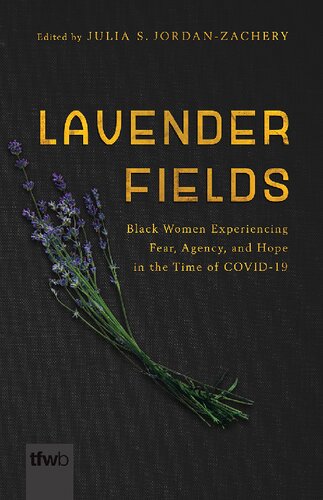
Lavender Fields: Black Women Experiencing Fear, Agency, and Hope in the Time of COVID-19 - Original PDF
نویسندگان: خلاصه: I start this book on African/Black women’s testimonies of living with COVID-19 by situating myself and my role in it. Over my twenty-plus years as an academician, I have evolved. I started simply wanting to be a political scientist who focused on Black women and public policy. I saw my work as an extension of me, but not in the way I do at this stage of my career. There was a shift in my approach to being an academician at some point. I started journaling about being a storyteller of Black women’s stories. Research, what I had been trained in, took a back seat, and the notion of storytell- ing became more prominent. I cannot explain this shift, and I have learned that some things need not be explained over time. Sometimes, Black women simply know (see Hill Collins 2000). Then COVID-19 hit. At some point during shelter in place—I have lost count of how long I have been at home—the Black feminine ancestors whispered to me. They called on me to undertake this project on Black women and COVID-19. I resisted. The project felt too big for me. I was worried that I could not do it and do it well. I went out into my garden. The energy of the ancestors deepened, and the call seemed to wrap itself around me in a way that would not release me. I did not feel threatened. But I resisted. I stayed in my gar- den for hours in my efforts to resist—weeding, tending, and avoiding. Finally, the heat of the day caught up to me, and I slowly made my way inside. I needed to find something else to occupy my mind, something that allowed me to continue avoiding the call for this project
Our Hopes, Our Future: Insights from the Hope Barometer - Original PDF
نویسندگان: خلاصه: The results of the Hope Barometer for the years 2019 and 2020 sketch a rather dark future full of crises and show the psychological consequences of such sce- narios. If we as individuals and as a society are to flourish, we need images of a hopeful world that will promote our commitment and cohesion. But what does it take to ignite the flame of hope for a livable future together without a naive optimism trivializing and playing down the current problems? Hope contains the belief in a better world but also the recognition of obstacles and the moti- vation to act. This book presents the phenomenon of hope in connection with individual psychological findings and socially relevant developments. After the psychological basics of future thinking, the general expectations and wishes for the future of around 10,000 people from fourteen countries are presented. The experiences of the Corona pandemic give hope because they show how people can deal successfully with crises. This results in the importance and character of individual and social hope.
Killing Hope_ US Military and CIA Interventions Since World War II. Part 1-Zed Books Ltd (2003) - Original PDF
نویسندگان: خلاصه: Introduction A Brief History of the Cold War and Anti-communism Our fear that communism might someday take over most of the world blinds us to the fact that anti- communism already has. —Michael Parenti1 It was in the early days of the fighting in Vietnam that a Vietcong officer said to his American prisoner: "You were our heroes after the War. We read American books and saw American films, and a common phrase in those days was "to be as rich and as wise as an American". What happened?"2 An American might have been asked something similar by a Guatemalan, an Indonesian or a Cuban during the ten years previous, or by a Uruguayan, a Chilean or a Greek in the decade subsequent. The remarkable international goodwill and credibility enjoyed by the United States at the close of the Second World War was dissipated country-by-country, intervention-by-intervention. The opportunity to build the war- ravaged world anew, to lay the foundations for peace, prosperity and justice, collapsed under the awful weight of anti-communism. The weight had been accumulating for some time; indeed, since Day One of the Russian Revolution. By the summer of 1918 some 13,000 American troops could be found in the newly-born Union of Soviet Socialist Republics. Two years and thousands of casualties later, the American troops left, having failed in their mission to "strangle at its birth" the Bolshevik state, as Winston Churchill put it.3 The young Churchill was Great Britain's Minister for War and Air during this period. Increasingly, it was he who directed the invasion of the Soviet Union by the Allies (Great Britain, the US, France, Japan and several other nations) on the side of the counter-revolutionary "White Army". Years later, Churchill the historian was to record his views of this singular affair for posterity: Were they [the Allies] at war with Soviet Russia? Certainly not; but they shot Soviet Russians at sight. They stood as invaders on Russian soil. They armed the enemies of the Soviet Government. They blockaded its ports, and sunk its battleships. They earnestly desired and schemed its downfall. But war—shocking! Interference—shame! It was, they repeated, a matter of indifference to them how Russians settled their own internal affairs. They were impartial—Bang!4 What was there about this Bolshevik Revolution that so alarmed the most powerful nations in the world? What drove them to invade a land whose soldiers had recently fought alongside them for over three years and suffered more casualties than any other country on either side of the World War? The Bolsheviks had had the audacity to make a separate peace with Germany in order to take leave of a war they regarded as imperialist and not in any way their war, and to try and rebuild a terribly weary and devastated Russia. But the Bolsheviks had displayed the far greater audacity of overthrowing a capitalist- feudal system and proclaiming the first socialist state in the history of the world. This was uppityness writ incredibly large. This was the crime the Allies had to punish, the virus which had to be eradicated lest it spread to their own people. 6 The invasion did not achieve its immediate purpose, but its consequences were nonetheless profound and persist to the present day. Professor D.F. Fleming, the Vanderbilt University historian of the Cold War, has noted: For the American people the cosmic tragedy of the interventions in Russia does not exist, or it was an unimportant incident long forgotten. But for the Soviet peoples and their leaders the period was a time of endless killing, of looting and rapine, of plague and famine, of measureless suffering for scores of millions— an experience burned into the very soul of a nation, not to be forgotten for many generations, if ever. Also for many years the harsh Soviet regimentations could all be justified by fear that the capitalist powers would be back to finish the job. It is not strange that in his address in New York, September 17, 1959, Premier Khrushchev should remind us of the interventions, "the time you sent your troops to quell the revolution", as he put it.5 In what could be taken as a portent of superpower insensitivity, a 1920 Pentagon report on the intervention reads: "This expedition affords one of the finest examples in history of honorable, unselfish dealings ... under very difficult circumstances to be helpful to a people struggling to achieve a new liberty."6 History does not tell us what a Soviet Union, allowed to develop in a "normal" way of its own choosing, would look like today. We do know, however, the nature of a Soviet Union attacked in its cradle, raised alone in an extremely hostile world, and, when it managed to survive to adulthood, overrun by the Nazi war machine with the blessings of the Western powers. The resulting insecurities and fears have inevitably led to deformities of character not unlike that found in an individual raised in a similar life- threatening manner. We in the West are never allowed to forget the political shortcomings (real and bogus) of the Soviet Union; at the same time we are never reminded of the history which lies behind it. The anti-communist propaganda campaign began even earlier than the military intervention. Before the year 1918 was over, expressions in the vein of "Red Peril", "the Bolshevik assault on civilization", and "menace to world by Reds is seen" had become commonplace in the pages of the New York Times. During February and March 1919, a US Senate Judiciary Subcommittee held heatings before which many "Bolshevik horror stories" were presented. The character of some of the testimony can be gauged by the headline in the usually sedate Times of 12 February 1919: DESCRIBE HORRORS UNDER RED RULE. R.E. SIMONS AND W.W. WELSH TELL SENATORS OF BRUTALITIES OF BOLSHEV1KI— STRIP WOMEN IN STREETS—PEOPLE OF EVERY CLASS EXCEPT THE SCUM SUBJECTED TO VIOLENCE BY MOBS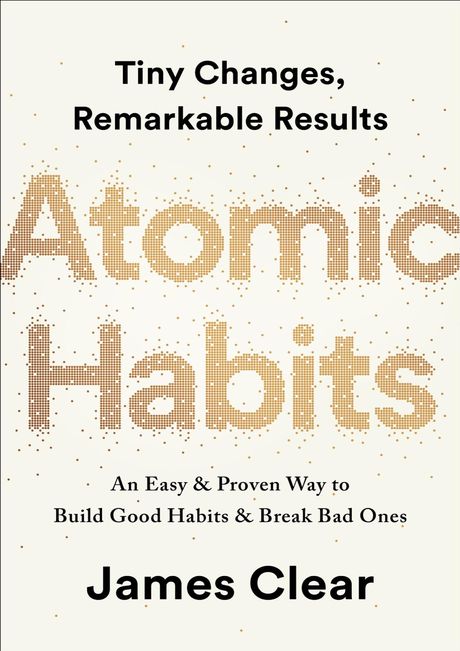
Atomic Habits - PDF
نویسندگان: خلاصه: Atomic Habits is a book by James Clear that outlines a process for creating and maintaining good habits and breaking bad ones. The book explains how small changes can make a big difference in life, in the form of tiny atomic habits. It also outlines the idea of building “habit stacks” that can be used to create a structure for both personal and professional development. Clear also argues that our environment and social cues have a powerful influence on our behavior and provides tips on how to use this knowledge to our advantage.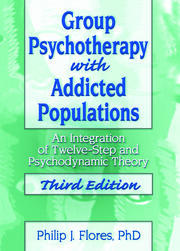
Group Psychotherapy with Addicted Populations - Original PDF
نویسندگان: خلاصه: ABSTRACT Be more effective in group therapy with addicted clients Group Psychotherapy with Addicted Populations: An Integration of Twelve-Step and Psychodynamic Theory, Third Edition is the newly revised edition of the classic text, that provides you with proven strategies for defeating alcohol and drug addiction through group psychotherapy. Philip J. Flores, a highly regarded expert in the treatment of alcoholism and in group psychotherapy brings together practical applications of 12-step programs and psychodynamic groups. This updated book explores the latest in constructive benefits of group therapy to chemically dependent individuals, providing opportunities to share and identify with others who are going through similar problems, to understand their own attitudes about addiction by confronting similar attitudes in others, and to learn to communicate their needs and feelings more directly. Topics in Group Psychotherapy with Addicted Populations: An Integration of Twelve-Step and Psychodynamic Theory, Third Edition include: alcoholism, addiction, and psychodynamic theories of addiction alcoholics anonymous and group psychotherapy use of confrontational techniques in the group inpatient group psychotherapy characteristics of the leader transference in the group resistance in groups preparing the chemically dependent person for group the curative process in group therapy integrating a modern analytic approach a discussion of object relations theory group psychotherapy, AA, and twelve-step programs diagnosis and addiction treatment treatment issues at early, middle, and late stages of treatment a discussion of guidelines and priorities for group leaders countertransference special considerations of resistance to addiction termination of treatment Professionals working in group therapy and addictions will find Group Psychotherapy with Addicted Populations: An Integration of Twelve-Step and Psychodynamic Theory, Third Edition an invaluable resource emphasizing the positive and constructive opportunities group psychotherapy brings to the chemically dependent individual.
It Runs In My Family - Original PDF
نویسندگان: خلاصه: ABSTRACT This volume offers therapists effective, practical strategies for helping patients overcome the psychological impact of a history of serious illness in the family. Using illustrative case material, the author discusses the feelings of powerlessness that family illness can produce in an individual, and describes techniques for fostering a healthier, more empowered attitude. She shows how various assessment exercises and validation techniques can help the person distinguish between reality and the myths that evolved as a result of the family illness.
Family Firms and Business Families in Cross-Cultural Perspective: Bringing Anthropology Back In - Original PDF
نویسندگان: خلاصه: IntroductIon Although the topics of kinship and economy are central to anthropologi- cal analysis, few scholars have brought the two fields together by introduc- ing broader concepts or large-scale comparisons. To date, the topic is gaining importance (Hann, 2018), and there is some solid research available; however, the results remain disparate and have few links to each other. Therefore, family business researchers with a strong background in management studies currently dominate the analysis of family firms and business families. A better understanding of family business, however, remains both necessary and hard to achieve under these research trajecto- ries. Therefore, the main aim of this volume is to provide a vision of how family business research and anthropology can be brought together, in order to benefit future research in both disciplines and develop a more sophisticated understanding of family businesses themselves. The study of family business has insisted that family ownership and operation distinguishes this business form from others such as non-family corporations, because of the close interaction between kinship and busi- ness interests. Such an insistence naturally demands further specification of how the family matters, and family business research has attempted to clarify the influence of the family itself on business activities by developing concepts such as familiness (Frank et al., 2010; Habbershon & Williams, 1999; Zellweger et al., 2010), entrepreneurial legacy (Jaskiewicz et al., 2015) or socio-emotional wealth (Gómez-Mejía et al., 2007). As a result, the kinship group behind the family firm has received increasing attention in family business research in the last decade or so (Caspary, 2018; Combs et al., 2020; Jaskiewicz et al., 2017, 2020; Kleve et al., 2020; Kleve & Koellner, 2019; Koellner et al., 2022; Stamm, 2013). Nevertheless, it still is the case that some obstacles to a better under- standing of the kinship group behind the family firm remain. A first con- sideration about the direction of future research concerns the fact that family business research largely focuses its analysis on single persons and not on broader networks of kin or whole families (Jaskiewicz et al., 2017: 313). Therefore, the composition, structure and organization of the kin- ship group still remain largely neglected, as do the form and quality of these relationships (Kushins & Behounek, 2020). Here anthropology definitely can offer some insights with its detailed ethnographies on kin relations based on long-term research
Understanding Autistic Relationships Across the Lifespan: Family, Friends, Lovers and Others - Original PDF
نویسندگان: خلاصه: Autism, and autistic people, have been around as long as humans have. It is likely there were ancient humans with behaviours, cognitive patterns, and sensory sen- sitivities that would meet clinical diagnostic criteria (though that would be taking the game of historical diagnoses too far!). Autism, and other neurodevelopmen- tal conditions, are part of the natural range of human biodiversity. This belief is known as the neurodiversity paradigm, and it is the framework within which we are writing this book. We take the approach that autistic people (see the language note that follows) are valid in their way of being in, experiencing, and relating to the world, and hope to help them and others understand some of these differences, rather than arguing that they are somehow ‘wrong’ or need changing to be more like non-autistic people. This book is not about the definitions or evolution of neurodiversity, but if you would like some further reading on the topic, we would recommend looking at the book list we provide at the back! Throughout the book, we will be using the terms ‘autistic people’ and ‘non- autistic people’. This is known as identity-first language, and has been shown to be the preference of the majority of autistic people who take part in research on the topic (Kenny et al., 2016). This is different to the way a lot of clinicians, pro- fessionals, and researchers have historically talked about autistic people, as they have tended to use ‘people with autism’ or say someone ‘has autism’ – known as person-first language. Originally this was used because it was thought to empha- sise the person rather than the condition (Kenny et al., 2016), and in some cases it is the preferred language of people affected themselves (e.g. in eating disorder research, people are described as ‘having anorexia’). However, recent research in the autism field has shown that person-first language can increase the stigma against autistic people and has a dehumanising rather than humanising effect on how oth- ers think about them (Cage et al., 2022). Combined with the stated preference of many autistic people, therefore, we use identity-first language in our writing, INTRODUCTION DOI: 10.4324/9781003044536-1 2 Introduction whilst recognising that a proportion of autistic people prefer person-first language. We have no wish to intimidate a minority within a minority and are following majority preference for simplicity. Autism has both a very complex and a very simple history, depending on how you look at it. The simple version is that two psychologists in the 1940s, Kanner in the United States and Asperger in Austria, independently noticed that they were seeing children who had a shared set of characteristics – difficulties with social interaction (to varying degrees), a preference for routine and sameness, and chal- lenges with everyday living skills. Kanner called this ‘autism’ (a preference for one- self or being alone), and Asperger called it ‘Aspergers’ (a preference for showing off his ego). The two did not know about each other’s work, and autism became the dominant diagnosis as Kanner published in English, whereas Asperger published in German (which was not the way to make your work popular in 1940s Europe, for obvious reasons. It may also have had something to do with the fact that Asperger worked with the Nazis in highly problematic ways.). These diagnoses were unchanged over the next 40 years or so, until Lorna Wing and Judy Gould, in 1980s South London, did a large-scale population level study and realised that the children with these two diagnoses were actually part of the same spectrum, as were lots of children who had not been given a formal diagnosis of either. This is where the term ‘the autism spectrum’ comes from, and it was designed to create a broader and more inclusive sense of what being autis- tic meant and could look like. This pair of researchers also invented ‘the triad of impairments’, which, while not the terminology we use today, revolutionised how autistic people were recognised and opened up diagnosis and support for more of those who needed it. This triad was made up of difficulties with: • Imagination and executive function (things like guessing what other people were thinking, or being able to make a plan based on imagining what will happen next) • Social communication (things like being non-verbal, not following standard ‘rules’ of communication like turn taking in conversation, or struggling with eye contact) • Repetitive behaviours and restricted interests (things like repeated physical move- ments such as hand flapping, or having intense special interests) The rise in autism diagnoses following this expansion of the diagnostic criteria from the strict ones set out earlier, especially removing the need for co-occurring learning difficulties Kanner used, was significant. This coincided with the rolling out of the MMR vaccine; and a highly questionable researcher called Andrew Wakefield used this correlation to publish his idea that the vaccine was causing autism in children. What he did not publish was that he was paid by the rival vaccine company, had faked his results, and the blood samples he ‘used’ had been collected without parental consent from children at a birthday party. If you want a Introduction 3 fuller idea of just how wrong his work was, there are literally thousands of academic papers proving it – but these tend not to make such good Facebook memes, and hence we have the anti-vaxxer movement. Regardless of that particular issue, autism diagnoses have generally continued to rise. This is because we are getting better at spotting when someone is autistic, our diagnostic tools have improved, and we are starting to recognise that autism can present in an even wider variety of ways than we thought in the 1980s. It is also because there is now a recognition that we can – and should – diagnose adults who were missed in childhood, for a variety of reasons. For a long time, if someone was not diagnosed before the age of about 14, they were highly unlikely to get a diagnosis at all, because autism was thought to be a ‘childhood condition’. The fact that autistic children grow into autistic adults was somehow lost on a lot of the early researchers. In 2013, on the basis of evidence from autistic people and clinicians, sensory sensitivities (being under/hypo- or over/hyper-sensitive on one of the five senses) were added to the diagnostic criteria. Similarly, there is growing research into and awareness of how autism can look different in those who internalise a lot of their experiences and those who externalise them – which is more what is considered ‘classically autistic’. A lot of these more nuanced ideas about what autism is have come from the autism community itself, with autistic advocates and academics driving change and increasing societal awareness. There is still plenty of work to do, but the direction of movement seems positive. There is also, as we said, a much more complex story which can be told about autism and how autism research has developed over time. That isn’t the focus of this book (though it is the focus of Neurotribes, by Steve Silberman), and so we won’t try to tell it all here. What is relevant for the current book is the focus on social dif- ficulties, which have characterised autism research and stereotypes from the earliest days, back in the 1940s, and the assumptions this led people to make about autistic relationships until very recently. Most autism research, researchers, and parents of autistic people, for most of the last 80 years, have functioned based on the assumption that because autistic people had difficulties with making and maintaining friendships and relationships, had dif- ferent social interaction patterns, and did not show distress about these things in the ways they expected . . . that autistic people did not want friends or romantic relationships . . . that these were just things autistic people were hardwired not to value, or be interested in at all. Avoiding eye contact was seen as a sign of not wanting to engage with the person who was speaking; not inferring someone’s true intentions was seen as a failure to understand that other people have minds (yes, really); and not making friends at school was assumed to be because the child did not want friends and was happier on their own. A whole academic discipline of autism studies, with corresponding theories, was built upon the basis of these observations of social difficulty (along with the other two parts of the triad). A few examples of these theories follow
آیا کتاب مورد نظر هنوز بر روی سایت قرار نگرفته است؟ جای نگرانی نیست! کافی است بر روی گزینه سفارش کتاب کلیک کرده و درخواست خود را ثبت کنید. در کمتر از چند ساعت کتاب شما را آماده خواهیم کرد.