موضوعات
آموزش و پرورش
ادبیات و زبان
پزشکی، دندانپزشکی و داروسازی
تاریخ و جغرافیا
داستان و رمان
دیگر
دین و فلسفه
روانشناسی
ریاضیات و آمار
سلامتی، تناسب اندام و رژیم غذایی
شیمی و پلیمر
علوم اجتماعی و حقوق
علوم زیستی و بیوتکنولوژی
فیزیک و نجوم
کامپیوتر و اینترنت
کتابهای کودکان و داستان
کسب و کار و اقتصاد
کشاورزی و دامپزشکی و غذا
معماری
مهندسی و فناوری
هنر و تئاتر
محصولات




Emotions and War: Medieval to Romantic Literature - Original PDF
نویسندگان: خلاصه: This volume addresses the place of the emotions in literary representations of war across six centuries of European history. It challenges modern assumptions about the passions and feelings attending violent conflict in order to reveal the multifarious historical emotions and emotional histories of war.
Pain and Emotion in Modern History - Original PDF
نویسندگان: خلاصه: Drawing on the expertise of historical, literary and philosophical scholarship, practicing physicians, and the medical humanities this is a true interdisciplinary collaboration, styled as a history. It explores pain at the intersection of the living, suffering body, and the discursive cultural webs that entangle it in its specific moment.
Learning How to Feel Children’s Literature and Emotional Socialization, 1870–1970 - Original PDF
نویسندگان: خلاصه: Learning How to Feel explores the ways in which children and adolescents learn not just how to express emotions that are thought to be pre-existing, but actually how to feel. The volume assumes that the embryonic ability to feel unfolds through a complex dialogue with the social and cultural environment and specifically through reading material. The fundamental formation takes place in childhood and youth. A multi-authored historical monograph, Learning How to Feel uses children's literature and advice manuals to access the training practices and learning processes for a wide range of emotions in the modern age, circa 1870-1970. The study takes an international approach, covering a broad array of social, cultural, and political milieus in Britain, Germany, India, Russia, France, Canada, and the United States. Learning How to Feel places multidirectional learning processes at the centre of the discussion, through the concept of practical knowledge. The book innovatively draws a framework for broad historical change during the course of the period. Emotional interaction between adult and child gave way to a focus on emotional interactions among children, while gender categories became less distinct. Children were increasingly taught to take responsibility for their own emotional development, to find 'authenticity' for themselves. In the context of changing social, political, cultural, and gender agendas, the building of nations, subjects and citizens, and the forging of moral and religious values, Learning How to Feel demonstrates how children were provided with emotional learning tools through their reading matter to navigate their emotional lives.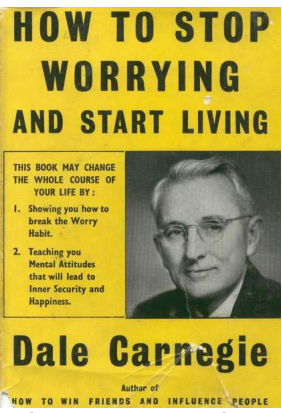
How To Stop Worrying And Start Living - PDF
نویسندگان: خلاصه: How to Stop Worrying and Start Living by Dale Carnegie In this time-tested book, Dale Carnegie shows us how to conquer worry and anxiety. Via engaging stories that reveal helpful lessons and practical frameworks, Carnegie arms you with an array of tools that will help you start living more fully and without the harmful effects of worry. Even though this book was written in 1936, the deceptively simple lessons from this book will help you better navigate the noise of the modern era. Key Takeaways Focus on today “Our main business is not to see what lies dimly at a distance, but to do what lies clearly at hand.” – Thomas Carlyle Resurfaced using Readwise Thinking about what needs to be done in the future can lead to overwhelm and inaction. But if you focus on what you need to accomplish today, it’s much more doable. It will help you create the future you want, one day at a time. A formula to follow Frameworks for dealing with worry can be helpful, especially since worry destroys our ability to concentrate. Without being able to concentrate, not only do we feel worse, but we’re less effective. If you have a situation where you’re worrying about failing, follow these three steps. Step 1: Analyze a situation causing you worry to determine the worst possible scenario if you fail. Step 2: Accept the worst possible case scenario, if it is to happen. Step 3: Focus on trying to improve the situation so that you end up with a better outcome than worst case. Why you should care about worry “The greatest mistake physicians make is that they attempt to cure the body without attempting to cure the mind; yet the mind and body are one and should not be treated separately.” – Plato Resurfaced using Readwise Worry isn’t just something that makes you feel a little worse or makes it less likely that you can concentrate. It’s something that can lead to seriously adverse health effects for your mind, body, and soul. These negative effects can cause much worse situations with your health than whatever it is that you’re worrying about. In short, worry is not worth the physical toll it can take on your body. Techniques for Analyzing Worry Understand the situation Whenever you’re worrying about something, you need to do three things: Get the facts. Analyze the facts. Arrive at a decision – and act on that decision. One simple framework for figuring this all out is to follow four lines of inquiry. Write down what you’re worrying about (What am I worrying about?) Think about what you can do about it (What can I do about it?) Decide on what to do (What are you going to do about it?) Start carrying out the decision (When am I going to start doing it?) This framework helps you get out of your head. It allows you to quickly understand what’s going on, what you can do about it, and to make a decision and start doing what you’ve decided. Solving business problems Similar to the framework above for analyzing any worry, you can use the following four questions to solve most of your worry about any business situation. What’s the problem? What is the cause of the problem? What are all possible solutions to the problem? What solution do you suggest? Whenever you’re struggling in business, go through this framework. You’ll feel better and be clear on what you’re going to do to start actually solving the problem, instead of simply worrying about it. Breaking the Worry Habit Use busyness To conquer worry, you need to understand that worry is a habit. That means it’s a habit you can break. One technique for breaking the worry habit is to keep yourself busy. When you’re really busy or taken up by action, it’s hard to worry. There’s a balance here – you don’t want to mask underlying problems by just keeping yourself moving all the time. But filling up your days can make it easier to not worry. Don’t sweat the small stuff or the improbable “Trivialities are at the bottom of most marital unhappiness” – Joseph Sabath Resurfaced using Readwise Don’t let the little annoyances or problems in life cause you too much worry. You can’t eliminate everything that’s unpleasant, and the energy expended on worrying about these problems prevents you from focusing on what’s important. On a related note, don’t get too concerned about things that don’t have a high probability of happening. Most surfers fear sharks, but how likely is it that they’ll get killed by one? Not that likely. Try to ask yourself honestly, “How likely is it that the thing I’m worrying about will occur?” Accept the situation “God grant me the serenityTo accept the things I cannot change,The courage to change the things I can;And the wisdom to know the difference.” Resurfaced using Readwise We often find ourselves in situations we don’t want to be in. Focus on what you can do about the situation, rather than on the existence of the source of worry. Know your values “Yes, I honestly believe that this is one of the greatest secrets to true peace of mind – a decent set of values. And I believe we could annihilate fifty per cent of all our worries at once if we would develop a a sort of private gold standard – a gold standard of what things are worth to us in terms of our lives.” Resurfaced using Readwise Get clear on what you value, and live by that standard. Hold others to your standards as well. If you have a friend who’s always an hour late, say that you’re willing to wait up to 10 minutes, but after that, you’re leaving. That’s a standard that you’ve communicated, and the person can choose to meet it or not. Figure out what you really care about in life and what you’re willing to give up to get it. You may find that you’re expending a lot of energy on something you don’t even want. Cut it if it doesn’t align with your values. Cultivating a Mental Attitude that Fosters Peace “Our life is what our thoughts make it.” – Marcus Aurelius Resurfaced using Readwise Just for today A beautiful daily program for you to aspire to follow, originally written by Sibyl F. Partridge. Just for today I will be happy. This assumes that what Abraham Lincoln said is true, that “most folks are about as happy as they make up their minds to be.” Happiness is from within; it is not a matter of externals. Just for today I will try to adjust myself to what is, and not try to adjust everything to my own desires. I will take my family, my business, and my luck as they come and fit myself to them. Just for today I will take care of my body. I will exercise it, care for it, nourish it, not abuse it nor neglect it, so that it will be a perfect machine for my bidding. Just for today I will try to strengthen my mind. I will learn something useful. I will not be a mental loafer. I will read something that requires effort, thought and concentration. Just for today I will exercise my soul in three ways; I will do somebody a good turn and not get found out. I will do at least two things I don’t want to do, as William James suggests, just for exercise. Just for today I will be agreeable. I will look as well as I can, dress as becomingly as possible, talk low, act courteously, be liberal with praise, criticize not at all, nor find fault with anything and not try to regulate nor improve anyone. Just for today I will try to live through this day only, not tackle my whole life problem at once. I can do things for twelve hours that would appall me if I had to keep them up for a lifetime. Just for today I will have a program. I will write down what I expect to do every hour. I may not follow it exactly, but I will have it. It will eliminate two pests, hurrying and indecision. Just for today I will have a quiet half-hour all by myself and relax. In this half-hour sometimes I will think of God, so as to get a little more perspective into my life. Just for today I will be unafraid, especially I will not be afraid to be happy, to enjoy what is beautiful, to love, and to believe that those I love, love me. Avoid trying to get even “If selfish people try to take advantage of you, cross them off your list, but don’t try to get even. When you try to get even, you hurt yourself more than you hurt the other fellow.” – Milwaukee police department No one can disturb your mind if you do not let them. Don’t waste time thinking about people you don’t like. Don’t worry about ingratitude Avoid getting upset about people not showing the level of gratitude that you expect. It’s human nature for people to forget to be grateful. So if you expect that they will be, you’ll simply be disappointed. If you want to be giving to people or the world, then do it. Don’t worry about that being recognized. If it is, great. You may feel good about getting that recognition, but don’t feel bad if you don’t receive it. 90% right, 10% wrong. “Two men looked out from prison bars, One saw the mud, the other saw the stars.” Resurfaced using Readwise Most of the time, about 90% of our lives are going well, while 10% are not going as we’d like. We focus and obsess about that 10%, even if it’s about things that we don’t care very much about. The best way to start enjoying your life is to focus on what’s going well. You can always try to improve what’s not going well, but don’t make that the focus of your days. Be grateful for what’s going well and for what you don’t have. Help others If you’re feeling down, try to spend some time thinking about the world outside of yourself. Focus on other people and what drives them. Become interested in their stories. See if you can find small ways to help. Bringing joy to someone else often brings joy to you. Conquering Worry and Criticism “Man is not made to understand life, but to live it.” – Santayana Resurfaced using Readwise Consider religion and prayer Religion and prayer – or the acceptance of something not knowable and greater than yourself – is a good way to stop fretting about all of your troubles. While many modern day people are agnostic or atheist, shying away from the specifics of various religions, it’s important to remember that you can always accept that there is a piece of life that you’ll never fully understand. So even if you’re not religious, talk to yourself about your worries, about your joys, about your hopes and dreams. Ask the universe for help. You may feel better by just asking. No one kicks a dead dog “So when you are kicked and criticized, remember that it is often done because it gives the kicker a feeling of importance. It often means that you are accomplishing something and are worthy of attention.” Resurfaced using Readwise People don’t criticize others who aren’t doing anything. So if you’re receiving some criticism, it likely means that you’re doing something that’s at least worthy of attention. Don’t take criticism so personally You can’t control whether or not you receive negative feedback or unjust criticisms, but you can control how you allow these events to impact your mind. Learning not to get worked up when someone says something that isn’t positive is a core skill for dealing with a world in which you may get criticized for just and unjust reasons. Keep a “fool things I have done” list We all do stupid things. Some people learn from their mistakes and move on. Others obsess about the mistakes they’ve made and never let them go. What path sounds better? One way to begin learning from and accepting your mistakes is to keep a “fool things I have done” list. This list can be a simple recording of all the stupid things you’ve done in your life. You can add to the list over time and look back over the years to see how you’re improving. Keeping Fatigue at Bay “Fatigue often produces worry, or, at least, it makes you susceptible to worry.” Resurfaced using Readwise Rest and relax “I never stand up when I can sit down; and I never sit down when I can lie down.” – Henry Ford Resurfaced using Readwise Instead of grinding all day, take small breaks from your work. Do things you enjoy. Lay down. Go for a walk. Regularly take breaks to restore your energy, and you’ll be able to work longer during the day. Rest also includes finding ways to reduce the impact of your emotions on your energy levels. Feeling too many negative emotions can easily drain you. Anger, resentment, and so on are some of the most draining forces around. You could sit all down and do nothing, but if you’re angry and resentful, you’ll feel exhausted. There are different tactics that will work for you, but you have to find ways to relax. “Relaxation is the absence of all tension and effort.” Do whatever it is that relaxes you. This could be a few deep breaths. It could be keeping a journal when you’re upset. It could be laying on the floor for a few minutes when you’re tired. It could be sitting more comfortably in your chair. Do your best to avoid unnecessary strain as you go about your days, and you’ll feel better throughout them. Avoid boredom Boredom is often exhausting. A good way to understand this concept is to imagine times when you’re doing something interesting or exciting. Are you tired or fatigued when you’re really engaged with your work? Probably not. So find activities that get you excited, and you’ll naturally have more energy. Dealing with insomnia Sleep is obviously a critical factor in feeling good. But many people, especially as they develop insomnia, begin to worry constantly about not getting enough sleep. This worry fuels the insomnia, and it makes people even more exhausted. So if you can’t sleep well, by all means, try different tactics to get better sleep. But if you don’t get much sleep or are struggling, don’t worry about your lack of sleep. The worry will make you far more exhausted than the “not sleeping” part. It compounds the problem, rather than fixing it. If you want more book summaries like this... Find more great book recommendations. Discover lists with hundreds of the best books. Check out Foundations. Foundations is a searchable digital notebook built for curious, lifelong learners. It will help you accelerate your learning, solve hard problems, and save time by giving you access to a growing digital collection of insights from timeless books.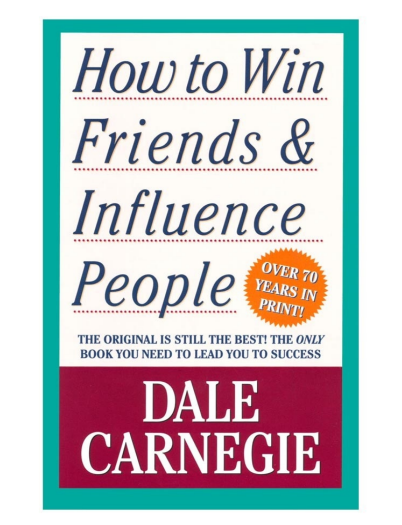
How To Win Friends and Influence People - PDF
نویسندگان: خلاصه: How to Win Friends and Influence People is Dale Carnegie’s timeless guide for anyone who wants to improve their relationships and success in life. Above all else, Carnegie teaches us that connecting with other people is a skill (not a natural talent) and that through being honest with our shortcomings and intentional in our efforts to overcome those challenges, we can improve this skill. Key Takeaways As social animals, we crave acceptance from others. We don’t need everyone to like and accept us, but we do need some people to do so. That’s why we invest in friendships, participate in groups, and build relationships with our colleagues. While each of us excels in connecting with people in some ways, we struggle in others. Perhaps we don’t give off a good first impression. Perhaps we find ourselves in heated discussions with new friends. Perhaps we find it difficult to showcase our personality in big groups. The good news is that we don’t have to accept these natural challenges. Connecting with other people is a skill, and through being honest with our challenges and intentional in our efforts to overcome those challenges, we can improve. Improving in this area is well worth the effort. Because in getting better at understanding, communicating with, and relating to other people, our quality of life will improve. We’ll develop healthier relationships, build more rewarding careers, and navigate the world more easily. If you’re interested in improving your interactions with other people, below is a list of timeless principles designed to help you do so. Not all of the principles will resonate with you, and that’s okay. You can choose a few of the principles that will help you in your current situation and revisit the list later. Fundamental Techniques in Handling People Don’t criticize, condemn, or complain. Give honest and sincere appreciation. Arouse in the other person an eager want. Six Ways to Make People Like You Become genuinely interested in other people. Smile. Remember that a person’s name is to that person the sweetest and most important sound in any language. Be a good listener. Encourage others to talk about themselves. Talk in terms of the other person’s interests. Make the other person feel important. How to Win People to Your Way of Thinking The only way to get the best of an argument is to avoid it. Show respect for the other person’s opinions. Never say, “You’re wrong.” If you are wrong, admit it quickly and emphatically. Begin in a friendly way. Get the other person saying “yes, yes” immediately. Let the other person do a great deal of the talking. Let the other person feel that the idea is his or hers. Try honestly to see things from the other person’s point of view. Be sympathetic with the other person’s ideas and desires. Appeal to the nobler motives. Dramatize your ideas. Throw down a challenge. Be a Leader: How to Change People Begin with praise and honest appreciation. Call attention to people’s mistakes indirectly. Talk about your own mistakes before criticizing the other person. Ask questions instead of giving direct orders. Let the other person save face. Praise the slightest improvement and praise every improvement. Be “hearty in your approbation and lavish in your praise.” Give the other person a fine reputation to live up to. Use encouragement. Make the fault seem easy to correct. Make the other person happy about doing the thing you suggest.
Hope Behind Bars: Notes from Indian Prisons - Original PDF
نویسندگان: خلاصه: prisons – the perils of freedom versus infinite detention. Focus is also brought to a lightly documented category of persons – the children of prisoners – in chapter ten by K. R. Raja, who highlights their secondary vulnerabilities and invisible suffering. A prison is a world of its own, where residents live without the support systems that those on the outside take for granted. Prisoners hope and will each day to be their last in confinement. We believe that the stories in Hope Behind Bars provide insight into lives less ordinary.
Hatred, Emptiness, and Hope: Transference-Focused Psychotherapy in Personality Disorders - Original PDF
نویسندگان: خلاصه: Introduction The present volume continues my investigation of the psychopathology and treatment of severe personality disorders. It focuses on the analysis of particular clinical features of personality pathologies and describes contemporary psychoanalytic object relations theory as a general theoret- ical frame of treatment that allows us to conceptualize both normal per- sonality functioning and the very nature of personality disorders. This volume also includes my recent contributions to understanding the rela- tionship between neurobiological dispositions and their interaction with psychodynamic developments, again, both in normality and psychopa- thology. Finally, this volume explores the application of object relations theory to group processes, love relations, and therapists’ training. Part I of the book includes major theoretical statements. Chapter 1, “Object Relations Theory and Transference Analysis,” presents a brief, updated summary of contemporary object relations theory and its direct relevance to transference analysis, the fundamental therapeutic approach of transference-focused psychotherapy (TFP). This chapter summarizes the theoretical approach that informs the new psychotherapeutic devel- opments in the treatment of severe personality disorders that are de- scribed throughout the entire volume. Chapter 2, “Some Implications of New Developments in Neurobiology for Psychoanalytic Object Relations Theory” summarizes developments in neurobiology regarding the con- ceptualization of affect systems and their role as the motivational basis ix x HATRED, EMPTINESS, AND HOPE for establishing internalized dyadic self- and object-relations structures. This chapter shows how the underlying limbic and cortical brain struc- tures and functions contribute to embedding the fundamental concepts of self and of significant others. It proposes that the formation of such dy- adic structures is an essential task of higher levels of psychic functioning. Part II, on technique, updates empirical studies of the Personality Disorders Institute at Weill Cornell Medical College, expanding the ap- plications of TFP, exploring its relationship to standard psychoanalytic technique, and outlining a general comprehensive theory of technique that applies to both psychoanalysis and its derived psychotherapies. Chapter 3, “Extensions of Psychoanalytic Technique: The Mutual Influ- ences of Standard Psychoanalysis and Transference-Focused Psycho- therapy” presents an updated view of TFP in comparison with standard psychoanalytic technique that differentiates more sharply these two technical approaches and discusses the problems in training therapists efficiently in both modalities. Chapter 4, “Therapeutic Implications of Transference Structures in Various Personality Pathologies,” presents an overview of transference developments in different modalities of severe personality disorders and the modifications in technical approaches to transference analysis related to these structural differences. It is a highly specialized description of TFP in action. Chapter 5, “Affective Domi- nance, Dyadic Relationship, and Mentalization,” focuses on two basic premises from which the therapist enters every therapeutic session—that is, the alertness to affective dominance and the diagnosis of the predom- inant dyadic object relationship linked to it. By illustrating this approach with clinical cases, the chapter also points to similarities and differences between TFP and mentalization-based therapy (MBT), an alternative psychodynamic approach to severe personality disorders. Chapter 6, “Reflections on Supervision,” describes my personal experience as well as general controversial issues regarding the supervision of psychoan- alytic and derivative treatments. In the process, the chapter details our collective experience of training and supervising clinicians in TFP over many years at the Personality Disorders Institute. Part III, on specific psychopathologies, deals with particular disor- ders within the broad field of severe personality disorders. Chapter 7, “Psychodynamics and Treatment of Schizoid Personality Disorders,” presents our experience with these complex disorders. Schizoid struc- ture has received less attention in recent times than other types of severe personality disorders, particularly borderline and narcissistic personal- ity disorders. This chapter presents a diagnostic update and summa- rizes the specific contributions of the TFP approach to the treatment of schizoid personality. Chapter 8, “Psychotic Personality Structure,” ex- plores the differences between borderline personality organization and psychotic personality organization. It describes the development of psy- chotic features as a potential transitory regression in patients with bor- xiIntroduction derline personality organization, as well as a reflection of a psychotic structure that only emerges during treatment. It proposes correspond- ing differences in technique for transitory psychotic developments aris- ing in sessions, for transference psychosis, and for the emergence of major psychotic illness during the course of TFP. The chapter also ana- lyzes the nature and shifts in reality testing in the context of transference analysis. Chapter 9, “Narcissistic Pathology of Love Relations,” deals with the specific pathology of narcissistic personalities, the great diffi- culties of these patients in establishing and maintaining a love relation in depth, and the general study of sexuality and the capacity to love as part of the diagnostic evaluation of all patients with severe personality disorders. It also considers the influences of the therapist’s own emo- tional maturity in the assessment of this aspect of psychopathology. Part IV deals with the application of object relations theory to inpa- tient hospital treatment, to group regression and political leadership, and to psychoanalytic education. Chapter 10, “Psychoanalytic Ap- proaches to Inpatient Treatment of Personality Disorders: A Neglected Dimension,” examines the inpatient treatment of patients with person- ality disorders, a neglected therapeutic approach in the United States. Although pioneered predominantly in the United States, inpatient treat- ment has been developed in new ways in recent European experiences, with relatively extended hospital treatment of severe personality disor- ders. This chapter summarizes both the North American and recent Eu- ropean experiences with an important therapeutic instrument that, mostly for financial reasons, has been underutilized in the United States. It offers important technical tools that are relevant for the repetitive brief hospitalizations of regressed borderline patients that have replaced se- lective long-term inpatient treatment. This approach may be the basis for the development of optimal treatment of very regressed stages of illness in the future. Chapter 11, “Malignant Narcissism and Large Group Re- gression,” applies psychoanalytic object relations theory and the devel- oping knowledge of the social functioning of some personality disorders to the study of the mutual influences of severe leadership pathology in organizational and political structures and the psychological conditions that underpin large group regression. Political circumstances that foster such large group regression in social subgroups and leadership with ma- lignant narcissistic features tend to reinforce each other, with potentially damaging and dangerous consequences to the social community. This chapter is a contribution to the clarification of these potentially threaten- ing and damaging social developments. Chapter 12, “Challenges for the Future of Psychoanalysis,” applies the psychoanalytical approach that underlies this volume to the analysis of particular conditions of psycho- analysis today as a profession, an educational enterprise, and a social or- ganization within the mental health sciences. This chapter and the book end with recommendations for innovations that may strengthen the role xii HATRED, EMPTINESS,AND HOPE of psychoanalysis as a profession, a treatment approach, and a social or- ganization. It proposes solutions to organizational problems, particu- larly stressing the urgent need for development of empirical research, psychoanalytic psychotherapies, and radical renovation in its educa- tional structure.آیا کتاب مورد نظر هنوز بر روی سایت قرار نگرفته است؟ جای نگرانی نیست! کافی است بر روی گزینه سفارش کتاب کلیک کرده و درخواست خود را ثبت کنید. در کمتر از چند ساعت کتاب شما را آماده خواهیم کرد.