موضوعات
آموزش و پرورش
ادبیات و زبان
پزشکی، دندانپزشکی و داروسازی
تاریخ و جغرافیا
داستان و رمان
دیگر
دین و فلسفه
روانشناسی
ریاضیات و آمار
سلامتی، تناسب اندام و رژیم غذایی
شیمی و پلیمر
علوم اجتماعی و حقوق
علوم زیستی و بیوتکنولوژی
فیزیک و نجوم
کامپیوتر و اینترنت
کتابهای کودکان و داستان
کسب و کار و اقتصاد
کشاورزی و دامپزشکی و غذا
معماری
مهندسی و فناوری
هنر و تئاتر
محصولات
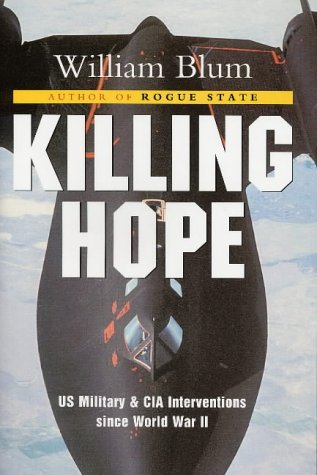
Killing Hope_ US Military and CIA Interventions Since World War II. Part 1-Zed Books Ltd (2003) - Original PDF
نویسندگان: خلاصه: Introduction A Brief History of the Cold War and Anti-communism Our fear that communism might someday take over most of the world blinds us to the fact that anti- communism already has. —Michael Parenti1 It was in the early days of the fighting in Vietnam that a Vietcong officer said to his American prisoner: "You were our heroes after the War. We read American books and saw American films, and a common phrase in those days was "to be as rich and as wise as an American". What happened?"2 An American might have been asked something similar by a Guatemalan, an Indonesian or a Cuban during the ten years previous, or by a Uruguayan, a Chilean or a Greek in the decade subsequent. The remarkable international goodwill and credibility enjoyed by the United States at the close of the Second World War was dissipated country-by-country, intervention-by-intervention. The opportunity to build the war- ravaged world anew, to lay the foundations for peace, prosperity and justice, collapsed under the awful weight of anti-communism. The weight had been accumulating for some time; indeed, since Day One of the Russian Revolution. By the summer of 1918 some 13,000 American troops could be found in the newly-born Union of Soviet Socialist Republics. Two years and thousands of casualties later, the American troops left, having failed in their mission to "strangle at its birth" the Bolshevik state, as Winston Churchill put it.3 The young Churchill was Great Britain's Minister for War and Air during this period. Increasingly, it was he who directed the invasion of the Soviet Union by the Allies (Great Britain, the US, France, Japan and several other nations) on the side of the counter-revolutionary "White Army". Years later, Churchill the historian was to record his views of this singular affair for posterity: Were they [the Allies] at war with Soviet Russia? Certainly not; but they shot Soviet Russians at sight. They stood as invaders on Russian soil. They armed the enemies of the Soviet Government. They blockaded its ports, and sunk its battleships. They earnestly desired and schemed its downfall. But war—shocking! Interference—shame! It was, they repeated, a matter of indifference to them how Russians settled their own internal affairs. They were impartial—Bang!4 What was there about this Bolshevik Revolution that so alarmed the most powerful nations in the world? What drove them to invade a land whose soldiers had recently fought alongside them for over three years and suffered more casualties than any other country on either side of the World War? The Bolsheviks had had the audacity to make a separate peace with Germany in order to take leave of a war they regarded as imperialist and not in any way their war, and to try and rebuild a terribly weary and devastated Russia. But the Bolsheviks had displayed the far greater audacity of overthrowing a capitalist- feudal system and proclaiming the first socialist state in the history of the world. This was uppityness writ incredibly large. This was the crime the Allies had to punish, the virus which had to be eradicated lest it spread to their own people. 6 The invasion did not achieve its immediate purpose, but its consequences were nonetheless profound and persist to the present day. Professor D.F. Fleming, the Vanderbilt University historian of the Cold War, has noted: For the American people the cosmic tragedy of the interventions in Russia does not exist, or it was an unimportant incident long forgotten. But for the Soviet peoples and their leaders the period was a time of endless killing, of looting and rapine, of plague and famine, of measureless suffering for scores of millions— an experience burned into the very soul of a nation, not to be forgotten for many generations, if ever. Also for many years the harsh Soviet regimentations could all be justified by fear that the capitalist powers would be back to finish the job. It is not strange that in his address in New York, September 17, 1959, Premier Khrushchev should remind us of the interventions, "the time you sent your troops to quell the revolution", as he put it.5 In what could be taken as a portent of superpower insensitivity, a 1920 Pentagon report on the intervention reads: "This expedition affords one of the finest examples in history of honorable, unselfish dealings ... under very difficult circumstances to be helpful to a people struggling to achieve a new liberty."6 History does not tell us what a Soviet Union, allowed to develop in a "normal" way of its own choosing, would look like today. We do know, however, the nature of a Soviet Union attacked in its cradle, raised alone in an extremely hostile world, and, when it managed to survive to adulthood, overrun by the Nazi war machine with the blessings of the Western powers. The resulting insecurities and fears have inevitably led to deformities of character not unlike that found in an individual raised in a similar life- threatening manner. We in the West are never allowed to forget the political shortcomings (real and bogus) of the Soviet Union; at the same time we are never reminded of the history which lies behind it. The anti-communist propaganda campaign began even earlier than the military intervention. Before the year 1918 was over, expressions in the vein of "Red Peril", "the Bolshevik assault on civilization", and "menace to world by Reds is seen" had become commonplace in the pages of the New York Times. During February and March 1919, a US Senate Judiciary Subcommittee held heatings before which many "Bolshevik horror stories" were presented. The character of some of the testimony can be gauged by the headline in the usually sedate Times of 12 February 1919: DESCRIBE HORRORS UNDER RED RULE. R.E. SIMONS AND W.W. WELSH TELL SENATORS OF BRUTALITIES OF BOLSHEV1KI— STRIP WOMEN IN STREETS—PEOPLE OF EVERY CLASS EXCEPT THE SCUM SUBJECTED TO VIOLENCE BY MOBS
A devil's chaplain: reflections on hope, lies, science, and love - Original PDF
نویسندگان: خلاصه: The first essay in this volume, A Devil's Chaplain (1.1), has not previously been published. The title, borrowed by the book, is explained in the essay itself. The second essay, What is True? (1.2), was my contribution to a symposium of that name, in Forbes ASAP magazine. Scientists tend to take a robust view of truth and are impatient of philosophical equivocation over its reality or importance. It's hard enough coaxing nature to give up her truths, without spectators and hangers-on strewing gratuitous obstacles in our way. My essay argues that we should at least be consistent. Truths about everyday life are just as much - or as little - open to philosophical doubt as scientific truths. Let us shun double standards. At times I fear turning into a double standards bore. It started in child- hood when my first hero, Doctor Dolittle (he returned irresistibly to mind when I read the Naturalist's Voyage of my adult hero, Charles Darwin), raised my consciousness, to borrow a useful piece of feminist jargon, about our treatment of animals. Non-human animals I should say, for, of course, we are animals. The moral philosopher most justly credited with raising today's consciousness in this direction is Peter Singer, lately moved from Australia to Princeton. His The Great Ape Project aims towards granting the other great apes, as near as is practically possible, civil rights equivalent to those enjoyed by the human great ape. When you stop and ask yourself why this seems so immediately ridiculous, the harder you think, the less ridiculous it seems. Cheap cracks like 'I suppose you'll need reinforced ballot-boxes for gorillas, then?' are soon dispatched: we give rights, but not the vote, to children, lunatics and Members of the House of Lords. The biggest objection to the GAP is 'Where will it all end? Rights for oysters?' (Bertrand Russell's quip, in a similar context). Where do you draw the line? Gaps in the Mind (1.3), my own contribution to the GAP book, uses an evolutionary argument to show that we should not be in the business of drawing lines in the first place. There's no law of nature that says boundaries have to be clear-cut.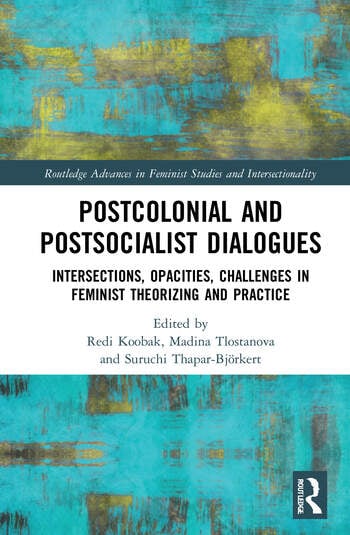
Postcolonial and Postsocialist Dialogues - Original PDF
نویسندگان: خلاصه: Through staging dialogues between scholars, activists, and artists from a variety of disciplinary, geographical, and historical specializations, Postcolonial and Postsocialist Dialogues explores the possible resonances and dissonances between the postcolonial and the postsocialist in feminist theorizing and practice. While postcolonial and postsocialist perspectives have been explored in feminist studies, the two analytics tend to be viewed separately. This volume brings together attempts to understand if and how postcolonial and postsocialist dimensions of the human condition - historical, existential, political, and ideological - intersect and correlate in feminist experiences, identities, and struggles. In the three sections that probe the intersections, opacities, and challenges between the two discourses, the authors put under pressure what postcolonialism and postsocialism mean for feminist scholarship and activism. The contributions address the emergence of new political and cultural formations as well as circuits of bodies and capital in a post-Cold War and postcolonial era in currently re-emerging neo-colonial and imperial conflicts. They engage with issues of gender, sexuality, race, migration, diasporas, indigeneity, and disability, while also developing new analytical tools such as postsocialist precarity, queer postsocialist coloniality, uneventful feminism, feminist opacity, feminist queer crip epistemologies. The collection will be of interest for postcolonial and postsocialist researchers, students of gender studies, feminist activists and scholars.

Invest Like a Shark: How a Deaf Guy with No Job and Limited Capital Made a Fortune Investing in the Stock Market - PDF
نویسندگان: خلاصه: The book you are holding is, hands-down, one of the most original and insightful books I have ever read when it comes to teaching you, the individual investor, not only why you have the ability to beat the Whales of Wall Street, but also how you can do it.
Women with Mustaches and Men without Beards - Original PDF
نویسندگان: خلاصه: Drawing from a rich array of visual and literary material from nineteenth-century Iran, this groundbreaking book rereads and rewrites the history of Iranian modernity through the lens of gender and sexuality. Peeling away notions of a rigid pre-modern Islamic gender system, Afsaneh Najmabadi provides a compelling demonstration of the centrality of gender and sexuality to the shaping of modern culture and politics in Iran and of how changes in ideas about gender and sexuality affected conceptions of beauty, love, homeland, marriage, education, and citizenship. She concludes with a provocative discussion of Iranian feminism and its role in that country's current culture wars. In addition to providing an important new perspective on Iranian history, Najmabadi skillfully demonstrates how using gender as an analytic category can provide insight into structures of hierarchy and power and thus into the organization of politics and social life.
The sociology of community connections - Original PDF
نویسندگان: خلاصه: The Sociology of Community Connections is about how we interact and connect with one another as individuals and groups in a variety of social situations. We interact out of necessity and connect as a consequence of choice, and it is our connections that create community. Networks of communities that are interdependent, diverse, and responsive to change, yet cohesive, provide the infrastructure for a healthy society. In today's world, our societal infrastructure is continuously being tested by forces and demands that attempt to alter it, and thereby change the nature of how we connect within our various communities. We need to analyze these forces and demands and understand the impact they have on our connections so that, individually and collectively, we can create more social capital than we use. In the last decade, as the world has become smaller and more interdependent, the definition of community has changed. In our society--indeed, in the world--there seem to be more broken and fragmented relationships than in the past, an absence of connections where they appear to be needed, an uncertainty and lack of trust in relationships we have sustained, and a tendency to select, restrict, and even plan those connections that promote self-interest. This graduate-level text explains how our early connections and attachments are formed and discusses past and present conceptions of community. A major portion of the book describes how the sociology of connections takes place in a variety of communities such as: immigrant and ethnic communities, the fragmented communities of the poor and homeless, communities experiencing crises, communities of exclusion and excluded communities, religious communities, cyber communities and solitary communities. The Sociology of Community Connections is highly recommended for classes in sociology, social work, social and cultural anthropology, community psychology, communications, criminal justice, and urban planning.
Handbook of Research on Discourse Behavior and Digital Communication - Original PDF
نویسندگان: خلاصه: With the growth and advancement of digital communication technology over the past decade and the advent of modern telecommunications and the Internet, the structure of human behavior and social interaction has been redesigned. The Handbook of Research on Discourse Behavior and Digital Communication: Language Structures and Social Interaction is a compendium of over 50 scholarly works on discourse behavior in digital communication. The diverse, but related disciplinary perspectives presented in this handbook further establishes how modern communication technologies are shaping discourse and social interaction all over the world; providing a comprehensive overview of empirical, as well as theoretical issues on digital communication from various regions of the world.
How Canadians Communicate II - Original PDF
نویسندگان: خلاصه: Building on How Canadians Communicate this second volume embarks upon a new examination of Canada’s current media health and turns its attention to the impact of globalization on Canadian communication, culture, and identity. This new collection of essays includes contributions from experts from a wide range of specialties in the areas of communication and technology. Some, as the editors point out, are optimistic about the future of Canadian media, while others are pessimistic. All, however, recognize the profound impact of rapidly changing technologies and the new globalized world on Canadian culture. The contributors highlight the new tools such as blogs, Blackberries, and peer-to-peer networks that are continuously changing how Canadians communicate. And, they explore the various ways in which Canada is adapting to the new climate of globalization, suggesting new and innovative paths to further define and strengthen our uniquely Canadian cultural identity.
168hours : you have more time than y ou think - PDF
نویسندگان: خلاصه: Keep track of your time, hour by hour, for a week or two so you can see how you’re actually spending your time. One woman called it “one mortifying experience” when she realized how much time she was actually spending checking Facebook while at work and how often it derailed her from getting actual things done. Figure out what your core competencies are and spend your time doing those. What are you best at? Writing? Cooking? Nurturing relationships with our significant others and children (hopefully no one is better at that than you are . . . ). Maximize your time doing those things and minimize how much time you spend doing other things. Stop doing pretend work. Lots of us spend a lot of time being busy but doing things that aren’t actually that valuable. Are you spending a lot of time doing meaningless housework, or setting up elaborate organizational systems or having long conference calls that could be finished in ten minutes if you got right on task? Whether this is in your home life or your work life, you could probably get the “have to” things done a lot faster and more efficiently than you do. I basically always spend the entire two hours of nap and quiet time at my desk, but I often end up wasting so much time trying to multi-task between screens, doing fairly unimportant busy work (spending the last $15 on a gift card or trying to clear my inbox) that I end up having to work in the evenings too and then I feel like I spend all my time “working.” Since I finished this book, I’ve made a list each day of what I needed to get done and then I just put my head down and work, not getting distracted by the other maybe-should be things that don’t matter nearly so much or could get done later at a less focused time. Decide what you can off-load. She’s an enormous fan of outsourcing as much as possible, whether it’s laundry, grocery shopping, house cleaning, lawn care, etc. She argues that Pick 2-4 hobbies or activities you want in your life. You may be saying you want to sew more or read more books or volunteer with an organization you care about or run a marathon, but then you end up squandering your free time doing really low-investment things like watching TV (which is draining and not nearly as fun as you think it is). Figure out what you want to do and then when you can fit them in and make the happen. You’ll be rejuvenated by doing the things you’ve always meant to do and the lure of the Internet and TV will be reduced. She also says one of your hobbies really should/must be exercise. When you consider doing 30 minutes, 5 days a week, that’s only 3 hours out of your entire 168 a week. You can probably (almost certainly) fit it in. I love that she doesn’t argue that it’s easy to make it happen. It takes a lot of planning and discipline to make your life look like you want it to, instead of just piddling your life away running errands, checking email, and watching TV. And she has such an engaging writing style – I think she’s somewhat similar to Gretchen Rubin, with a lot of anecdotes, discussions about what she does well herself and also where she falls short, and an ability to make all sorts of data and statistics really engaging. There are certainly things I don’t agree with her on. I’m not willing to let my housekeeping slip to barely passable to get back a small chunk of time; I’m not the world’s best housekeeper by any means and the time I spend cleaning is fairly minimal, but I don’t keep things tidy because I care what other people think – I keep the clutter to a minimum because it makes ME crazy when there are piles of things on every surface. And she doesn’t seem to enjoy cooking like I do – yes, I could probably reduce the time I spend cooking by making easier meals or doing grocery delivery, but I’m not looking to outsource those things and I like to cook. And having been in schools, I totally disagree with her hypothesis that school lunches are way improved from days of old and that it’s well-worth having your kids just buy a lunch for a few bucks (also, having just read Slim by Design, I know that people who pack their lunches tend to eat more healthily than those who buy because you pack your lunch when you’re usually not terribly hungry (after dinner or breakfast) and so you make fairly good choices, whereas if you buy lunch when you’re starving, guess what you buy? Not salad).آیا کتاب مورد نظر هنوز بر روی سایت قرار نگرفته است؟ جای نگرانی نیست! کافی است بر روی گزینه سفارش کتاب کلیک کرده و درخواست خود را ثبت کنید. در کمتر از چند ساعت کتاب شما را آماده خواهیم کرد.