موضوعات
آموزش و پرورش
ادبیات و زبان
پزشکی، دندانپزشکی و داروسازی
تاریخ و جغرافیا
داستان و رمان
دیگر
دین و فلسفه
روانشناسی
ریاضیات و آمار
سلامتی، تناسب اندام و رژیم غذایی
شیمی و پلیمر
علوم اجتماعی و حقوق
علوم زیستی و بیوتکنولوژی
فیزیک و نجوم
کامپیوتر و اینترنت
کتابهای کودکان و داستان
کسب و کار و اقتصاد
کشاورزی و دامپزشکی و غذا
معماری
مهندسی و فناوری
هنر و تئاتر
محصولات
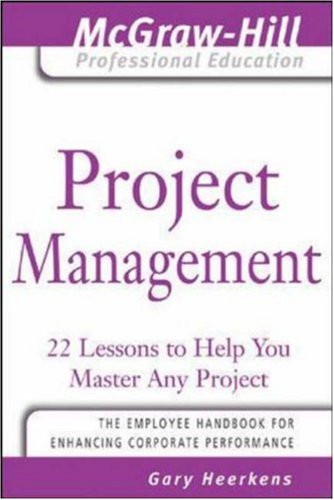
Project Management: 24 Lessons to Help You Master Any Project - PDF
نویسندگان: خلاصه: Project Management reviews the steps in organizing and managing projects, from how to build a realistic schedule to how to measure both success and failure. Project Management discusses team building, timing, the planning process, estimating project costs, managing project interfaces, risk management, and more.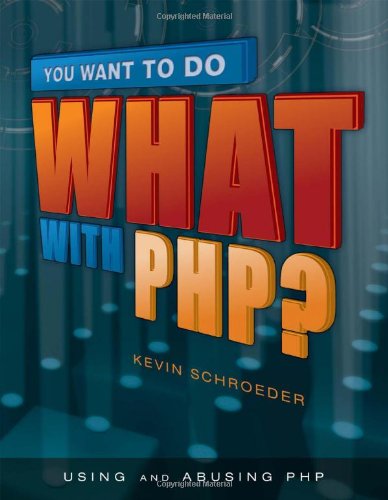
You Want to Do What with PHP? - PDF
نویسندگان: خلاصه: A creative look at the fundamentals of PHP programming, this manual shows practical but atypical examples of PHP code. Theories, considerations, and varying options--such as binary protocols, character encoding or scaling PHP applications with messaging--are presented as new approaches to solving problems. Taking into consideration operating system level options, this programming reference goes beyond the basics to offer more advanced and innovative options for building PHP applications.
You Be the Judge: 20 True Crimes and Cases to Solve - Original PDF
نویسندگان: خلاصه: This lively, original book is likely to be a milestone in America's ongoing fascination with the drama of trials and justice. - Fred Graham, former chief anchor Court TV Have you ever had the chance to decide the fate of another person? What would you do? In the real-life cases presented to you in this book, you will be the judge and the jury - making the ultimate decision between right and wrong. Can you convict an abused woman who kills her husband because she is afraid he will beat her again? What about a man who helps his best friend commit suicide to avoid a painful death? Would you allow a feeding tube to be removed from a 92-year-old coma victim so she can die peacefully? Put yourself in the place of the judge or one of the jurors as you read the details of each case. Many of these trials raise questions that go beyond the law to the heart of one's own moral code. At the end of each case, after rendering your own verdict, you can read on to find out what really happened. THE CASE IS NOW IN YOUR HANDS.
The face you were afraid to see: essays on the Indian economy - PDF
نویسندگان: خلاصه: Economists talk of prices rising or falling in response to excess of demand or supply in the market, but are at a loss to explain who sets the price in a market of many players where no one has the power to dictate price. They then have to invent the invisible hand of a mythical god called price mechanism to create the image of the market operating as a self-regulating system. While unregulated free trade amounts to groping in the dark, the situation is far worse when the prices and other rules of the market are set by the state on behalf of large corporations as has happened in globalizing in the name of economic development.
I Am America (And So Can You!) - PDF
نویسندگان: خلاصه: Congratulations--just by looking at this webpage, you became 25% more patriotic.From Stephen Colbert, the host of television's highest-rated punditry show The Colbert Report, comes the book to fill the other 23? hours of your day. I Am America (And So Can You!) contains all of the opinions that Stephen doesn't have time to shoehorn into his nightly broadcast.Dictated directly into a microcassette recorder over a three-day weekend, this book contains Stephen's most deeply held knee-jerk beliefs on The American Family, Race, Religion, Sex, Sports, and many more topics, conveniently arranged in chapter form.Always controversial and outspoken, Stephen addresses why Hollywood is destroying America by inches, why evolution is a fraud, and why the elderly should be harnessed to millstones. You may not agree with everything Stephen says, but at the very least, you'll understand that your differing opinion is wrong.I Am America (And So Can You!) showcases Stephen Colbert at his most eloquent and impassioned. He is an unrelenting fighter for the soul of America, and in this book he fights the good fight for the traditional values that have served this country so well for so long.Please buy this book before you leave the store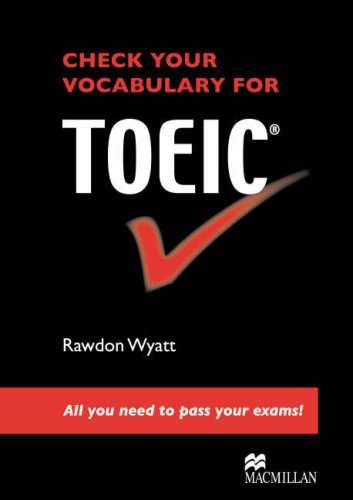
Check your vocabulary for TOEIC®: all you need to pass your exams ! - PDF
نویسندگان: خلاصه: Filled with illuminating questions and answers, this comprehensive workbook provides exercises to help teach and build vocabulary related to the TOEIC examination. For nearly three decades, the Test Of English for International Communication (TOEIC) has been used to measure the ability of nonnative English speakers to use English in occupational situations. Through the puzzles, examples, and word games in this guide, students can get to know words in different contexts and become familiar with language use in the workplace. The material covered also includes grammar, comprehension, and spelling to fully prepare test takers for the TOEIC.
You Can Cook - Original PDF
نویسندگان: خلاصه: One of the great pleasures in life is eating and if you can cook, you will always be able to conjure up a delicious meal even if you only have a few ingredients. So I’m going to show you how easy it is to master basic cooking skills, prepare tasty meals, and have fun along the way. One thing is for sure—everyone loves a good cook! Bon appetit.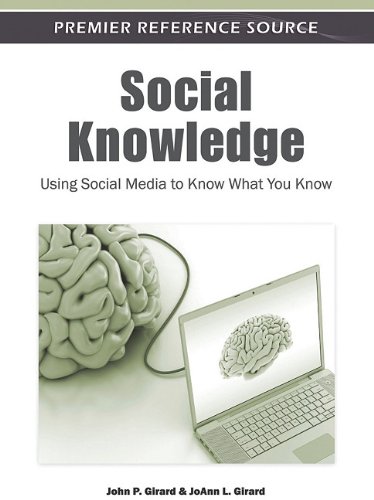
Social Knowledge: Using Social Media to Know What You Know (Premier Reference Source) - PDF
نویسندگان: خلاصه: For the past two decades, executives have struggled to develop effective ways of sharing what their organizations know. Organizational leaders are now seeking ways to share knowledge with both internal and external stakeholders driven by concerns such as downsizing, the impending retirement of baby boomers, terrorism, and a host of other organizational challenges.Social Knowledge: Using Social Media to Know What You Know aims to provide relevant theoretical frameworks, latest empirical research findings, and practitioners best practices in the area. The book is multidisciplinary in nature and considers a wide range of topics, each of which is related to social knowledge. It is written for professionals who want to improve their understanding of the strategic role of social knowledge in business, government, or non-profit sectors.
How to Get What You Want...: Without Having to Ask - PDF
نویسندگان: خلاصه: Tired of not getting what you want? Don't know how to ask for it? Best-selling author Richard Templar brings his inimitable blend of originality, imagination, wisdom, and straight talk to the challenges of negotiation, persuasion, and influence. Templar offers up 100 clever, simple, pain-free ways to get people to happily say "yes" to you! Templar is the world-renowned author of best-sellers like The Rules of Money and The Rules of Life. In this new book, he offers practical principles and strategies covering a wide range of situations, both at work and beyond. You'll learn how to get what you want without saying a word… and, for those rare occasions when you have to ask, you'll find the techniques and words that'll get the job done. Every solution gets its own "bite-size" two-page spread, making this book incredibly easy to read--and use. Some people seem to get what they want consistently and effortlessly. It's not luck: it's knowing how. Read this fresh, funny, and relentlessly practical book, and you'll know how, too.
Linux Kernel Crash Book Everything you need to know - Original PDF
نویسندگان: خلاصه: www.dedoimedo.com all rights reservedPart IIKdump10 IntroductionLinux kernel is a rather robust entity. It is stable and fault-tolerable and usually does notsuffer irrecoverable errors that crash the entire system and require a reboot to restoreto normal production. Nevertheless, these kinds of problems do occur from time totime. They are known as kernel crashes and are of utmost interest and importance toadministrators in charge of these systems. Being able to detect the crashes, collect themand analyze them provides the system expert with a powerful tool in finding the rootcause to crashes and possibly solving critical bugs.In the previous part (I), we have learned how to setup, configure and use Linux KernelCrash Dump (LKCD) utility. However, LKCD, being an older project, exhibited severalmajor limitations in its functionality: LKCD was unable to save memory dumps to localRAID (md) devices and its network capability was restricted to sending memory coresto dedicated LKCD netdump servers only on the same subnet, provided the cores wereunder 4GB in size. Memory cores exceeding the 32-bit size barrier were corrupt upontransfer and thus unavailable for analysis. The same-subnet also proved impractical forlarge-scale operations with thousands of machines.Kdump is a much more flexible tool, with extended network-aware capabilities. It aimsto replace LKCD, while providing better scalability. Indeed, Kdump supports networkdumping to a range of devices, including local disks, but also NFS areas, CIFS sharesor FTP and SSH servers. This makes if far more attractive for deployment in largeenvironments, without restricting operations to a single server per subnet.In this part of the book, we will learn how to setup and configure Kdump for memorycore dumping to local disks and network shares. We will begin with a short overview ofbasic Kdump functionality and terminology. Next, we will review the kernel compilationparameters required to use Kdump. After that, we will go through the configuration fileand study each directive separately, step by step. We will also edit the GRUB menuas a part of the Kdump setup. Lastly, we will demonstrate the Kdump functionality,including manually triggering kernel crashes and dumping memory cores to local andnetwork devices. In the Appendix section (V), you will also be able to learn aboutchanges and new functionality added in later versions of Kdump, plus specific setups foropenSUSE and CentOSآیا کتاب مورد نظر هنوز بر روی سایت قرار نگرفته است؟ جای نگرانی نیست! کافی است بر روی گزینه سفارش کتاب کلیک کرده و درخواست خود را ثبت کنید. در کمتر از چند ساعت کتاب شما را آماده خواهیم کرد.