موضوعات
آموزش و پرورش
ادبیات و زبان
پزشکی، دندانپزشکی و داروسازی
تاریخ و جغرافیا
داستان و رمان
دیگر
دین و فلسفه
روانشناسی
ریاضیات و آمار
سلامتی، تناسب اندام و رژیم غذایی
شیمی و پلیمر
علوم اجتماعی و حقوق
علوم زیستی و بیوتکنولوژی
فیزیک و نجوم
کامپیوتر و اینترنت
کتابهای کودکان و داستان
کسب و کار و اقتصاد
کشاورزی و دامپزشکی و غذا
معماری
مهندسی و فناوری
هنر و تئاتر
محصولات

The Chile Reader: History, Culture, Politics - Original PDF
نویسندگان: خلاصه: The Chile Reader makes available a rich variety of documents spanning more than five hundred years of Chilean history. Most of the selections are by Chileans; many have never before appeared in English. The history of Chile is rendered from diverse perspectives, including those of Mapuche Indians and Spanish colonists, peasants and aristocrats, feminists and military strongmen, entrepreneurs and workers, and priests and poets. Among the many selections are interviews, travel diaries, letters, diplomatic cables, cartoons, photographs, and song lyrics. Texts and images, each introduced by the editors, provide insights into the ways that Chile's unique geography has shaped its national identity, the country's unusually violent colonial history, and the stable but autocratic republic that emerged after independence from Spain. They shed light on Chile's role in the world economy, the social impact of economic modernization, and the enduring problems of deep inequality. The Reader also covers Chile's bold experiments with reform and revolution, its subsequent descent into one of Latin America's most ruthless Cold War dictatorships, and its much-admired transition to democracy and a market economy in the years since dictatorship.
Realism and Christian Faith: God, Grammar, and Meaning - Original PDF
نویسندگان: خلاصه: The question of realism (that is, whether God exists independently of human beings) is central to contemporary theology and church life. It is also an important topic in the philosophy of religion. This book discusses the relationship between realism and Christian faith. It uses the resources of philosophy and theology to argue for a conception of realism in which God's independent reality is shown through Christian life practices.
Althaus-Reid - The Queer God - Original PDF
نویسندگان: خلاصه: There are those who go to gay bars and salsa clubs with rosaries in their pockets, and who make camp chapels of their living rooms. Others enter churches with love letters hidden in their bags, because their need for God and their need for love refuse to fit into different compartments. But what goodness and righteousness can prevail if you are in love with someone whom you are ecclesiastically not supposed to love? Where is God in a salsa bar?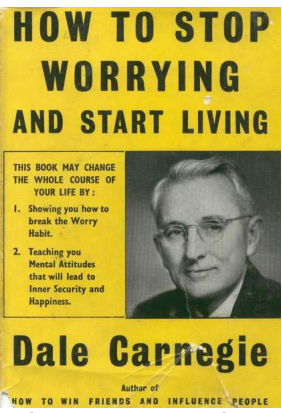
How To Stop Worrying And Start Living - PDF
نویسندگان: خلاصه: How to Stop Worrying and Start Living by Dale Carnegie In this time-tested book, Dale Carnegie shows us how to conquer worry and anxiety. Via engaging stories that reveal helpful lessons and practical frameworks, Carnegie arms you with an array of tools that will help you start living more fully and without the harmful effects of worry. Even though this book was written in 1936, the deceptively simple lessons from this book will help you better navigate the noise of the modern era. Key Takeaways Focus on today “Our main business is not to see what lies dimly at a distance, but to do what lies clearly at hand.” – Thomas Carlyle Resurfaced using Readwise Thinking about what needs to be done in the future can lead to overwhelm and inaction. But if you focus on what you need to accomplish today, it’s much more doable. It will help you create the future you want, one day at a time. A formula to follow Frameworks for dealing with worry can be helpful, especially since worry destroys our ability to concentrate. Without being able to concentrate, not only do we feel worse, but we’re less effective. If you have a situation where you’re worrying about failing, follow these three steps. Step 1: Analyze a situation causing you worry to determine the worst possible scenario if you fail. Step 2: Accept the worst possible case scenario, if it is to happen. Step 3: Focus on trying to improve the situation so that you end up with a better outcome than worst case. Why you should care about worry “The greatest mistake physicians make is that they attempt to cure the body without attempting to cure the mind; yet the mind and body are one and should not be treated separately.” – Plato Resurfaced using Readwise Worry isn’t just something that makes you feel a little worse or makes it less likely that you can concentrate. It’s something that can lead to seriously adverse health effects for your mind, body, and soul. These negative effects can cause much worse situations with your health than whatever it is that you’re worrying about. In short, worry is not worth the physical toll it can take on your body. Techniques for Analyzing Worry Understand the situation Whenever you’re worrying about something, you need to do three things: Get the facts. Analyze the facts. Arrive at a decision – and act on that decision. One simple framework for figuring this all out is to follow four lines of inquiry. Write down what you’re worrying about (What am I worrying about?) Think about what you can do about it (What can I do about it?) Decide on what to do (What are you going to do about it?) Start carrying out the decision (When am I going to start doing it?) This framework helps you get out of your head. It allows you to quickly understand what’s going on, what you can do about it, and to make a decision and start doing what you’ve decided. Solving business problems Similar to the framework above for analyzing any worry, you can use the following four questions to solve most of your worry about any business situation. What’s the problem? What is the cause of the problem? What are all possible solutions to the problem? What solution do you suggest? Whenever you’re struggling in business, go through this framework. You’ll feel better and be clear on what you’re going to do to start actually solving the problem, instead of simply worrying about it. Breaking the Worry Habit Use busyness To conquer worry, you need to understand that worry is a habit. That means it’s a habit you can break. One technique for breaking the worry habit is to keep yourself busy. When you’re really busy or taken up by action, it’s hard to worry. There’s a balance here – you don’t want to mask underlying problems by just keeping yourself moving all the time. But filling up your days can make it easier to not worry. Don’t sweat the small stuff or the improbable “Trivialities are at the bottom of most marital unhappiness” – Joseph Sabath Resurfaced using Readwise Don’t let the little annoyances or problems in life cause you too much worry. You can’t eliminate everything that’s unpleasant, and the energy expended on worrying about these problems prevents you from focusing on what’s important. On a related note, don’t get too concerned about things that don’t have a high probability of happening. Most surfers fear sharks, but how likely is it that they’ll get killed by one? Not that likely. Try to ask yourself honestly, “How likely is it that the thing I’m worrying about will occur?” Accept the situation “God grant me the serenityTo accept the things I cannot change,The courage to change the things I can;And the wisdom to know the difference.” Resurfaced using Readwise We often find ourselves in situations we don’t want to be in. Focus on what you can do about the situation, rather than on the existence of the source of worry. Know your values “Yes, I honestly believe that this is one of the greatest secrets to true peace of mind – a decent set of values. And I believe we could annihilate fifty per cent of all our worries at once if we would develop a a sort of private gold standard – a gold standard of what things are worth to us in terms of our lives.” Resurfaced using Readwise Get clear on what you value, and live by that standard. Hold others to your standards as well. If you have a friend who’s always an hour late, say that you’re willing to wait up to 10 minutes, but after that, you’re leaving. That’s a standard that you’ve communicated, and the person can choose to meet it or not. Figure out what you really care about in life and what you’re willing to give up to get it. You may find that you’re expending a lot of energy on something you don’t even want. Cut it if it doesn’t align with your values. Cultivating a Mental Attitude that Fosters Peace “Our life is what our thoughts make it.” – Marcus Aurelius Resurfaced using Readwise Just for today A beautiful daily program for you to aspire to follow, originally written by Sibyl F. Partridge. Just for today I will be happy. This assumes that what Abraham Lincoln said is true, that “most folks are about as happy as they make up their minds to be.” Happiness is from within; it is not a matter of externals. Just for today I will try to adjust myself to what is, and not try to adjust everything to my own desires. I will take my family, my business, and my luck as they come and fit myself to them. Just for today I will take care of my body. I will exercise it, care for it, nourish it, not abuse it nor neglect it, so that it will be a perfect machine for my bidding. Just for today I will try to strengthen my mind. I will learn something useful. I will not be a mental loafer. I will read something that requires effort, thought and concentration. Just for today I will exercise my soul in three ways; I will do somebody a good turn and not get found out. I will do at least two things I don’t want to do, as William James suggests, just for exercise. Just for today I will be agreeable. I will look as well as I can, dress as becomingly as possible, talk low, act courteously, be liberal with praise, criticize not at all, nor find fault with anything and not try to regulate nor improve anyone. Just for today I will try to live through this day only, not tackle my whole life problem at once. I can do things for twelve hours that would appall me if I had to keep them up for a lifetime. Just for today I will have a program. I will write down what I expect to do every hour. I may not follow it exactly, but I will have it. It will eliminate two pests, hurrying and indecision. Just for today I will have a quiet half-hour all by myself and relax. In this half-hour sometimes I will think of God, so as to get a little more perspective into my life. Just for today I will be unafraid, especially I will not be afraid to be happy, to enjoy what is beautiful, to love, and to believe that those I love, love me. Avoid trying to get even “If selfish people try to take advantage of you, cross them off your list, but don’t try to get even. When you try to get even, you hurt yourself more than you hurt the other fellow.” – Milwaukee police department No one can disturb your mind if you do not let them. Don’t waste time thinking about people you don’t like. Don’t worry about ingratitude Avoid getting upset about people not showing the level of gratitude that you expect. It’s human nature for people to forget to be grateful. So if you expect that they will be, you’ll simply be disappointed. If you want to be giving to people or the world, then do it. Don’t worry about that being recognized. If it is, great. You may feel good about getting that recognition, but don’t feel bad if you don’t receive it. 90% right, 10% wrong. “Two men looked out from prison bars, One saw the mud, the other saw the stars.” Resurfaced using Readwise Most of the time, about 90% of our lives are going well, while 10% are not going as we’d like. We focus and obsess about that 10%, even if it’s about things that we don’t care very much about. The best way to start enjoying your life is to focus on what’s going well. You can always try to improve what’s not going well, but don’t make that the focus of your days. Be grateful for what’s going well and for what you don’t have. Help others If you’re feeling down, try to spend some time thinking about the world outside of yourself. Focus on other people and what drives them. Become interested in their stories. See if you can find small ways to help. Bringing joy to someone else often brings joy to you. Conquering Worry and Criticism “Man is not made to understand life, but to live it.” – Santayana Resurfaced using Readwise Consider religion and prayer Religion and prayer – or the acceptance of something not knowable and greater than yourself – is a good way to stop fretting about all of your troubles. While many modern day people are agnostic or atheist, shying away from the specifics of various religions, it’s important to remember that you can always accept that there is a piece of life that you’ll never fully understand. So even if you’re not religious, talk to yourself about your worries, about your joys, about your hopes and dreams. Ask the universe for help. You may feel better by just asking. No one kicks a dead dog “So when you are kicked and criticized, remember that it is often done because it gives the kicker a feeling of importance. It often means that you are accomplishing something and are worthy of attention.” Resurfaced using Readwise People don’t criticize others who aren’t doing anything. So if you’re receiving some criticism, it likely means that you’re doing something that’s at least worthy of attention. Don’t take criticism so personally You can’t control whether or not you receive negative feedback or unjust criticisms, but you can control how you allow these events to impact your mind. Learning not to get worked up when someone says something that isn’t positive is a core skill for dealing with a world in which you may get criticized for just and unjust reasons. Keep a “fool things I have done” list We all do stupid things. Some people learn from their mistakes and move on. Others obsess about the mistakes they’ve made and never let them go. What path sounds better? One way to begin learning from and accepting your mistakes is to keep a “fool things I have done” list. This list can be a simple recording of all the stupid things you’ve done in your life. You can add to the list over time and look back over the years to see how you’re improving. Keeping Fatigue at Bay “Fatigue often produces worry, or, at least, it makes you susceptible to worry.” Resurfaced using Readwise Rest and relax “I never stand up when I can sit down; and I never sit down when I can lie down.” – Henry Ford Resurfaced using Readwise Instead of grinding all day, take small breaks from your work. Do things you enjoy. Lay down. Go for a walk. Regularly take breaks to restore your energy, and you’ll be able to work longer during the day. Rest also includes finding ways to reduce the impact of your emotions on your energy levels. Feeling too many negative emotions can easily drain you. Anger, resentment, and so on are some of the most draining forces around. You could sit all down and do nothing, but if you’re angry and resentful, you’ll feel exhausted. There are different tactics that will work for you, but you have to find ways to relax. “Relaxation is the absence of all tension and effort.” Do whatever it is that relaxes you. This could be a few deep breaths. It could be keeping a journal when you’re upset. It could be laying on the floor for a few minutes when you’re tired. It could be sitting more comfortably in your chair. Do your best to avoid unnecessary strain as you go about your days, and you’ll feel better throughout them. Avoid boredom Boredom is often exhausting. A good way to understand this concept is to imagine times when you’re doing something interesting or exciting. Are you tired or fatigued when you’re really engaged with your work? Probably not. So find activities that get you excited, and you’ll naturally have more energy. Dealing with insomnia Sleep is obviously a critical factor in feeling good. But many people, especially as they develop insomnia, begin to worry constantly about not getting enough sleep. This worry fuels the insomnia, and it makes people even more exhausted. So if you can’t sleep well, by all means, try different tactics to get better sleep. But if you don’t get much sleep or are struggling, don’t worry about your lack of sleep. The worry will make you far more exhausted than the “not sleeping” part. It compounds the problem, rather than fixing it. If you want more book summaries like this... Find more great book recommendations. Discover lists with hundreds of the best books. Check out Foundations. Foundations is a searchable digital notebook built for curious, lifelong learners. It will help you accelerate your learning, solve hard problems, and save time by giving you access to a growing digital collection of insights from timeless books.
Servant-Leadership, Feminism, and Gender Well-Being: How Leaders Transcend Global Inequities through Hope, Unity, and Love - Original PDF
نویسندگان: خلاصه: In a world where leaders and organizations face global pandemics and power conflicts, gender dualism still prevails, and gender stereotyping and the glass ceiling continue to affect humanity's conceptualizations of leadership. How can we integrate the lost aspects of ourselves, often socialized by gender, so as to recover wholeness? How can we discern and develop the feminine and masculine within every leader? Servant-Leadership, Feminism, and Gender Well-Being offers grace, strength, and hope by providing evidence of servant-leaders crossing gender boundaries and integrating gendered traits and behaviors. Feminist ways of knowing, honoring both feminine and masculine giftedness, deepen the holistic foundation of servant-leadership. By integrating female perspectives with male perspectives, a paradigm shift in leadership theory through avenues inherent to servant-leadership can move organizations from hierarchy-driven, rules-based, and authoritative models to value-driven, follower-oriented, and participative models.
Dread and Hope: Christian Eschatology and Pop Culture - Original PDF
نویسندگان: خلاصه: Description: Christianity was born in the midst of great expectation and fear about the world’s future. The existing Jewish paradigm of the coming Messiah, his antithesis, and the initiation of the coming age set the stage for Christian beliefs about the end of the current age. However, the unexpected death and resurrection of Jesus caused that paradigm to be reformed within the burgeoning Christian faith, reshaping hopes, and reworking old patterns. Dread and Hope explores the ways in which those old paradigms were challenged by Jesus’s death and resurrection, how the resulting eschatological landscape was understood within Christianity, and how modern popular culture has consumed and modified various components of Christian Hope. Joshua Wise examines how the central Christian eschatological themes such as the Antichrist, the Great Persecution, Heaven, and Hell have both been transformed and preserved in novels, television, films, and video games. Drawing on works such as 1984, Diablo, The Stand, What Dreams May Come, and the Fallout series, Dread and Hope considers how the human fears and desires shaped by Christian beliefs are expressed in popular culture.
Medical Ethics A Very Short Introduction Tony Hope - Original PDF
نویسندگان: خلاصه: The fox represents those who pursue many ends, often unrelated and even contradictory, connected, if at all, only in some de facto way, . . . [who] lead lives, perform acts, and entertain ideas that are cen- trifugal rather than centripetal . . . seizing upon the essence of a vast variety of experiences . . . without . . . seeking to fit them into . . . any one unchanging, all-embracing, . . . unitary inner vision. Berlin gives as examples of hedgehogs: Dante, Plato, Dostoevsky, Hegel, Proust, amongst others. He gives as examples of foxes: Shakespeare, Herodotus, Aristotle, Montaigne, and Joyce. Berlin goes on to argue that Tolstoy was a fox by nature but believed in being a hedgehog. 4 Medical Ethics 2. Are you a hedgehog or a fox? I am a fox, or at least would like to be. I admire the intellectual rigour of those who try to produce a unitary vision, but I prefer the rich, contradictory, and sometimes chaotic visions of Berlin’s foxes. I do not, in this book, attempt to approach the various problems I discuss from one single moral theory. Each chapter considers an issue on which I argue for a particular position, using whatever methods of argument seem to me to be the most relevant. I have covered different areas in different chapters: genetics, modern reproductive technologies, resource allocation, mental health, medical research, and so on; and have looked at one issue in each of these areas. At the end of the book I guide the reader to other issues and further reading. The one perspective that is common to all the chapters is the central importance of reasoning and reasonableness. I believe that medical ethics is essentially a rational subject: that is, it is all about giving reasons for the view that you take, and being prepared to change your views on the basis of reasons. That is why one chapter, in the middle of the book, is a reflection on various tools of rational argument. But although I believe in the central importance of reasons and evidence, even here the fox in me sounds a note of caution. Clear thinking, and high standards of rationality, are not enough. We need to develop our hearts as well as our minds. Consistency and moral enthusiasm can lead to bad acts and wrong decisions if pursued without the right sensitivities. The novelist, Zadie Smith, has written: There is no bigger crime, in the English comic novel, than thinking you are right. The lesson of the comic novel is that our moral enthusiasms make us inflexible, one-dimensional, flat. This is a lesson we need to take into any area of practical ethics, including medical ethics. What better place to start this tour of medical ethics than at the end, with the thorny issue of euthanasia? 6 Medical Ethics Chapter 2 Euthanasia: good medical practice, or murder? Good deeds do not require long statements; but when evil is done the whole art of oratory is employed as a screen for it. (Thucydides) The practice of euthanasia contradicts one of the oldest and most venerated of moral injunctions: ‘Thou shalt not kill’. The practice of euthanasia, under some circumstances, is morally required by the two most widely regarded principles that guide medical practice: respect for patient autonomy and promoting patient’s best interests. In the Netherlands and Belgium active euthanasia may be carried out within the law. Outline of the requirements in order for active euthanasia to be legal in the Netherlands 1. The patient must face a future of unbearable, interminable suffering. 2. The request to die must be voluntary and well-considered. 3. The doctor and patient must be convinced there is no other solution. 4. A second medical opinion must be obtained and life must be ended in a medically appropriate way.
Killing Hope_ US Military and CIA Interventions Since World War II. Part 1-Zed Books Ltd (2003) - Original PDF
نویسندگان: خلاصه: Introduction A Brief History of the Cold War and Anti-communism Our fear that communism might someday take over most of the world blinds us to the fact that anti- communism already has. —Michael Parenti1 It was in the early days of the fighting in Vietnam that a Vietcong officer said to his American prisoner: "You were our heroes after the War. We read American books and saw American films, and a common phrase in those days was "to be as rich and as wise as an American". What happened?"2 An American might have been asked something similar by a Guatemalan, an Indonesian or a Cuban during the ten years previous, or by a Uruguayan, a Chilean or a Greek in the decade subsequent. The remarkable international goodwill and credibility enjoyed by the United States at the close of the Second World War was dissipated country-by-country, intervention-by-intervention. The opportunity to build the war- ravaged world anew, to lay the foundations for peace, prosperity and justice, collapsed under the awful weight of anti-communism. The weight had been accumulating for some time; indeed, since Day One of the Russian Revolution. By the summer of 1918 some 13,000 American troops could be found in the newly-born Union of Soviet Socialist Republics. Two years and thousands of casualties later, the American troops left, having failed in their mission to "strangle at its birth" the Bolshevik state, as Winston Churchill put it.3 The young Churchill was Great Britain's Minister for War and Air during this period. Increasingly, it was he who directed the invasion of the Soviet Union by the Allies (Great Britain, the US, France, Japan and several other nations) on the side of the counter-revolutionary "White Army". Years later, Churchill the historian was to record his views of this singular affair for posterity: Were they [the Allies] at war with Soviet Russia? Certainly not; but they shot Soviet Russians at sight. They stood as invaders on Russian soil. They armed the enemies of the Soviet Government. They blockaded its ports, and sunk its battleships. They earnestly desired and schemed its downfall. But war—shocking! Interference—shame! It was, they repeated, a matter of indifference to them how Russians settled their own internal affairs. They were impartial—Bang!4 What was there about this Bolshevik Revolution that so alarmed the most powerful nations in the world? What drove them to invade a land whose soldiers had recently fought alongside them for over three years and suffered more casualties than any other country on either side of the World War? The Bolsheviks had had the audacity to make a separate peace with Germany in order to take leave of a war they regarded as imperialist and not in any way their war, and to try and rebuild a terribly weary and devastated Russia. But the Bolsheviks had displayed the far greater audacity of overthrowing a capitalist- feudal system and proclaiming the first socialist state in the history of the world. This was uppityness writ incredibly large. This was the crime the Allies had to punish, the virus which had to be eradicated lest it spread to their own people. 6 The invasion did not achieve its immediate purpose, but its consequences were nonetheless profound and persist to the present day. Professor D.F. Fleming, the Vanderbilt University historian of the Cold War, has noted: For the American people the cosmic tragedy of the interventions in Russia does not exist, or it was an unimportant incident long forgotten. But for the Soviet peoples and their leaders the period was a time of endless killing, of looting and rapine, of plague and famine, of measureless suffering for scores of millions— an experience burned into the very soul of a nation, not to be forgotten for many generations, if ever. Also for many years the harsh Soviet regimentations could all be justified by fear that the capitalist powers would be back to finish the job. It is not strange that in his address in New York, September 17, 1959, Premier Khrushchev should remind us of the interventions, "the time you sent your troops to quell the revolution", as he put it.5 In what could be taken as a portent of superpower insensitivity, a 1920 Pentagon report on the intervention reads: "This expedition affords one of the finest examples in history of honorable, unselfish dealings ... under very difficult circumstances to be helpful to a people struggling to achieve a new liberty."6 History does not tell us what a Soviet Union, allowed to develop in a "normal" way of its own choosing, would look like today. We do know, however, the nature of a Soviet Union attacked in its cradle, raised alone in an extremely hostile world, and, when it managed to survive to adulthood, overrun by the Nazi war machine with the blessings of the Western powers. The resulting insecurities and fears have inevitably led to deformities of character not unlike that found in an individual raised in a similar life- threatening manner. We in the West are never allowed to forget the political shortcomings (real and bogus) of the Soviet Union; at the same time we are never reminded of the history which lies behind it. The anti-communist propaganda campaign began even earlier than the military intervention. Before the year 1918 was over, expressions in the vein of "Red Peril", "the Bolshevik assault on civilization", and "menace to world by Reds is seen" had become commonplace in the pages of the New York Times. During February and March 1919, a US Senate Judiciary Subcommittee held heatings before which many "Bolshevik horror stories" were presented. The character of some of the testimony can be gauged by the headline in the usually sedate Times of 12 February 1919: DESCRIBE HORRORS UNDER RED RULE. R.E. SIMONS AND W.W. WELSH TELL SENATORS OF BRUTALITIES OF BOLSHEV1KI— STRIP WOMEN IN STREETS—PEOPLE OF EVERY CLASS EXCEPT THE SCUM SUBJECTED TO VIOLENCE BY MOBS
168hours : you have more time than y ou think - PDF
نویسندگان: خلاصه: Keep track of your time, hour by hour, for a week or two so you can see how you’re actually spending your time. One woman called it “one mortifying experience” when she realized how much time she was actually spending checking Facebook while at work and how often it derailed her from getting actual things done. Figure out what your core competencies are and spend your time doing those. What are you best at? Writing? Cooking? Nurturing relationships with our significant others and children (hopefully no one is better at that than you are . . . ). Maximize your time doing those things and minimize how much time you spend doing other things. Stop doing pretend work. Lots of us spend a lot of time being busy but doing things that aren’t actually that valuable. Are you spending a lot of time doing meaningless housework, or setting up elaborate organizational systems or having long conference calls that could be finished in ten minutes if you got right on task? Whether this is in your home life or your work life, you could probably get the “have to” things done a lot faster and more efficiently than you do. I basically always spend the entire two hours of nap and quiet time at my desk, but I often end up wasting so much time trying to multi-task between screens, doing fairly unimportant busy work (spending the last $15 on a gift card or trying to clear my inbox) that I end up having to work in the evenings too and then I feel like I spend all my time “working.” Since I finished this book, I’ve made a list each day of what I needed to get done and then I just put my head down and work, not getting distracted by the other maybe-should be things that don’t matter nearly so much or could get done later at a less focused time. Decide what you can off-load. She’s an enormous fan of outsourcing as much as possible, whether it’s laundry, grocery shopping, house cleaning, lawn care, etc. She argues that Pick 2-4 hobbies or activities you want in your life. You may be saying you want to sew more or read more books or volunteer with an organization you care about or run a marathon, but then you end up squandering your free time doing really low-investment things like watching TV (which is draining and not nearly as fun as you think it is). Figure out what you want to do and then when you can fit them in and make the happen. You’ll be rejuvenated by doing the things you’ve always meant to do and the lure of the Internet and TV will be reduced. She also says one of your hobbies really should/must be exercise. When you consider doing 30 minutes, 5 days a week, that’s only 3 hours out of your entire 168 a week. You can probably (almost certainly) fit it in. I love that she doesn’t argue that it’s easy to make it happen. It takes a lot of planning and discipline to make your life look like you want it to, instead of just piddling your life away running errands, checking email, and watching TV. And she has such an engaging writing style – I think she’s somewhat similar to Gretchen Rubin, with a lot of anecdotes, discussions about what she does well herself and also where she falls short, and an ability to make all sorts of data and statistics really engaging. There are certainly things I don’t agree with her on. I’m not willing to let my housekeeping slip to barely passable to get back a small chunk of time; I’m not the world’s best housekeeper by any means and the time I spend cleaning is fairly minimal, but I don’t keep things tidy because I care what other people think – I keep the clutter to a minimum because it makes ME crazy when there are piles of things on every surface. And she doesn’t seem to enjoy cooking like I do – yes, I could probably reduce the time I spend cooking by making easier meals or doing grocery delivery, but I’m not looking to outsource those things and I like to cook. And having been in schools, I totally disagree with her hypothesis that school lunches are way improved from days of old and that it’s well-worth having your kids just buy a lunch for a few bucks (also, having just read Slim by Design, I know that people who pack their lunches tend to eat more healthily than those who buy because you pack your lunch when you’re usually not terribly hungry (after dinner or breakfast) and so you make fairly good choices, whereas if you buy lunch when you’re starving, guess what you buy? Not salad).
Rich Dad Poor Dad - Original PDF
نویسندگان: خلاصه: “Life pushes all of us around. Some people give up and others fight. A few learn the lesson and move on. They welcome life pushing them around.” “A job is really a short-term solution to a long-term problem.” “It’s fear that keeps most people working at a job: the fear of not paying the bills, the fear of being fired, the fear of not having enough money, and the fear of starting over.آیا کتاب مورد نظر هنوز بر روی سایت قرار نگرفته است؟ جای نگرانی نیست! کافی است بر روی گزینه سفارش کتاب کلیک کرده و درخواست خود را ثبت کنید. در کمتر از چند ساعت کتاب شما را آماده خواهیم کرد.