محصولات
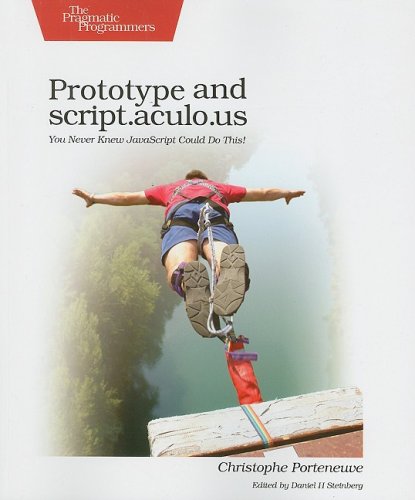
Prototype and script.aculo.us: you never knew JavaScript could do this! - Original PDF
نویسندگان: Christophe Porteneuve خلاصه: Tired of getting swamped in the nitty-gritty of cross-browser, Web 2.0-grade JavaScript? Get back in the game with Prototype and script.aculo.us, two extremely popular JavaScript libraries, that make it a walk in the park. Be it AJAX, drag and drop, auto-completion, advanced visual effects, or many other great features, all you need is write one or two lines of script that look so good they could almost pass for Ruby code! Web applications are getting richer and richer, with more interaction baked in every day
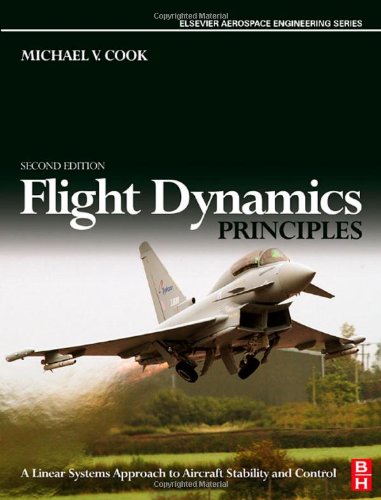
Flight Dynamics Principles, Second Edition: A Linear Systems Approach to Aircraft Stability and Control (6th Edition) - Original PDF
نویسندگان: Michael V. Cook خلاصه: The study of flight dynamics requires a thorough understanding of the theory of the stability and control of aircraft, an appreciation of flight control systems and a comprehensive grounding in the theory of automatic control. Flight Dynamics provides all three in an accessible and student focussed text. Written for those coming to the subject for the first time the book is suitable as a complete first course text
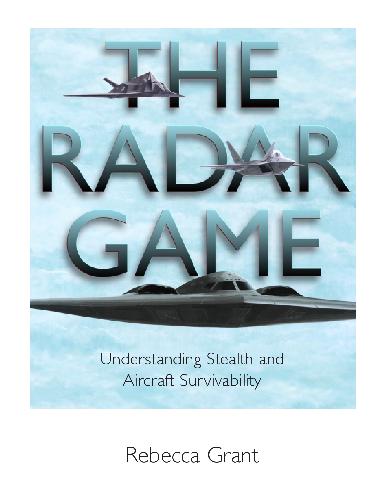
The radar game: Understanding stealth and aircraft survivability - Original PDF
نویسندگان: Rebecca Grant خلاصه: Precision weapons and rapid targeting information mean little if aircraft are unable to survive engagements with enemy air defenses. In addition to costing the lives of pilots, high levels of attrition can ultimately affect the outcome of the theater campaign. One of the most critical factors in determining the success of an air operation is survivability. In the last several decades, the term survivability has been associated with analysis of how low observables and electronic countermeasures can help aircraft carry out their missions in hostile airspace. Discussions of survivability immediately bring to mind stealth aircraft, radar jamming and debates about the latest SA-10 threats. Yet the quest for survivability is not a fad of the Cold War or the high-technology 1990s. Its roots, and its importance to combined arms operations, go back to the first use of military aircraft in World War I.
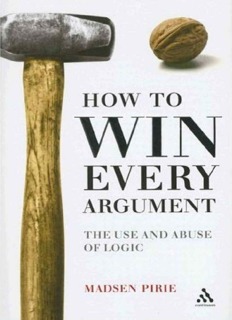
How to Win Every  Argument - PDF
How to Win Every Argument - PDF
نویسندگان: Madsen Pirie خلاصه: .
Introduction to Communication Electronic Warfare Systems - Original PDF
نویسندگان: Richard Poisel خلاصه: Comprehensive engineering-level resource provides you with an excellent introduction to electronic warfare (EW) for communication systems. You are provided with a complete understanding of how modern direction finders for communication signals work, along with their limitations.
Play 1 e4 e5: - PDF
Play 1 e4 e5: - PDF
نویسندگان: Nigel Davies خلاصه: .
The Complete Guide to Chess (4th Edition) - PDF
نویسندگان: Logan Donovan خلاصه: .
Coloniality of Power in Postcolonial Africa - Original PDF
نویسندگان: Sabelo J. Ndlovu-Gatsheni Council خلاصه: This lively book interrogates the African postcolonial condition with a focus on the thematics of liberation predicament and the long standing crisis of dependence (epistemological, cultural, economic, and political) created by colonialism and coloniality. A sophisticated deployment of historical, philosophical, and political knowledge in combination with the equi-primordial concepts of coloniality of power, coloniality of being, and coloniality of knowledge yields a comprehensive and truly refreshing understanding of African realities of subalternity. How global imperial designs and coloniality of power shaped the architecture of African social formations and disciplined the social forces towards a convoluted ëpostcolonial neocolonizedí paralysis dominated by myths of decolonization and illusions of freedom emerges poignantly in this important book. What distinguishes this book is its decolonial entry that enables a critical examination of the grammar of decolonization that is often wrongly conflated with that of emancipation; bold engagement with the intractable question of what and who is an African; systematic explication of the role of coloniality in sustaining Euro-American hegemony; and unmasking of how the ëpostcolonialí is interlocked with the ëneocolonialí paradoxically. It is within this context that the postcolonial African state emerges as a leviathan, and the ëpostcolonialí reality becomes a terrain of contradictions mediated by the logic of violence. No doubt, Sabelo Ndlovu-Gatsheniís handling of complex concepts and difficult questions of the day is remarkable, particularly the decoding and mixing of complex theoretical interventions from Africa and Latin America to enlighten the present, without losing historical perspicacity. To buttress the theoretical arguments, detailed empirical case studies of South Africa, Zimbabwe, DRC and Namibia completes this timely contribution to African Studies.
A Glossary of Literary Terms (10th Edition)- Original PDF
نویسندگان: M. H. ABRAMS خلاصه: First published fifty years ago, A GLOSSARY OF LITERARY TERMS remains an essential text for all serious students of literature. Now fully updated to reflect the latest scholarship on recent and rapidly evolving critical theories, the tenth edition contains a complete glossary of essential literary terms presented as a series of engaging essays that explore the terms, place them in context, and suggest related entries and additional reading. This indispensable, authoritative, and highly affordable reference covers terms useful in discussing literature and literary history, theory, and criticism. Perfect as a core text for introductory literary theory or as a supplement to any literature course, this classic work is an invaluable reference that students can continue to use throughout their academic and professional careers.
Thinking in bets making smarter decisions when you don’t have all the facts - PDF
نویسندگان: Annie Duke خلاصه: Professional poker player Annie Duke explores how we can all become better decision-makers in an uncertain and challenging world. She helps us understand how to disentangle the role of luck and skill in determining outcomes, ultimately helping us make better bets that lead to better outcomes and a better life. Get book on Amazon (Must Read) Access My Searchable Collection of 100+ Book Notes Key Takeaways Biases “Resulting”: Our tendency to equate the quality of a decision with the quality of its outcome. The prevents us from accurately assessing the quality of our decisions and the role of luck in the outcomes we achieve. Hindsight bias: Our tendency to see an outcome as inevitable after an outcome is known. It is the enemy of probabilistic thinking that prevents us from seeing the many other outcomes that could have occurred. Loss aversion: Losses hurt more than gains feel good. E.g., winning $100 at blackjack feels as good as losing $50 feels bad. The same applies to being right and wrong. Being wrong hurts more than being right feels good, unless you reframe your relationship with being wrong. Motivated reasoning: The beliefs we hold influence how we process new information. Blind-spot bias: People are better at recognizing biased reasoning in others but are blind to bias in themselves. Binary bias: Our tendency to seek clarity and closure by simplifying complex ideas and situations into two categories. What is thinking in bets? A bet is a decision about an uncertain future. Thus, most of the decisions in your life – switching jobs, choosing a partner, selecting your field of study, not doing something – are bets. They’re choices that you make in the face of an uncertain future. Thinking in bets begins with understanding that there are two forces that influence how our lives turn out: the quality of our decisions and luck. Being able to recognize the difference between these two forces is what thinking in bets is about. Once you can distinguish between the two, you can focus on improving the quality of your decisions, which will help you in the long run. Poker vs chess as a metaphor for life “Life is more like poker. You could make the smartest, most careful decision in firing a company president and still have it blow up in your face. You could run a red light and get through the intersection safely – or follow all the traffic rules and signals and end up in an accident. You could teach someone the rules of poker in five minutes, put them at a table with a world champion player, deal a hand (or several), and the novice could beat the champion. That could never happen in chess.” Life consists of skill, luck, and hidden information. While chess is a highly strategic game, it is unlike life in that it involves very little hidden information or luck. Poker, on the other hand, is a much better model for life. It requires skill, luck, and making decisions in the face of incomplete information. Whereas in chess if you make all of the right decisions, you’re likely to win, in poker, that’s not the case. What’s a good decision? “What makes a decision great is not that it has a great outcome. A great decision is the result of a good process, and that process must include an attempt to accurately represent our own state of knowledge. That state of knowledge, in turn, is some variation of ‘I’m not sure.’” Most of us evaluate the quality of our decisions based on the outcomes we achieve. But you can make a bad decision that turns out favorably and a good decision that turns our poorly. Equating outcomes solely with the quality of your decisions is one way in which we fail to improve our thinking and understand the world. Redefining right and wrong. “If we aren’t wrong just because things didn’t work out, then we aren’t right just because things worked out well.” Being wrong is not a bad thing. It’s an opportunity to learn and grow. It requires humility, an open mind, and a willingness to study our actions. Once you’re comfortable not being “right” or “wrong and living in the shades of gray, you start to learn more from your decisions and the outcomes you experience. This has an added emotional benefits of making the highs less high and the lows less low. Become a calibrator Calibrators use experience and information to more objectively update their beliefs to more accurately represent the world. The more accurate our beliefs, the better the foundation of the bets we make. The better the foundation of the bets we make, the more likely it is that we achieve favorable outcomes in the long run. Default believers “We form beliefs without vetting most of them, and maintain them even after receiving clear, corrective information.” Our default setting is to believe what we hear is true. While we think our processing of information looks like this: We hear something We think about it and vet it, determining whether it is true or false We form our belief It actually looks like this: We hear something We believe it to be true Only sometimes, later, if we have the time or the inclination, we think about it and vet it, determining whether it is, in fact, true or false This default believing behavior means that we hold beliefs that we’ve never actually validated. And because our beliefs shape how we see the world and interpret new information, we hold heavily biased ways of thinking based on beliefs we never tested. This is a dangerous place to be. Fake news amplifies our beliefs Fake news does not convince the other side that the world is one way. It takes people on one side and entrenches their beliefs even further. It plays to the views of our filter bubbles, and in doing so, it amplifies and makes our preexisting beliefs. Being smart makes it worse “It turns out the better you are with numbers, the better you are at spinning those numbers to conform to your beliefs.” Smart people are not more rational thinkers. In fact, they’re more prone to letting biases cloud their vision of the world. Because smart people are better at taking in constructing narratives that support their beliefs, they find more creative ways to rationalize and frame data to fit their preexisting points of view. It’s helps to admit you might be wrong “The more we recognize that we are betting on our beliefs (with our happiness, attention, health, money, time, or some other limited resource), the more we are likely to temper our statements, getting closer to the truth as we acknowledge the risk inherent in what we believe.” When we admit that we aren’t sure of something, we’re more open to updating our beliefs. When we’re more open to update our beliefs, we develop a more accurate view of the world over time. This allows us to improve the quality of our decisions, and in the long run, the outcomes we achieve. Luck vs. skill in outcomes In life we make bets. Those bets lead to outcomes. And ideally, those outcomes teach us something about how we can make better bets. When we analyze outcomes, we ask ourselves: “why did something happen the way it did?” To learn from these inquiries, we have to figure out the role of both luck and skill. Luck is everything that we can’t control – the actions of others, the weather, our genes. Skill is related to how clear our understanding of the world is and the quality of the decision we made based on that understanding. Because of the self-serving bias, we often fail in analyzing outcomes. When something good happens, we attribute it to our skills. We something bad happens, we attribute it to back luck. Basically, we take credit for the good and deflect blame for the bad. “We must believe in luck. For how else can we explain the success of those we don’t like.” – Jean Cocteau The opposite is true when we analyze the outcomes of others. We often attribute their good fortune to luck and their bad fortune to their decisions. These tendencies make us less likely to form an accurate understanding of why things happen in our lives, and so we often learn very little. But if we fight the self-serving bias and learn to better disentangle the role of skill and luck, we can slowly improve our decision over time. Comparing ourselves to others Our happiness is not always related to our objective conditions. In fact, it’s often driven by how we’re doing comparatively to the peer group that we choose. So even when we climb the ladder and improve our circumstances, we often end up unhappy as we continue to see other people doing better than us in certain domains. This comparative frame makes us more likely to be less giving, to be zero-sum thinkers, and to cloud our vision about what drives both our outcomes and the outcomes of others. Why you should improve your decision-making “The cumulative effects of being a little better at decision-making, like compounding interest, can have huge effects in the long run on everything that we do.” Just like how good habits or good investments compound, so do improvements in our decision-making. The earlier you learn to improve your decisions, the better the results. “Improving decision quality is about increasing our changes of good outcomes, not guaranteeing them.” No matter how good your decisions are, you can’t guarantee good outcomes. You can only improve the odds that you get a better outcome. The Rashomon Effect Even when people experience the same event at the same time, if you ask them about it, you will often get two very different accounts about what happened. That’s because the way we interpret the world is not only a function of the objective experience, but includes how we see and choose to understand the world. Overweighting opinions based on feelings “When we have a negative opinion about the person delivering the message, we close our minds to what they are saying and miss a lot of learning opportunities because of it. Likewise, when we have a positive opinion of the messenger, we tend to accept the message without much vetting. Both are bad.” Your relationship with “the messenger” clouds how you see “the message.” If you like them, you see it more favorably. If you don’t like them, you see it less favorably. It’s important to pay attention to this and be honest with yourself to continue being open to good ideas and to not be persuaded by bad ideas. Temporal discounting “The tendency we all have to favor our present-self at the expense of our future-self is called temporal discounting.” When we’re out drinking late at night or thinking about how to invest our money, we tend to overweight our present selves, often at the expense of our future selves. This “present self bias” often leads to pain for us down the road and is mostly avoidable. Don’t watch the ticker “We make a long-term stock investment because we want it to appreciate over years or decades. Yet there we are, watching a downward tick over a few minutes, consumed by imagining the worst. What’s the volume? Is it heavier than usual? Better check the news stories. Better check the message boards to find out what rumors are circulating.” Stop watching the ticker. Don’t get lost in the trees and miss the forest. Sometimes we need to zoom out of the noise of the present to make good decisions about an uncertain future. If you can learn to do this well, you’ll be less anxious about the problems of today and be able to make less emotional decisions. Reactive decision-making is worth avoiding because it often leads us to try to get rid of negative emotions in favor of sustaining positive emotions. This can keep us off track from our longer-term goals. Feelings are path dependent Image you’re playing blackjack in a casino. You start the night with $1,000 and one of two scenarios happens: You lose $900 in the first hour, going on to win it back and end the night even. You win $1,000 in the first hour, going on to lose those gains and end the night even. All of us feel better in the first scenario, despite ending up in the same place. That’s because in the first scenario we end up making our way back from down, and in the second we feel the pain of having been up and not quitting. What’s silly is that both outcomes are the same. The takeaway is that how we feel about something depends heavily on how we got to that outcome. So even when we end up with better outcomes, we can end up feeling worse than if we had worse outcomes. The path of how you got to some outcome matters more than you think. Build Ulysses contracts A Ulysses Contract is when our past-selves prevent our present-selves from doing something stupid. There are two types of Ulysses Contracts: Barrier-inducing: If you want to eat healthy and are meeting a friend at the mall where there is a food court with unhealthy food, you can eat something beforehand or not leave enough time to be able to even visit the food court. You’ve created a barrier (suppressing your hunger or not leaving time) so you can better live by the actions you’ve decided to take. Barrier-reducing: If you want to eat healthy and have a penchant for potato chips, you could choose not to ever have potato chips in the house. That way, when you’re feeling hungry and impulsive late at night, you won’t have them available to you. You could always go to the store, but this requires much more effort, and you’re less likely to do it. Other examples include things like setting automatic contributions to your retirement account. You can meet your investing goals without having to think about timing the market or even making the decision. Scenario planning Scenario planning can help us make better decisions and plans, anticipating how things may or may not work out and improving the quality of our plans along the way. There are two types of scenario planning: Backcasting – If you backcast, you imagine that you’ve achieve your goal. Then you work backward to think about how you got there. This is a positive frame that helps you imagine the outcome you want. Premortems – When you do a premortem, you imagine a world in which you don’t achieve your goal – aka your plan failed. You then think about all of the reasons the plan might fail, and this helps you create a plan that reduces the probability of these things from happening. Both backcasting and premortems are useful, but premortems are more effective in helping you get good outcomes. In imagining a world in which you don’t succeed, you reduce the likelihood that your plans are overly optimistic, help tackle roadblocks in advance, and feel better if you don’t succeed on your path. You won’t win every time “Life, like poker, is one long game, and there are going to be a lot of losses, even after making the best possible bets.” You won’t win or get good outcomes with everything you do. The important thing is to continue to learn, evaluate, and improve over time. But don’t expect to always win, even if you make a great decision.

آیا کتاب مورد نظر هنوز بر روی سایت قرار نگرفته است؟ جای نگرانی نیست! کافی است بر روی گزینه سفارش کتاب کلیک کرده و درخواست خود را ثبت کنید. در کمتر از چند ساعت کتاب شما را آماده خواهیم کرد.