موضوعات
آموزش و پرورش
ادبیات و زبان
پزشکی، دندانپزشکی و داروسازی
تاریخ و جغرافیا
داستان و رمان
دیگر
دین و فلسفه
روانشناسی
ریاضیات و آمار
سلامتی، تناسب اندام و رژیم غذایی
شیمی و پلیمر
علوم اجتماعی و حقوق
علوم زیستی و بیوتکنولوژی
فیزیک و نجوم
کامپیوتر و اینترنت
کتابهای کودکان و داستان
کسب و کار و اقتصاد
کشاورزی و دامپزشکی و غذا
معماری
مهندسی و فناوری
هنر و تئاتر
محصولات

Live Sports Media The What, How and Why of Sports Broadcasting Second Edition - Original PDF
نویسندگان: خلاصه: xv Preface Athletic competitions have affected how people perceive life and their roles within social groups since the ancient Olympic Games began in Greece in 776 BC, and most certainly back even farther before recorded history. On the North American continent for more than 1,000 years, the game of lacrosse has affected the social rela- tions among groups of native people, their tribes, and their families. Before a game, people would meet for ceremonial feasts and agree upon the stakes and rules. These meetings helped develop relations between nations, families, and competitors. In some cases, tribes would play a game of lacrosse to settle disputes instead of taking up arms against each other in battle. Sport continues to be a powerful social force, disseminating and reinforcing the values that regulate how people behave, setting examples for how to go about attain- ing goals and determining acceptable solutions for problems. And it presents indi- viduals and groups with a means to escape from the reality of their daily lives, if only for a few hours, into a world of entertainment and celebration populated by talented, charismatic stars capable of remarkable performances, powerful leaders, and teams, all with their legions of adoring followers. The word “sport” itself came into English in the late 14th century as “disport,” meaning a diversion that carried one away from work or serious matters, a recreation or amusement. Its origin is in the Latin verb “portare,” to carry. When you imagine how difficult daily life would have been in the 1300s, any recreation or amusement must have been a relief and a welcome escape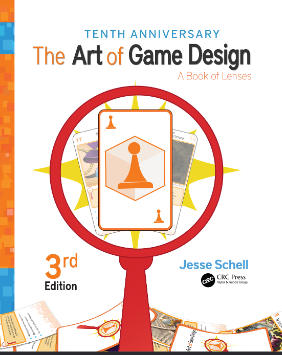
enth Anniversary The Art of Game Design A Book of Lenses 3rd Edition - Original PDF
نویسندگان: خلاصه: I was shorter then. since that picture was taken, I’ve done a lot of different things. I’ve worked in circuses as a professional juggler. I’ve been a writer, comedian, and magician’s apprentice. I’ve worked at IbM and bell Communications Research as a software engineer. I’ve designed and developed interactive theme park rides and massively multiplayer games for the Walt Disney Company. I’ve started my own game studio, and become a professor at Carnegie Mellon University. but when peo- ple ask me what I do, I tell them that I am a game designer. I mention all this only because at various times in this book, I will be drawing examples from these experiences, since every single one of them has taught me valuable lessons about the art of game design. that might sound surprising now, but hopefully, as you read this book, it will help you see the ways that game design meaningfully connects to the many experiences in your own life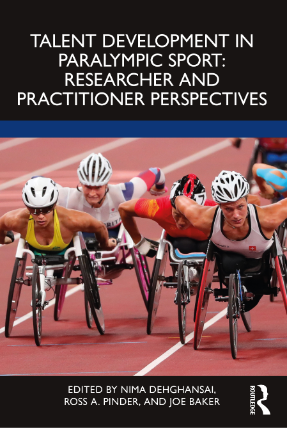
TALENT DEVELOPMENT IN PARALYMPIC SPORT: RESEARCHER AND PRACTITIONER PERSPECTIVES - Original PDF
نویسندگان: خلاصه: dentifying and developing talented athletes to their fullest potential is a central concern of coaches, sports scientists, and sports policymakers. However, there is currently limited practical and theoretical knowledge for those working in Paralympic sport. A systematic review by our research team (Dehghansai et al., 2017a), for example, highlighted the clear lack of literature examining athlete development. Subsequent studies (Dehghansai et al., 2017b; Dehghansai & Baker, 2020; Dehghansai et al., 2020, 2022, 2021, Houlihan & Chapman, 2017; Patatas et al., 2020, 2022) from research groups around the world have expanded our understanding, and provided the impetus for this book, which aims to synthesize the most up-to-date research with practice across international Paralympic sport systems (e.g., from those in Australia, Belgium, Brazil, Canada, Czech Republic, United Kingdom, United States, Netherlands, and New Zealand). As part of Australia’s preparation for the Tokyo 2020 Paralympic Games, two of the authors/editors have experienced first-hand the potential opportunities for supporting athlete development. We have witnessed rapid performance trajectories, the quality and passion of coaches and other practitioners working in this field, and the creativity required to solve problems. We also observed (and experienced) many of the challenges that are highlighted and discussed at length throughout this book. We worked closely with sports which, during this period (i.e., 2016–2021), resulted in athletes winning medals at the 2020 Paralympic Games who were not even participating in that sport during the time of the previous Paralympic Games (i.e., Rio 2016 Paralympic Games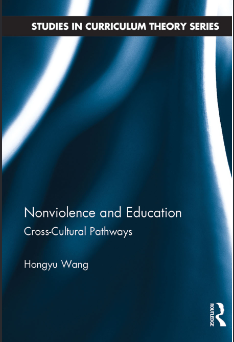
NONVIOLENCE AND EDUCATION Cross-Cultural Pathways - Original PDF
نویسندگان: خلاصه: This book is based on a life history, qualitative study of four university professors’ cross-cultural pathways. When I started this research during my sabbatical leave in China in September, 2009, I had no idea what it would lead me to. To my aston- ishment, it turned out to be one of the most spiritual experiences in my life. As a result, I became fully committed to nonviolence education, inspired by the life stories of the four professors in their cross-cultural engagements situated in history, culture, and educational contexts. Two Chinese professors, one male and one female, and two American pro- fessors, one male and one female, from different generations participated in this study. This book tells these professors’ extraordinary stories of encountering a culture different from their own and how such engagements influenced their edu- cational work. Specifically, the Chinese professors’ engagement with American/ Western thought and culture and the American professors’ engagement with Chi- nese thought and culture are narrated. Their stories are also situated in the context of the intellectual and cultural history of China–US engagement, with my auto- biographical voice woven in when applicable. While Chinese immigrants’ stories are more often heard in the North American educational field, Americans’ lived experiences in China must also be heard to achieve the mutuality that is necessary for forming constructive relationships between the self and the other globally (Aoki, 2005). It is at the site of mutuality that non-dualistic engagement with dif- ference becomes possible in cross-cultural and intercultural education. Nonviolence has emerged as a central thread of cross-cultural pathways and pedagogy. Here nonviolence is defined as unity between the body and the mind within the self and compassionate relationships between the self and the other that can be extended to the group, the nation, and the global (and further to the ecological relationship between humanity and nonhuman being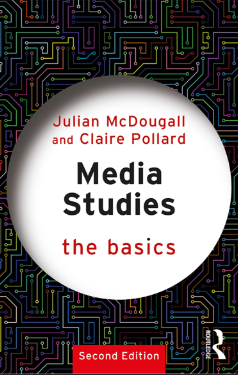
MEDIA STUDIES THE BASICS SECOND EDITION - Original PDF
نویسندگان: خلاصه: INTRODUCTION TO THE SECOND EDITION Eight years on from the first edition of this book, any notion that updating it for a second edition would be quick or straightforward was dispensed with at the start of the process. We imagine that updating other books in this series might involve replacing some examples, refreshing the core concepts with new theories, perhaps reviewing the ‘shelf-life’ of some case studies. But for Media Studies, the subject never stands still, so this is more like a total system upgrade than a software update. For this reason, the second edition is a collaboration, to converge the perspective of the author of the original book with the experience and insight of the editor of MediaMagazine, also a teacher trainer in the subject. Maybe you have picked up this book because you’re starting a course in Media Studies (given the title, it’s a fair guess). Perhaps you are an English teacher diversifying into Media Studies. Or you could be a parent, wondering what Media Studies is really all about and whether your child should spend their time engaging with it. We will argue that in the era of social media platform capitalism and ‘fake news’, it’s more important than ever. If you are a Media student, the assumption will be that you’ve never studied it before – this is, after all, ‘The Basics’, although it might be a useful ‘refresher’ even if you have. All the way through, the emphasis will be on distinguishing between everyday media engagement and critical media literacy. Just by being alive in the contemporary ‘mediated’ world, we all respond actively to media – we never just ‘take it in’ without any thought or interpretation and more and more, we create it. Equally, the distinction between ou
Rethinking Economics Starting from the Commons Towards an Economics of Francesco - Original PDF
نویسندگان: خلاصه: What would happen if the economics courses taught in universities focused on the topic of the commons rather than of private goods? What if the former became the main subject of study and the latter the exception in the study of economic science? What if social business, rather than being considered a hybrid form, became the typical approach, with ethical and green finance taking over the financial sector? Is it possible to move away from the primacy of consumers to the preeminence of ethical consumers who express their daily preferences for an inclusive, sustainable, and worker-friendly economic system? These and other questions are the basis of this book, which aims to systematize the academic contribution to the development of the Economy of Francesco (henceforth EOF). EOF is a global movement of young (under 35 years) economists, entrepreneurs, and changemakers who, in 2019, answered Pope Francis’ call to gather in Assisi to rethink and change the global economy. The three pillars of the EOF are Pope Francis, with his social and economic magisterium; the Franciscan economic thought of the late Middle Ages, which is a source of precious knowledge with which to imagine a new economy; and the ideas of the young people thinking, working, and living a new economy. EOF is also a forum for youth-driven inclusive dialogue, stimulating a vibrant global change toward a new economic system, one that should serve everyone, regardless of income, gender, race, class, family, or background, and one in which everyone can thrive and feel included. To achieve this goal, EOF has been structured since the very beginning along 12 thematic “villages,” i.e., working sessions rooted in topics critical for today’s economy. Each thematic village contains a tension in its title, representing the already contemporary eco- nomic systems and the not-yet economy for which the movement advocates (i.e., Agriculture and Justice, Work and Care, Co2 of Inequalities, Women for Economy, Policies and Happiness, and many more)
Handbook of Hope Theory, Measures, & Applications - PDF
نویسندگان: خلاصه: This Handbook of Hope simply would not have happened without a small army of graduate students who, over the past decade, have come into my office one by one and suggested yetanother angle from which we could view hope. In that sense, what has come to be called hope theory has been like a gemstone that, when held to the light, sends shimmers of ideas about yet other possible implications or experiments. I have produced previous theories about reactions to personal feedback, uniqueness seeking, excuse making, and reality negotiation, hue none of chose have continued co produce the sufficiently intriguing questions to get me revved up for yet another experiment. Hope theory has been a great energizer at a time in my life when I have needed it. For the past seven years I have had a severe, unrelenting, and undiagnosed chest pain that is with me from my fim waking moments to the time th.at I slip off into sleep. Although I have been taking powerful pain killers, I think that none of those pills matches the positive effects of my getting lost in theory and research and work- ing with my students. At age 55 (by the time this book is published), I still enjoy the theory and bench science to the same degree that I did as a brand new 27-year- old assistant professor here at Kansas. And so, I have much for which to be th:.ink- ful.
New Challenges for Macroeconomic Policies Economic Growth, Sustainable Development, Fiscal and Monetary Policies - Original PDF
نویسندگان: خلاصه: P REFACE Macroeconomists’ efforts to investigate a series of new phenomena have been considerable over the past decade. Theories and methods hitherto considered to be the backbone of reasoning are gradually being called into question, because they do not provide answers to new puzzles. Why don’t current Phillips curves take into account financial inflation, that is, changes in the financial asset prices? Why should a central bank worry about controlling the real sector inflation when it is low? How should governments behave to reduce income and wealth inequalities? Why do macroeconomists continue to consider climate changes and countries’ health situation as exogenous to economies? Has industrial capitalism come of age? Why have natural interest rates been falling for at least two decades? What about helicopter money? Is it not an appropriate way to settle public debts? Isn’t it dangerous for governments to continue accumulating debt as they do today? Who will repay the debt? Are we going to reduce public debts as we did after the Second World War by using financial repression policies?
Fundamentals_of_Computer_Graphics - Original PDF
نویسندگان: خلاصه: Preface This edition of Fundamentals of Computer Graphics includes substantial rewrites of the material on shading, light reflection, and path tracing, as well as many corrections throughout. This book now provides a better introduction to the tech- niques that go by the names of physics-based materials and physics-based ren- dering and are becoming predominant in actual practice. This material is now better integrated, and we think this book maps well to the way many instructors are organizing graphics courses at present. The organization of this book remains substantially similar to the fourth edi- tion. As we have revised this book over the years, we have endeavored to retain the informal, intuitive style of presentation that characterizes the earlier editions, while at the same time improving consistency, precision, and completeness. We hope the reader will find the result is an appealing platform for a variety of courses in computer graphics. About the Cover The cover image is from Tiger in the Water by J. W. Baker (brushed and air- brushed acrylic on canvas, 16” by 20”, www.jwbart.com). The subject of a tiger is a reference to a wonderful talk given by Alain Fournier (1943–2000) at a workshop at Cornell University in 1998. His talk was an evoca- tive verbal description of the movements of a tiger. He summarized his point: Even though modelling and rendering in computer graphics have been improved tremendously in the past 35 years, we are still not at the point where we can model automatically a tiger swimming in the river in all its glorious details. By automatically I mean in a way that does not need careful manual tweaking by an artist/expert. The bad news is that we have still a long way to go. The good news is that we have still a long way to go
آیا کتاب مورد نظر هنوز بر روی سایت قرار نگرفته است؟ جای نگرانی نیست! کافی است بر روی گزینه سفارش کتاب کلیک کرده و درخواست خود را ثبت کنید. در کمتر از چند ساعت کتاب شما را آماده خواهیم کرد.