موضوعات
آموزش و پرورش
ادبیات و زبان
پزشکی، دندانپزشکی و داروسازی
تاریخ و جغرافیا
داستان و رمان
دیگر
دین و فلسفه
روانشناسی
ریاضیات و آمار
سلامتی، تناسب اندام و رژیم غذایی
شیمی و پلیمر
علوم اجتماعی و حقوق
علوم زیستی و بیوتکنولوژی
فیزیک و نجوم
کامپیوتر و اینترنت
کتابهای کودکان و داستان
کسب و کار و اقتصاد
کشاورزی و دامپزشکی و غذا
معماری
مهندسی و فناوری
هنر و تئاتر
محصولات
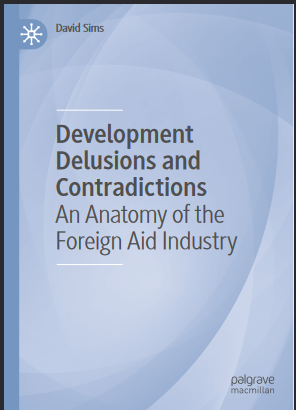
Development Delusions and Contradictions An Anatomy of the Foreign Aid Industry - Original PDF
نویسندگان: خلاصه: xix Around 1700 almost everyone on earth was poor or destitute, and Thomas Hobbes’ phrase about life as “poor, nasty, brutish and short” certainly hit the mark. Perhaps only one-tenth of the world’s population was living what could be considered anywhere near comfortable lives. At least, this is what most economic historians will tell you. Jumping ahead 250 years, one could definitely say two completely dif- ferent worlds had emerged—a prosperous West and a definitely lagging Rest. The reasons for this ascendency of the West were due to processes and factors that, even today, are not well understood, but this huge West– Rest economic divide led to the realization that this gap was one of the great issues of the times, one that needed to be addressed as part of any new world order. Thus, by 1950 it could be said that the Development Era began. Some 70 years later, after untold machinations and lots and lots of money, the West is still very much at it. Western nations and institutions constructed increasingly sophisticated systems to redress this divide, based originally on the idea that transposed expertise and capital was what was needed to help nations build modern economies, to prosper, and eventually to be self-sustaining. Not only would these ‘emerging’ nations become partners in global prosperity; they would become great consumers as well and, through the miracles of free trade, economies of scale and comparative advantage, the West as well as the Rest would benefit. Yet what sounded so clear and noble back at the start of the Development Era, and what has remained, at least ostensibly, the philosophical bedrock of helping poor nations, has had to face a very rocky road, to say the leas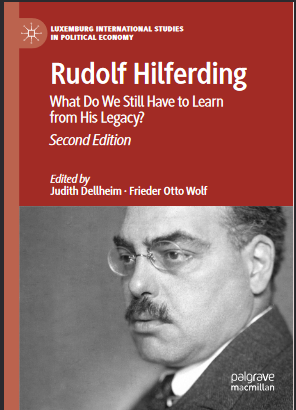
Rudolf Hilferding What Do We Still Have to Learn from His Legacy? - Original PDF
نویسندگان: خلاصه: Editors and authors are, of course, grateful for the interest of our readers that has made it possible to realise a second edition now. We have made use of this happy occasion to correct mistakes we had overlooked in the first edition, to actualise the texts wherever needed, and to add four texts: one by Michael R. Krätke on the still unpublished notes of Hilferding’s last manuscript which had been published post-humously (discussed as such by F. O. Wolf), and another one, also by Krätke, on Hilferding’s cor- respondence; plus a presentation of Krzywicki, the Polish ‘equivalent’ to Hilferding, by Toporowski, as well as a contribution by the editors open- ing a perspective on Varga. We hope to fuel the incipient debate on Hilferding by providing access to these materials—which are not merely of biographical relevancy. We also have added a contribution on Eugen Varga, leading on to the next collection of texts planned in this series. All authors have had the occasion to revise their texts according to the need they could see for this. Accordingly, the new edition will serve as a use- ful tool for further developing the debate on Hilferding, after it had been unblocked from political fetters resulting from older political antagonisms. We have become aware that there is an important and specific debate on Hilferding in Japan. Minoru Kurata and Masaaki Kurotaki should at least be mentioned here. Unfortunately, we have not been able to find a Japanese author for presenting this debate authentically, for which we only Preface to the second edition xviii PREFACE TO THE SECOND EDITION have passing references in the volume. This remains an open challenge for further research and debate.1 In finishing this volume, while the terrible ‘military operations’ gener- ated especially by Putin and his narrow power circle are unfolding, we want to underline the deep internationalist character of our work aiming at strengthening critical thinking and emancipatory-solidarity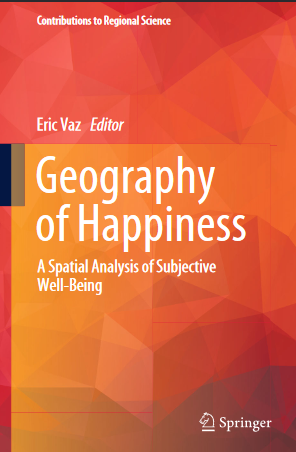
Geography of Happiness A Spatial Analysis of Subjective Well-Being - Original PDF
نویسندگان: خلاصه: Recent advances in spatial analysis have led to a growing interest in applying geocomputation methods to complex issues (Du et al., 2020), often defined over large datasets framing socioeconomic variables (Ekbia et al., 2015) and the natural environment (Bryan et al., 2011). Much of this work has been carried out to optimize decision-making and lead to a better quality of life, economic growth and social stability (Higgins et al., 2014; Rosu et al., 2015; Ahlfeldt et al., 2020). Thanks to the advances of computational power, spatial analysis has reached a new stage, where nonlinear modelling approaches combined with stochastic modelling allow for a better understanding of the geographical environment (Silva et al., 2020) and there- fore foster more accurate decision-making (Carver, 2019). This decision-making has focused predominantly on sustainable development, leading to better life quality, where spatial information on the natural environment has brought a key role, partic- ularly in ecology, to understand the present and offer a more sustainable future. From an anthropocentric perspective, wellbeing is the relation of humankind’s social, economic, and environmental stability, maximizing the opportunities for sustainable development while leading to better life quality. This holistic approach of wellbeing closely rem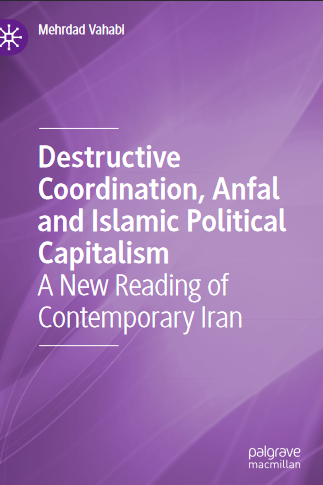
Destructive Coordination, Anfal and Islamic Political Capitalism A New Reading of Contemporary Iran - Original PDF
نویسندگان: خلاصه: xi The term Anfal in the title of this book is not familiar for the general readership and its meaning cannot be easily understood by referring to English dictionaries. What is Anfal? If you launch an internet search on Anfal, you will encounter two main strands of literature. The first one relates to the Kurdish genocide by Saddam’s regime in the late eighties, and the second is about the eight Surah (chapter) of the Koran known as ‘Al-Anfal’. As Kurdistan regional government has aptly underlined, in Kurdish society, the word Anfal has come to represent the entire genocide over decades. Anfal was the term used by Saddam Hossein to describe a series of eight military campaigns conducted by the Iraqi government against rural Kurdish communities in Iraq, which lasted from February 23 to September 6, 1988.1 The campaign took its name from Surah al-Anfal in the Koran. Al-Anfal literally means the spoils of war (bounties) and was used to describe the military campaign of extermination and looting commanded by Ali Hassan al-Majid, the cousin of Saddam Hossein. As President of Iraq, Saddam Hossein frequently used religious language when describing the actions of his Ba’athist regime (see Johns, 2006), portraying Arabs as true defenders of Islam and Kurds as infidels.2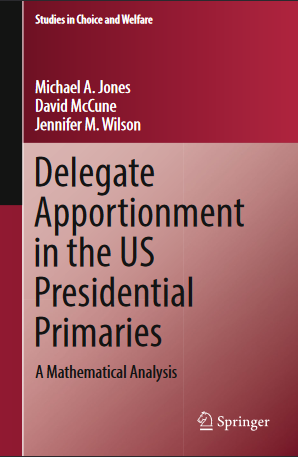
Delegate Apportionment in the US Presidential Primaries A Mathematical Analysis - Original PDF
نویسندگان: خلاصه: The purpose of this book is to examine the mathematics of the delegate allocation process in the US presidential primaries. The US presidential primaries are a series of state elections held every four years that determine the Democratic and Republican Parties’ nominees for president in the general election. Presidential candidates in each party are awarded delegates based on their shares of the vote in each state contest. At the end of the primary season, each party holds a national convention. The candidate with a majority of state delegates, after one or more rounds of voting, is selected to be the party’s nominee for president. From a mathematical standpoint, the question of how to allocate delegates is largely a problem of apportionment. Apportionment problems arise when a fixed quantity (such as a number of delegates) must be divided among several constituents (such as candidates) in proportion to some attribute (such as vote share), so that each portion is a whole number. Since delegates are individuals and cannot be divided, their allocation is a matter of apportionment. Apportionment or similar allocation problems occur at multiple stages in the delegate selection process from determining how many delegates each state receives, and how they should be divided between statewide and district delegates, to determining what happens after each primary when the delegates must be awarded to the candidates based on how well they do in the election. Apportionment has been well-studied in the context of allocating state represen- tatives to the US House of Representatives in proportion to state populations. It has also been widely analyzed for its role in proportional representation systems where party seats are awarded to parties based on the vote distribution. It is less well-known in the case of apportioning delegates in the US primaries. Thus the examination of apportionment applied to delegate allocation involves both an identification and anal- ysis of new apportionment methods as well as an evaluation of old and new criteria by which to evaluate their properties. The goal of this book is to do both. We have spent several years researching delegate allocation in presidential primaries and were inspired to write this volume because of the interesting aspects of apportionment arising in this context. The book’s vii viii Preface origin can be traced to 2016, when we observed that the 2016 Georgia Repub- lican party adopted an apportionment method for its state primary that was unique and perhaps the most interesting method we had encountered. This motivated us to investigate the methods used by other state parties, many of which are new, and to consider how the allocation of delegates is affected by elimination thresholds—the minimum levels of support required to receive delegates—and the overall structure of the state delegates selection plans in which delegates are apportioned based on vote distributions in each district and statewide. This led us also to consider how the goals of delegate apportionment differ from that of house or party apportionment— most noticeably in that the state primaries occur over time, and that the end result is not political representation but the declaration of a winner. This means that the usual criteria for evaluating apportionment need to be rethought in an effort to deter- mine what features of traditional apportionment theory are most relevant to delegate apportionment and which features are not.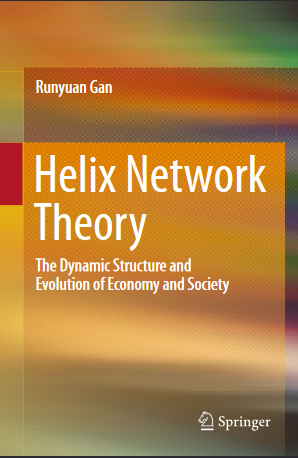
Helix Network Theory The Dynamic Structure and Evolution of Economy and Society Interdisciplinary Integrated Economics Creating a Brand New “Micro-Meso-Macro” Paradigm - Original PDF
نویسندگان: خلاصه: Foreword by Gong-Meng Chen I first met and started working with Gan Runyuan, the author of the book, around April and May of 2002. Back then, I had just established the China Accounting and Finance Research Centre at Hong Kong Polytechnic University in Shenzhen. Because the research centre was not long established, it was necessary to introduce various talents. Gan Runyuan was one of the first groups of personnel recruited into the research centre. By 2003, with the active support of Cheng Si-Wei, I and my colleagues had founded the China Venture Capital Research Institute. During that period of time, Gan Runyuan worked as my assistant and participated in many tasks at the China Accounting and Finance Research Centre and China Venture Capital Research Institute. He was easy-going, serious in working, and I was always impressed. Later, Gan Runyuan left Shenzhen to Shanghai. However, he still kept in touch with me and participated in several forums organised by the China Venture Capital Research Institute. At the end of March this year, Gan visited Shenzhen. I learned that he had written an economics monograph, Helix Network Theory, and he invited me to write a preface to this book. He said that this is the ten-year brainchild of his toil, blood, and sweat. I did not expect him after leaving Shenzhen for more than ten years, not only reading that many books on economics and sociology but also spending quite a few years writing an econo
The Emergence of a Tradition: Essays in Honor of Jesús Huerta de Soto, Volume II Philosophy and Political Economy - Original PDF
نویسندگان: خلاصه: Only a small minority of people, in our experience, know what Jesús’s full name is. Due to some idiosyncrasies of Spanish naming conventions, this group is dominated by Spaniards. To aid the non-Spanish speaker, a brief explanation of his name is necessary. All Spanish surnames are composed of two parts. The first part is the father’s first surname, and the sec- ond is the mother’s first surname. The general form for all Spanish names becomes [first name] [paternal first surname] [maternal first surname]. Thus, all children have a different surname than their mothers and fathers, though this surname will include elements of both through their respective paternal branches. The children of Juan Garcia Fernandez and Sofia Gonzalez Martin, for example, would all have the surname Garcia Gonzalez. Jesús Huerta de Soto Ballester was born to Jesús Huerta Ballester and Concepción de Soto Acuña. His birth name was Jesús Huerta de Soto, and (after marrying Sonsoles Huarte) his children would have the surname Huerta Huarte. With six children, this linguistically challenging surname would have not been an isolated difficulty. After marriage, Jesús made the decision to legally change the order of his surnames. (This bureaucratic process is not straightforward, nor is it common.) As a result of this change, his first surname, Huerta de Soto, now includes elements of both his father’s and his mother’s names. His second surname, Ballester, is from his father. While the name remains essentially the same (Jesús Huerta de Soto at birth versus Jesús Huerta de Soto Ballester today), the change in ordering meant that the family name passed down to his children would be “Huerta de Soto” instead of “Huerta.” This also applies to their descendants. In all but the most formal situations in Spain, use of only the first surname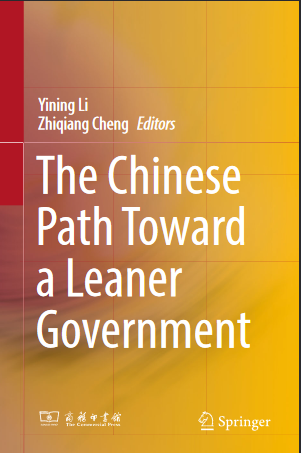
The Chinese Path Toward a Leaner Government - Original PDF
نویسندگان: خلاصه: Building a leaner government ( Jian Zheng Fang Quan , or “streamlining admin- istration and delegating powers” in the official translated documents) is essential in China’s transition from a planned economy to a market economy and in an effort to improve the country’s socialist market economy. People of our generation have all had some experiences with the planned economy. It was a time when the government managed everything from production to consump- tion. In other words, the government assumed the role of both the producer and distributor of goods. Little was outside the government administration. It set quotas that matched its plans and organized supplies according to the quotas. No one in China at that time had ever heard about the term Jian Zheng Fang Quan or stream- lining administration and delegating powers. In fact, it was impossible to streamline the government then because everything was controlled by the government, every decision had to come from the higher authorities, and all kinds of stuff were placed under the quota system. When a government assigned each of its staff with a particular task to either manage or supervise economic activities, how could it be streamlined? Power devolution was even more beyond imagination. The planned economy was based on the concentration of power. If power was delegated, how could the economy and people’s daily life go as the government had planned for them? Indeed, there were times when the Chinese government was concerned about the low efficiency and poor performance of the planned economy that too much concentration of power had entailed. However, there were no better ways. China had quite a few lessons learnt in a hard way. Trials to cut government power or remove some quota all ended up in market disorder. Shifting back to old practice only stifled the economy. Such policy flip-flops occurred time after time during the period of the planned economy. It was a doomed cycle that no one was able to brea
Digital Transformation of the Financial Industry Approaches and Applications - Original PDF
نویسندگان: خلاصه: Preface This book is aimed to be a collection of state-of-the-art research findings in digital transformations across the financial industry from the Central and East European markets. Digitalization is fundamentally changing financial services in the last few decades and tends to reshape the landscape of financial industry in an unprecedented manner. This book seeks to extend the concurrent body of knowledge on digital transformation in the financial industry by encompassing significant conceptual contributions, innovations in methods and techniques and by delineating the main applications of digital transformation in the CEE region. Although the books elaborating digital transformation in finance can be found in the market, these books dominantly focus on developed market. The aim of this book is to progress one-step forward—to focus on practice in developing and transitional/post- transitional countries. When any technology disrupts an industry, trailblazers are usually from the highly developed countries. Diffusion of tech-related disruption is, however, only rarely linear and uninterrupted. Thusly, we were highly motivated to collect the evidence on the development of fintech from the CEE countries. This book can serve to all important fintech stakeholders—students, academic community (with both technical and social science background), and practitioners (decision-makers and policy holders in various organizations of the financial sys- tems). As for the students, typical users are master or doctoral level of education with major subjects covering business, finance, accounting, economics, management science, and other fields in social science and/or engineering. As for the academic community, the book might be interesting for lecturers and scholars from CEE countries. Finally, the book is aimed at practitioners—economic analysts, informa- tion technology developers and information system experts, small investors, insti- tutional investors, as well as regulators of the financial system and national finance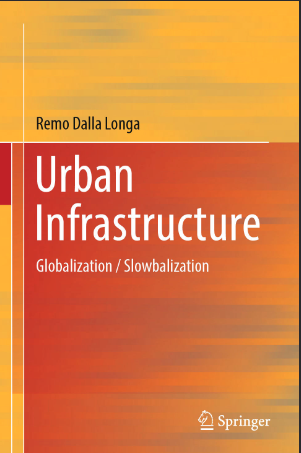
Urban Infrastructure Globalization / Slowbalization - Original PDF
نویسندگان: خلاصه: The book addresses the issue of urban infrastructures within globalization. Slowbal- ization is then introduced rather than deglobalization to indicate important variables that could stand in the way of a prevailing reading key in the book. Wiig et al (2022) argue that starting from a volume (Graham, Marvin, 2001 ) the study of infrastructures has been brought to the center of urban studies and has inspired the infrastructural turn within urban sciences. Infrastructures, and urban ones in particular, precisely because of their differentiation, specialisms, formulas and organizational models that underlie their assembly, governance and management have always appeared residual compared to other themes such as the city, urbaniza- tion, the form urban, competitive advantage, applied globalization; or on another more technical side, specialisms such as engineering or other technical disciplines called upon to assemble and update the various infrastructures in various ways. Moss (2020) on Berlin, which tells the story of that city (1920–2020) through infrastructures, removing them from invisibility, may be singular, but it is not. Putting them at the center offers new ideas and angles both from the point of view of economics, finance, assembly technique and above all the spatiality of the city within the different forms of globalization. Today, urban infrastructures are also a fundamental part of the economy and finance and follow their evolution and trajectory. They assume particular impor- tance starting from the conjugation with the term globalization; we have seen a rapid transformation of the interconnected infrastructure precisely with the growth of glob- alization and the global city. The analysis focused more on what has been called the western global city and the context of the brownfield infrastructureآیا کتاب مورد نظر هنوز بر روی سایت قرار نگرفته است؟ جای نگرانی نیست! کافی است بر روی گزینه سفارش کتاب کلیک کرده و درخواست خود را ثبت کنید. در کمتر از چند ساعت کتاب شما را آماده خواهیم کرد.