موضوعات
آموزش و پرورش
ادبیات و زبان
پزشکی، دندانپزشکی و داروسازی
تاریخ و جغرافیا
داستان و رمان
دیگر
دین و فلسفه
روانشناسی
ریاضیات و آمار
سلامتی، تناسب اندام و رژیم غذایی
شیمی و پلیمر
علوم اجتماعی و حقوق
علوم زیستی و بیوتکنولوژی
فیزیک و نجوم
کامپیوتر و اینترنت
کتابهای کودکان و داستان
کسب و کار و اقتصاد
کشاورزی و دامپزشکی و غذا
معماری
مهندسی و فناوری
هنر و تئاتر
محصولات
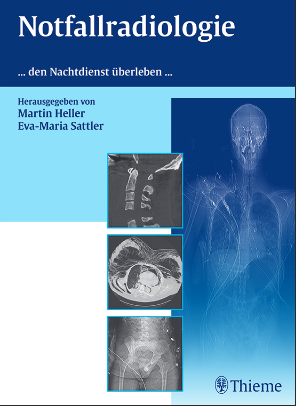
Notfallradiologie - Original PDF
نویسندگان: خلاصه: Vorwort Was ist das Schwerste von allem? Was Dir das Leichteste dünket: Mit den Augen zu sehn, was vor den Augen dir lieget. Johann Wolfgang von Goethe Die Nöte radiologischer Assistenzärzte, die – unterschied- lich ausgebildet – im Nachtdienst mit Fragen nach der Indikation, dem geeigneten Gerät, der Untersuchungs- technik und letztlich der Diagnose konfrontiert sind, ha- ben uns veranlasst, dieses Buch zu schreiben. Es hat nicht den Anspruch, ein Lehrbuch oder gar Handbuch zu er- setzen, es soll vielmehr ein Nachschlagewerk sein, in dem man schnell und zuverlässig die Informationen fin- det, die man dringlichst braucht. Zudem werden auch gängige Klassifikationen vermit- telt, die in der dringlichen Notsituation nicht sofort prä- sent sein müssen. Da aber jeder Untersuchung Befunde folgen, sollte auch hier eine Hilfestellung gegeben wer- den. Natürlich sind die Abläufe in allen Krankenhäusern sehr speziell, eine vergleichbare Vorgehensweise ist jedoch anzunehmen, da die Medizin als Notfallmedizin überall die gleichen Anforderungen an die Radiologie haben wird. Dieses Buch wendet sich an Assistenzärzte sämtlicher Fachrichtungen, vor allem Radiologen, die im Dienst mit radiologischen Untersuchungsstrategien, Untersuchun- gen und den daraus resultierenden Bildern konfrontiert werden, sowie an alle radiologisch Interessierten. Es sol- len die wichtigsten radiologischen Fragestellungen (Not- fälle) vermittelt werden. Da es ein sehr übersichtliches und kompaktes Buch ist, eignet es sich auch für Medizin- studenten zur Prüfungsvorbreitung. Ebenso können Ärzte an den Krankenhäusern, an denen kein radiologischer Dienst eingerichtet ist, aber Röntgen- und Ultraschallgeräte und Computertomografen zur Ver- fügung stehen, sicherlich von dem hier zusammengetra- genen Wissen profitieren. Wenn „der Nachtdienst“ und alle, die in der Notfallme- dizin tätig sind, dieses Buch mit Gewinn nutzen – dies ist unser Wunsch – hätte sich die Mühe gelohnt. Allen Mitarbeitern der Radiologie des UK-SH, Kiel und denen des Thieme Verlages danken wir sehr herzlich für ihre engagierte Unterstützung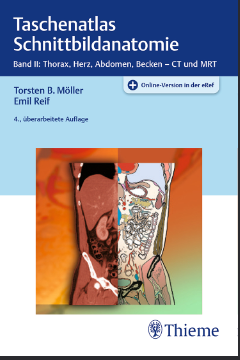
Taschenatlas Schnittbildanatomie Band II: Thorax, Herz, Abdomen, Becken - Original PDF
نویسندگان: خلاصه: änderung. Und doch ist es sinnvoll, das Alte mit dem Neuen zu verbinden. Deshalb bleibt diese Buchreihe der Taschenatlanten der Schnittbildanatomie auch ihrem bewährten Konzept der Gegenüberstel- lung von Bild und farbiger Zeichnung treu und fügt Neuerungen ein wo sinnvoll. Damit wird der rasanten Entwicklung der radiologischen Bildgebung Rechnung getragen, steigt doch mit den erhöhten Anforderungen an die Diagnostik bei immer selektiveren Therapien die Bedeu- tung der Anatomiekenntnisse weiter an. Die vorliegende Neuauflage – wieder mit zahlreichen Verbesserungen und aktuellen Neuerungen – besitzt wieder eine nochmals leicht verbesserte einheitliche farbige Aus- gestaltung der unterschiedlichen Strukturen. Die Leserinnen und Leser erhalten so trotz des enormen Detailreichtums der Zeichnungen übersichtlich, schnell und sicher ihre Informa- tionen. Die Aufnahme der thorakalen/media- stinalen Lymphknotenstationen entsprechend der Gepflogenheit internationaler Fachgesell- schaften auch in das Taschenbuchformat war vielfach gewünscht worden und erleichtert die Beschreibung insbesondere beim Tumor-Sta- ging. Wir glauben deshalb, dass auch diese Neuauflage wieder eine weitere Verbesserung darstellt. Umso mehr dient die Neuauflage damit auch dem ursprünglichen Erstellungszweck: die Suche nach Information soll den Leserin- nen und Lesern gleichzeitig auch viel Spaß und Freude bereiten.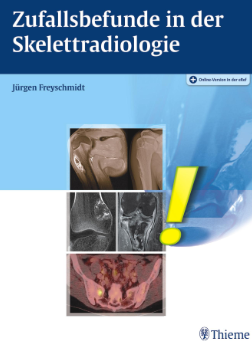
Zufallsbefunde in der Skelettradiologi - Original PDF
نویسندگان: خلاصه: Vorwort Die sich in der Radiologie schon längst etablierte und ständig weiter zunehmende Bilderflut sowie die Modalitäten und Erfolge der Krebstherapien mit ausgedehnten prätherapeutischen und langfristigen Nachsorgeuntersuchungen führen zwangsläufig zur Aufdeckung von immer mehr Zufalls- und Nebenbefunden, die vor allem dem Nichtspezialisten in der Skelettradiologie erhebli- che interpretatorische Probleme bereiten können. Doch wie geht man damit um? Sicherlich nicht, indem man die Bilderflut durch mehr oder weniger ungezielte zusätzliche Unter- suchungsverfahren ausweitet und damit unter Umständen neue Zufallsbefunde kreiert. Das gilt besonders für hoch sensitive aber weniger spezifische Modalitäten. Der anspruchsvolle und präzise Radiologe wird vielmehr ein ergänzendes Verfahren einsetzen, das – an der anatomischen Struktur des Zufallsbefunds orientiert – eine höhere Spezifität besitzt und zu einer begründeten und klinisch brauchbaren Diagnose führt. Der häufig angewendete Trick, sich der Verantwortung zu entziehen und eine histologi- sche Abklärung zu empfehlen, sollte gemieden werden. Denn die histologische Interpretation des Pathologen kann in der Skelett- radiologie nur so gut sein, wie der radiologische Befund klar und richtungsweisend ist. Ich betätige mich seit vielen Jahren als Konsiliarius in der Ske- lettradiologie. Das eingesandte Krankengut besteht zu etwa 50 % aus klinisch asymptomatischen Zufallsbefunden, hinter denen benigne Knochentumoren und tumorähnliche Läsionen, Erkran- kungen im Frühstadium, Teile einer systemischen Erkrankung, ungewöhnliche Normvarianten und vieles mehr stecken können. Es wird an mehr als 160 Fällen und fast 100 differenzialdiag- nostisch passenden Kasuistiken aufgezeigt, wie man professionell an solche Befunde unter Einbeziehung der individuellen Situation des Patienten herangeht, welche Relevanz sie haben und welche sinnvollen Empfehlungen man zum weiteren Prozedere geben kann. Mein Dank für die Überlassung der besonderen Fälle gilt den Kollegen CA Dr. med. Jürgen Wiens, Wolfsburg (Fall 22), Dr. med. Thomas Grieser, Augsburg (Fall 30), Professor Dr. med. Michael Laniado, Dresden (Fälle 34, 61), Privt.-Doz. Dr. Sönke Langner, Greifswald (Fall 45) und CA Dr. med. Nils H. Goecke, Wildes- hausen (Fall 131).
Unstuck and On Target!: An Executive Function Curriculum to Improve Flexibility, Planning, and Organization Second Edition - PDF
نویسندگان: خلاصه: About the Online Materials Unstuck and On Target! An Executive Function Curriculum to Improve Flexibility, Planning, and Organization, Second Edition, offers online companion materials to supplement and expand the knowledge and strategies provided in this text. All purchasers of the book may access, download, and print the handouts, resource materials, posters, and gameboards for educational purposes. The online materials include: Two digital, print-ready gameboards, available as one-page 11” x 17” PDFs, two-page 8.5” x 11” PDFs, and PowerPoint files Four digital posters, available as print-ready PDFs and PowerPoint files 50+ handouts—digital downloads available as fillable PDFs To access the materials that come with this book: 1. Go to the Brookes Publishing Download Hub: http://downloads.brookespublishing.com 2. Register to create an account or log in with an existing account. 3. Redeem the code 22nnLyW90 to access any locked materials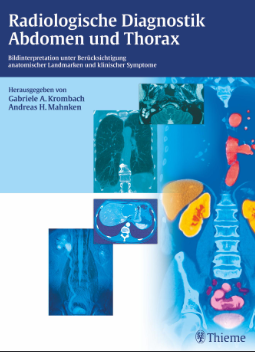
Radiologische Diagnostik Abdomen und Thorax - Original PDF
نویسندگان: خلاصه: Ultraschall, CT (Computertomografie) und MRT (Magnetreso- nanztomografie) sind die wichtigsten Modalitäten zur Unter- suchung der Kopf-Hals-Region. Gemäß den Leitlinien der Deut- schen Röntgengesellschaft (AG Kopf-Hals-Diagnostik) wird die MRT bei Verdacht auf suprahyoidale Tumoren aufgrund ihres gu- ten Weichteilkontrasts eingesetzt. Die CT kommt bei infrahyoidal gelegenen Tumoren zur Anwendung, da sie aufgrund der gerin- gen Untersuchungszeit im Vergleich zur MRT deutlich weniger artefaktanfällig ist. ●HMerke Bei der CT führt ein langes Zeitintervall nach Kontrastmittelinjek- tion (60–80 s) zur besseren Darstellung von Tumoren. Für die MRT ist gemäß den Empfehlungen der AG Kopf-Hals- Diagnostik der Deutschen Röntgengesellschaft die Durchführung mindestens folgender Sequenzen erforderlich: ● koronare fettunterdrückte T2w (T2-gewichtete) Sequenz (STIR [Short-Tau Inversion-Recovery]) mit einer Schichtdicke von 3–5 mm ● axiale T2w Sequenz mit Fettunterdrückung mit einer Schicht- dicke von 3–4 mm ● axiale und koronare native T1w (T1-gewichtete) SE-Sequenz (Spin-Echo-Sequenz) ohne Fettsättigung mit einer Schichtdicke von 3–4 mm ● axiale und koronare fettunterdrückte T1w SE-Sequenz nach i. v. (intravenöser) Kontrastmittelinjektion
MEDIA STUDIES THE BASICS SECOND EDITION - Original PDF
نویسندگان: خلاصه: INTRODUCTION TO THE SECOND EDITION Eight years on from the first edition of this book, any notion that updating it for a second edition would be quick or straightforward was dispensed with at the start of the process. We imagine that updating other books in this series might involve replacing some examples, refreshing the core concepts with new theories, perhaps reviewing the ‘shelf-life’ of some case studies. But for Media Studies, the subject never stands still, so this is more like a total system upgrade than a software update. For this reason, the second edition is a collaboration, to converge the perspective of the author of the original book with the experience and insight of the editor of MediaMagazine, also a teacher trainer in the subject. Maybe you have picked up this book because you’re starting a course in Media Studies (given the title, it’s a fair guess). Perhaps you are an English teacher diversifying into Media Studies. Or you could be a parent, wondering what Media Studies is really all about and whether your child should spend their time engaging with it. We will argue that in the era of social media platform capitalism and ‘fake news’, it’s more important than ever. If you are a Media student, the assumption will be that you’ve never studied it before – this is, after all, ‘The Basics’, although it might be a useful ‘refresher’ even if you have. All the way through, the emphasis will be on distinguishing between everyday media engagement and critical media literacy. Just by being alive in the contemporary ‘mediated’ world, we all respond actively to media – we never just ‘take it in’ without any thought or interpretation and more and more, we create it. Equally, the distinction between ou
Finance Capitalism and Income Inequality in the Contemporary Global Economy - Original PDF
نویسندگان: خلاصه: Rising inequality in income distribution is one of the most persistent global challenges, widespread not only in low- and middle-income coun- tries but also in industrialised ones. There is an increasingly alarming sta- tistics on wealth and income disparity as, for instance, four consecutive Oxfam reports have witnessed. Thus, in 2015 the wealthiest 62 individuals owned as much wealth as 3.6 billion people compared with 388 individu- als in 2010. Their wealth had increased from 2010 by 44% or $542 billion, while the wealth of the bottom 50% of the world’s population dropped by 41%, or over one trillion dollars (Oxfam, 2016). By 2016, just eight mostly white men possessed the same amount of wealth as the poorest half of the global population and the richest 1% controlled more wealth than the rest of the globe. Between 1988 and 2011 the incomes of the poorest decile rose by less than $3 a year compared with a 182-fold increase of the richest 1% (Oxfam, 2017). In 12 months of 2017 the incomes of the world’s elite increased by $762 billion which was enough to eradicate extreme poverty seven times over. Between 2006 and 2015 worker income rose by an aver- age of just 2% a year compared with a 13% increase for billionaires per year. In 2017, top 1% earners received 82% of all growth in global wealth, whereas the poorest half of the world population did not benefit at al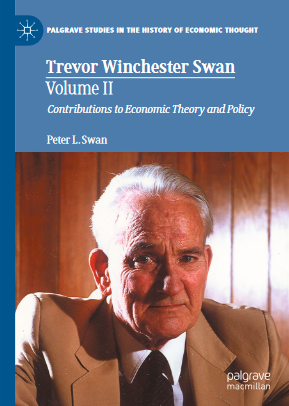
Trevor Winchester Swan, Volume II - Original PDF
نویسندگان: خلاصه: We now come to the first set of papers which made Trevor Swan famous. When Trevor Swan moved to the chair at the ANU he continued to dwell over the problems of internal and external balance which had been concerning him as an advisor to Prime Minister Menzies and even earlier when he was developing his econometric model of the Australian economy. In particular he was concerned that the very rapid immigra- tion programme, and the investment required to equip the newly arriving migrants would lead to excess demand in the economy and so create difficulties for policymakers in their attempts to achieve full employment, low inflation and a satisfactory outcome on the balance of payments (see Swan, 1949, 1950a, 1950c, 1950d). As early as November 1952, Swan wrote a paper, Simple Algebra (1952) which is included in this volume, for a meeting of economists at the Commonwealth (Central) Bank in Sydney addressing the issue of simultaneously achieving three objectives:
Innovation and Regional Technological Convergence Theory and Evidence - Original PDF
نویسندگان: خلاصه: The concept of income convergence has drawn the attention of many economists involved in the growth debate (Alataş, 2021). Recent theories of growth and empirical studies suggest that heterogeneity with respect to technological conditions in general and total factor productivity—TFP in particular are identified as the most decisive factors for the rate of income convergence of countries (Islam, 2003). Apparently, depending on whether initial TFP differences decrease or increase over time, income convergence or divergence may be a matter of fact. This has directed researchers’ attention to the concept of technological (TFP) convergence. Although many empirical studies try to find the answer to the question of technological convergence at the country level (Dowrick & Nguyen, 1989; Wolf, 1991; Dougherty & Jorgenson, 1997; Tebaldi, 2016; Rath & Akram, 2019), regional technological convergence is the research area of relatively modest exploration. However, this situation started to change, since the importance of technological convergence and its determinants have progressively gained attention in both the scientific and the policy domains at the regional level (Rodil-Marzábal & Vence- Deza, 2020). In the context of the Lisbon Agenda (European Council, 2000) and the Europe 2020 strategy (Commission of the European Communities, 2010) goals of making Europe and its regions the most competitive and dynamic knowledge-based economies in the world, it seems crucial to find whether innovation, regarded as the main driver of regional TFP growth (Dettori et al., 2012), can stimulate technolog- ical convergence and under what conditions
Understanding Economic Transitions - Original PDF
نویسندگان: خلاصه: Around 1990, about a quarter of the world’s population lived in middle-income socialist economies and another quarter in high-income and middle-income cap- italist economies. The remainder lived in low-income economies with varying admixtures of planning, markets, and informal exchange institutions. Forty years later, the remaining outposts of socialism are Cuba and North Korea, while a few others (mainly in the former states of the Soviet Union) wallow in the no man’s land of neither functional capitalism nor socialism. The USSR sustained seven decades of statist socialism between 1922 and 1992, Central Eastern Europe (CE) and Southeastern Europe (SEE) for nearly five decades, and China for a little over three decades. By 2000, nearly all have systemically “transitioned” from a centrally-planned economy to some form of a decentrally organized market economy. How and why large parts of Europe, Eurasia, and East Asia transitioned out of the capitalist system in 1917–1952, how they managed to industrialize in non-market settings, and how and why they came back to the capitalist fold are questions comparative economic systems seek to address. Furthermore, this wrenching structural change entailed a concomitant political transition from a monoparty system to an illiberal multiparty system in formerly socialist Europe and the former Soviet Union (FSU). Comparative Economic Systems (CES) focuses on the workings of institu- tional economic mechanisms across economic systems and income levels. CES, at the macro-, meso-, and micro-levels, dwells on the two foundations of an economic system: ownership types for productive assets (state vs. private) and the degree of centralization of decision-making over resource allocation and income distribu- tion (plan vs. market). The conceptual entry points are incentives (known rewards or residual legatee rights) and the sources of discipline (bureaucratic-based or market-based competition). More broadly, Comparative Economics (CE), which is broader than CES, melds the study of economic systems with historical insti- tutionalism and development economics to explore the determinants of prosperity and inequality properties over time and across economic space within a given economic systemآیا کتاب مورد نظر هنوز بر روی سایت قرار نگرفته است؟ جای نگرانی نیست! کافی است بر روی گزینه سفارش کتاب کلیک کرده و درخواست خود را ثبت کنید. در کمتر از چند ساعت کتاب شما را آماده خواهیم کرد.