موضوعات
آموزش و پرورش
ادبیات و زبان
پزشکی، دندانپزشکی و داروسازی
تاریخ و جغرافیا
داستان و رمان
دیگر
دین و فلسفه
روانشناسی
ریاضیات و آمار
سلامتی، تناسب اندام و رژیم غذایی
شیمی و پلیمر
علوم اجتماعی و حقوق
علوم زیستی و بیوتکنولوژی
فیزیک و نجوم
کامپیوتر و اینترنت
کتابهای کودکان و داستان
کسب و کار و اقتصاد
کشاورزی و دامپزشکی و غذا
معماری
مهندسی و فناوری
هنر و تئاتر
محصولات

Methodologies of Multi-Omics Data Integration and Data Mining - Original PDF
نویسندگان: خلاصه: Features multi-omics big-data integration and data-mining techniques Provides in detail and with supportive examples the “What”, “Why” and “How” of the topic Shed light on a data-driven and better understanding of in cancer, inflammation disease, and microbiome researche
Hope and Fear: Modern Myths, Conspiracy Theories and Pseudo History - Original PDF
نویسندگان: خلاصه: Description: A myth-busting journey through the twilight world of fringe ideas and alternative facts. Is a secret and corrupt Illuminati conspiring to control world affairs and bring about a New World Order? Was Donald Trump a victim of massive voter fraud? Is Elizabeth II a shapeshifting reptilian alien? Who is doing all this plotting? In Hope and Fear, Ronald H. Fritze explores the fringe ideas and conspiracy theories people have turned to in order to make sense of the world around them, from myths about the Knights Templar and the Ten Lost Tribes of Israel, to Nazis and the occult, the Protocols of Zion and UFOs. As Fritze reveals, when conspiracy theories, myths, and pseudo-history dominate a society’s thinking, facts, reality, and truth fall by the wayside.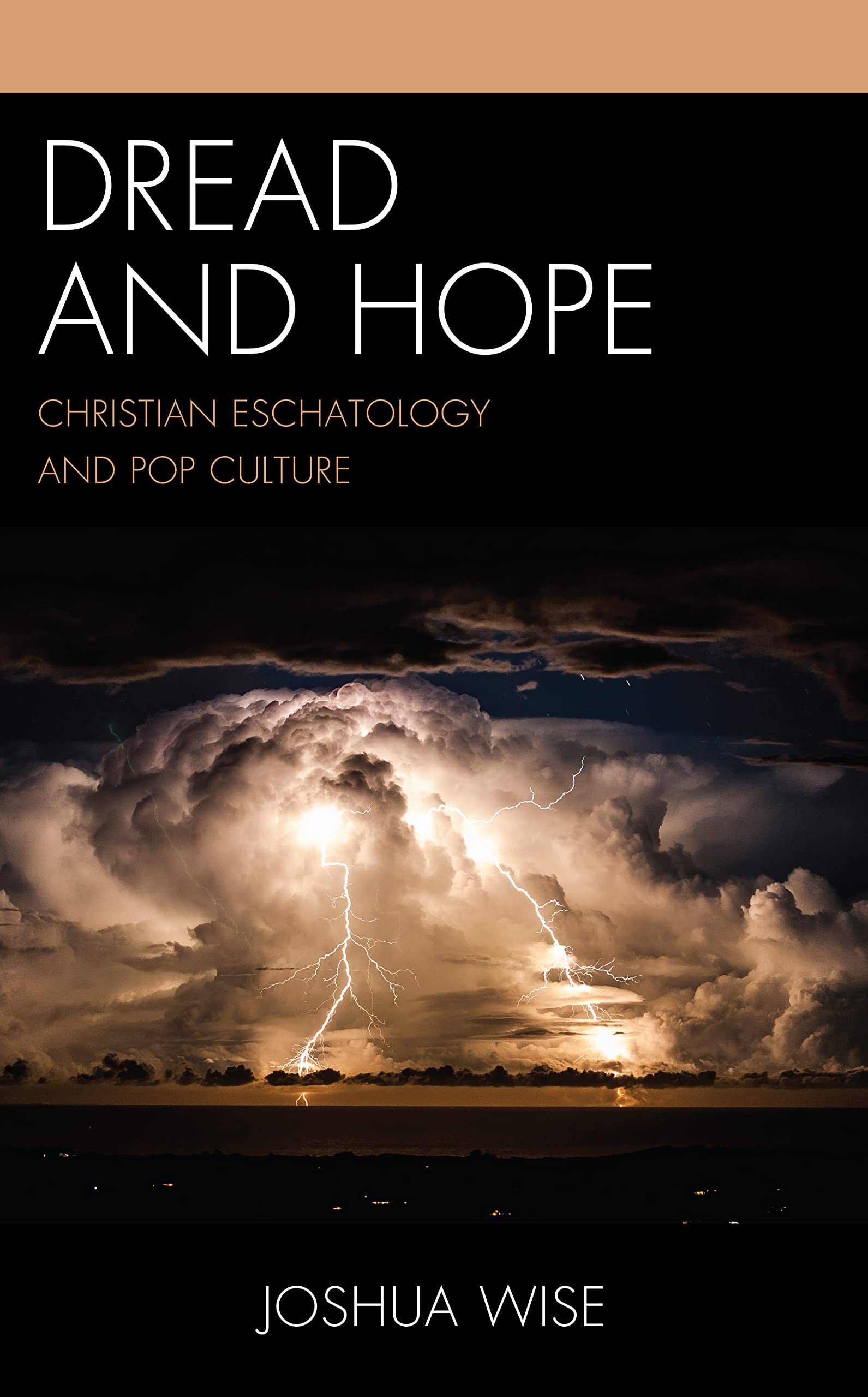
Dread and Hope: Christian Eschatology and Pop Culture - Original PDF
نویسندگان: خلاصه: Description: Christianity was born in the midst of great expectation and fear about the world’s future. The existing Jewish paradigm of the coming Messiah, his antithesis, and the initiation of the coming age set the stage for Christian beliefs about the end of the current age. However, the unexpected death and resurrection of Jesus caused that paradigm to be reformed within the burgeoning Christian faith, reshaping hopes, and reworking old patterns. Dread and Hope explores the ways in which those old paradigms were challenged by Jesus’s death and resurrection, how the resulting eschatological landscape was understood within Christianity, and how modern popular culture has consumed and modified various components of Christian Hope. Joshua Wise examines how the central Christian eschatological themes such as the Antichrist, the Great Persecution, Heaven, and Hell have both been transformed and preserved in novels, television, films, and video games. Drawing on works such as 1984, Diablo, The Stand, What Dreams May Come, and the Fallout series, Dread and Hope considers how the human fears and desires shaped by Christian beliefs are expressed in popular culture.
Hope Behind Bars: Notes from Indian Prisons - Original PDF
نویسندگان: خلاصه: prisons – the perils of freedom versus infinite detention. Focus is also brought to a lightly documented category of persons – the children of prisoners – in chapter ten by K. R. Raja, who highlights their secondary vulnerabilities and invisible suffering. A prison is a world of its own, where residents live without the support systems that those on the outside take for granted. Prisoners hope and will each day to be their last in confinement. We believe that the stories in Hope Behind Bars provide insight into lives less ordinary.
Hatred, Emptiness, and Hope: Transference-Focused Psychotherapy in Personality Disorders - Original PDF
نویسندگان: خلاصه: Introduction The present volume continues my investigation of the psychopathology and treatment of severe personality disorders. It focuses on the analysis of particular clinical features of personality pathologies and describes contemporary psychoanalytic object relations theory as a general theoret- ical frame of treatment that allows us to conceptualize both normal per- sonality functioning and the very nature of personality disorders. This volume also includes my recent contributions to understanding the rela- tionship between neurobiological dispositions and their interaction with psychodynamic developments, again, both in normality and psychopa- thology. Finally, this volume explores the application of object relations theory to group processes, love relations, and therapists’ training. Part I of the book includes major theoretical statements. Chapter 1, “Object Relations Theory and Transference Analysis,” presents a brief, updated summary of contemporary object relations theory and its direct relevance to transference analysis, the fundamental therapeutic approach of transference-focused psychotherapy (TFP). This chapter summarizes the theoretical approach that informs the new psychotherapeutic devel- opments in the treatment of severe personality disorders that are de- scribed throughout the entire volume. Chapter 2, “Some Implications of New Developments in Neurobiology for Psychoanalytic Object Relations Theory” summarizes developments in neurobiology regarding the con- ceptualization of affect systems and their role as the motivational basis ix x HATRED, EMPTINESS, AND HOPE for establishing internalized dyadic self- and object-relations structures. This chapter shows how the underlying limbic and cortical brain struc- tures and functions contribute to embedding the fundamental concepts of self and of significant others. It proposes that the formation of such dy- adic structures is an essential task of higher levels of psychic functioning. Part II, on technique, updates empirical studies of the Personality Disorders Institute at Weill Cornell Medical College, expanding the ap- plications of TFP, exploring its relationship to standard psychoanalytic technique, and outlining a general comprehensive theory of technique that applies to both psychoanalysis and its derived psychotherapies. Chapter 3, “Extensions of Psychoanalytic Technique: The Mutual Influ- ences of Standard Psychoanalysis and Transference-Focused Psycho- therapy” presents an updated view of TFP in comparison with standard psychoanalytic technique that differentiates more sharply these two technical approaches and discusses the problems in training therapists efficiently in both modalities. Chapter 4, “Therapeutic Implications of Transference Structures in Various Personality Pathologies,” presents an overview of transference developments in different modalities of severe personality disorders and the modifications in technical approaches to transference analysis related to these structural differences. It is a highly specialized description of TFP in action. Chapter 5, “Affective Domi- nance, Dyadic Relationship, and Mentalization,” focuses on two basic premises from which the therapist enters every therapeutic session—that is, the alertness to affective dominance and the diagnosis of the predom- inant dyadic object relationship linked to it. By illustrating this approach with clinical cases, the chapter also points to similarities and differences between TFP and mentalization-based therapy (MBT), an alternative psychodynamic approach to severe personality disorders. Chapter 6, “Reflections on Supervision,” describes my personal experience as well as general controversial issues regarding the supervision of psychoan- alytic and derivative treatments. In the process, the chapter details our collective experience of training and supervising clinicians in TFP over many years at the Personality Disorders Institute. Part III, on specific psychopathologies, deals with particular disor- ders within the broad field of severe personality disorders. Chapter 7, “Psychodynamics and Treatment of Schizoid Personality Disorders,” presents our experience with these complex disorders. Schizoid struc- ture has received less attention in recent times than other types of severe personality disorders, particularly borderline and narcissistic personal- ity disorders. This chapter presents a diagnostic update and summa- rizes the specific contributions of the TFP approach to the treatment of schizoid personality. Chapter 8, “Psychotic Personality Structure,” ex- plores the differences between borderline personality organization and psychotic personality organization. It describes the development of psy- chotic features as a potential transitory regression in patients with bor- xiIntroduction derline personality organization, as well as a reflection of a psychotic structure that only emerges during treatment. It proposes correspond- ing differences in technique for transitory psychotic developments aris- ing in sessions, for transference psychosis, and for the emergence of major psychotic illness during the course of TFP. The chapter also ana- lyzes the nature and shifts in reality testing in the context of transference analysis. Chapter 9, “Narcissistic Pathology of Love Relations,” deals with the specific pathology of narcissistic personalities, the great diffi- culties of these patients in establishing and maintaining a love relation in depth, and the general study of sexuality and the capacity to love as part of the diagnostic evaluation of all patients with severe personality disorders. It also considers the influences of the therapist’s own emo- tional maturity in the assessment of this aspect of psychopathology. Part IV deals with the application of object relations theory to inpa- tient hospital treatment, to group regression and political leadership, and to psychoanalytic education. Chapter 10, “Psychoanalytic Ap- proaches to Inpatient Treatment of Personality Disorders: A Neglected Dimension,” examines the inpatient treatment of patients with person- ality disorders, a neglected therapeutic approach in the United States. Although pioneered predominantly in the United States, inpatient treat- ment has been developed in new ways in recent European experiences, with relatively extended hospital treatment of severe personality disor- ders. This chapter summarizes both the North American and recent Eu- ropean experiences with an important therapeutic instrument that, mostly for financial reasons, has been underutilized in the United States. It offers important technical tools that are relevant for the repetitive brief hospitalizations of regressed borderline patients that have replaced se- lective long-term inpatient treatment. This approach may be the basis for the development of optimal treatment of very regressed stages of illness in the future. Chapter 11, “Malignant Narcissism and Large Group Re- gression,” applies psychoanalytic object relations theory and the devel- oping knowledge of the social functioning of some personality disorders to the study of the mutual influences of severe leadership pathology in organizational and political structures and the psychological conditions that underpin large group regression. Political circumstances that foster such large group regression in social subgroups and leadership with ma- lignant narcissistic features tend to reinforce each other, with potentially damaging and dangerous consequences to the social community. This chapter is a contribution to the clarification of these potentially threaten- ing and damaging social developments. Chapter 12, “Challenges for the Future of Psychoanalysis,” applies the psychoanalytical approach that underlies this volume to the analysis of particular conditions of psycho- analysis today as a profession, an educational enterprise, and a social or- ganization within the mental health sciences. This chapter and the book end with recommendations for innovations that may strengthen the role xii HATRED, EMPTINESS,AND HOPE of psychoanalysis as a profession, a treatment approach, and a social or- ganization. It proposes solutions to organizational problems, particu- larly stressing the urgent need for development of empirical research, psychoanalytic psychotherapies, and radical renovation in its educa- tional structure.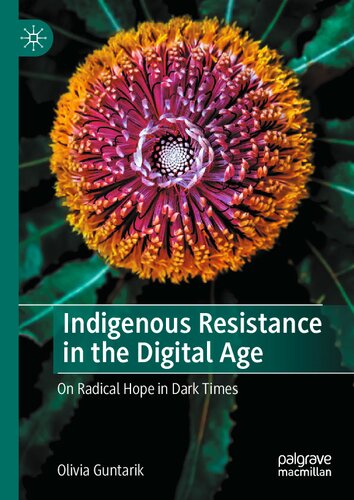
Indigenous Resistance in the Digital Age: On Radical Hope in Dark Times - Original PDF
نویسندگان: خلاصه: 1 CHAPTER 1 Introduction: Wild Things Written with my mountain home and First custodians Aki Nabalu and Odu Nabalu This is a chapter about place and Indigenous resistance. I am writing out of the politics of the two homelands I occupy in my mind as an Indigenous woman moving between two worlds. My voice is the bridge between two worlds. Places are never captured precisely in words or pictures. They are always more. Mount Kinabalu, the highest peak on Borneo island, is dotted with rock edges. Before it was damaged by an earthquake in 2015, one rockface took the shape of a donkey’s ear and was named so. It was the image that came to mind for the person who named it long ago but I have to say: What a diminutive title! I have to muse when this person looked up to that enor- mous pinnacle whether he heard a donkey’s ‘hee-haw’ braying down to him. Conservationist David Attenborough climbed Mount Kinabalu in 1975, describing a landscape of magical beauty. Granite pinnacles jutted skyward. The sky seemed to move as you climbed, as did the rockpools at the peak reflecting the stars. We learn the ascent was challenging, that nature came bearing gifts. Wild myrtle, rhododendrons, orchids, ferns. © The Author(s), under exclusive license to Springer Nature Switzerland AG 2022 O. Guntarik, Indigenous Resistance in the Digital Age, https://doi.org/10.1007/978-3-031-17295-3_1 2 Fig. 1.1 Mount Kinabalu from Kundasang. My grandfather Tumbaki, my mother Molly and my aunty Wendy. Photo credit Moffen Gondoloi Gifts that carried not just life but ominous signs. Pitcher plants shimmered with poison water, tricking insects in a dance of death. And so we learn of nature’s realities. Life and death, doom and gloom, smoldering side-by-side. Words. Pictures. A perspective from high up. Reading his words today, Attenborough’s (1975) nature walk up the mountain rumbles with sound. Frogs bleeeerrk-bleeeerrk at the lower reaches. Birds trill louder and louder farther up the trail. Birds in this part of the world do not fly away on approach; so tame, they scurry at the walker’s feet in a cheeky game of chasey. Come play with us, the birds seem to sing. At the top, where I imagine the walkers resting, perhaps stooping to drink water from mirrored rockpools, the icy wind cuts through bodies razor sharp. But oh how the top is worth the hike! The panorama magnifi- cent—even as you become more conscious of your breath, wind howling in your ears. Imagine this: terrestrial moss, lichen, liverwort, tiny trees clinging to rock icicles for dear life. Imagine the sounds and sights, sacred custodian of my homeland Aki Nabalu tells me. O. GUNTARIK 3 Let us consider this and listen, sings another custodian Oku Nabalu. Both of them are caretakers of this mountain place. My original home. Custodian ancestors help us tell the histories of place and the legacies of our survival. They are our original storytellers. They evidence the ways storytelling pioneer modes of knowing, merging animal and human, the wild and the tame, nature and machine to draw attention to the political dimensions of our existence (see Seton 1898; Cloos 1954; Carson 1962). This politics draws out the musical nature of stories to crystallize purpose and meaning. Listen to the words, for instance, of Australian poet Eileen Chong (2021, 73). ‘There is merit// in quietude, in the precise layering of sound, /image, and object. In the simple acts of walking, /waiting/and witnessing’. A precision to sound, image, object. An intention. Image and object and language come into play for me too. Words offer ways to see, to hear, to read the landscape. The world tilts like an optical illusion or like the multicoloured gems in a child’s kaleidoscope into new configurations of speech. Poets sculpt history into story. So I must pose new questions of life, nature and humankind. I am that tree clinging to bare life on the mountain. Maybe it takes more balls to survive and to talk this way. We need a new way to think about theory, to bring ideas into practice and the world. Praxis we might say. Activism working with reflection, as Paulo Freire (1968) claims. So I am reflecting with Attenborough and the First Custodians on a “sound walk” up a mountain ridge that today rises above a surrounding plateau of a disappearing jungle with a disconcerting backdrop. Dwindling rice plantations. An invasive eyesore of African palm. This is also the home- land of my ancestors: Dusun people, an Indigenous hilltribe of Borneo who were once subsistence farmers. Who share land with the governing Malay, and multiple generations of Indian and Chinese migrants, along with more than sixty Indigenous groups. It is an incisive and empowering moment in my readings of walks through the wilderness, reseeing a don- key’s ear and ‘other peaks...labelled rather unimaginatively...I could not help reflecting that local Dusun names would have been far more appro- priate and musical.’ Attenborough’s words (1975, 103).
When the Diagnosis Is Multiple Sclerosis: Help, Hope, and Insights from an Affected Physician - Original PDF
نویسندگان: خلاصه: THE NAME , “MULTIPLE SCLEROSIS ” I have a very hard time with the name of this illness—“multiple sclerosis.” It has such a horrific sound to it. Even after seven years, I rarely say the words multiple sclerosis aloud. I much prefer the more appealing sound of MS. In speaking to others with multiple sclerosis (MS), I have learned that I am not alone with this preference. At the time I was diagnosed, I was somewhat familiar with this illness, hav- ing intermittently cared for multiple sclerosis patients in the hospital. Most of the patients I had seen were diagnosed with MS in the 1970s or 1980s, a time when medication for relapse prevention was not yet available. Others, who were frequently in the hospital, had a variant of MS called “primary progressive multiple sclerosis,” which can lead to significant disability fairly quickly. As a physician, I thought their situations were so very sad, as many patients had developed poor functioning of their arms, legs, bladder, or speech. I rarely had the opportunity to see the MS patients who had very little disability, since they were seen in the outpatient setting. So when I finally had it con- firmed, that yes, these bizarre symptoms I had been having were in fact due to multiple sclerosis, I conjured up the worst possible images of what might happen to me. While many of you may not have had the opportunity to meet patients with more advanced stages of MS, I suspect that your reaction to the diagnosis of MS may have been quite similar to mine. Many people still carry an image of multiple sclerosis as an illness that picks an individual out of the prime of his or her life, and leaves that person wheelchair bound and severely disabled. Fortunately, for the majority of women and men who are newly diagnosed with relapsing–remitting MS in the new millennium, this is not an inevitable outcome. And yet, while we know that medications now exist to prevent relapses, this knowledge does not necessarily make the initial journey any 2 When the Diagnosis Is Multiple Sclerosis easier. We did not sign up for this club. We did not ask to play this game. The anger, the grief, and the uncertainty about the future can be overwhelming. Give yourself time. It will be possible to feel in control again.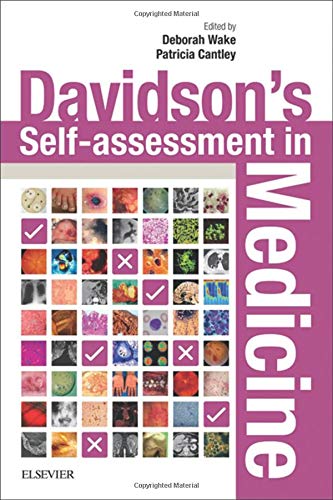
Davidson’s Self-assessment in Medicine - Original PDF
نویسندگان: خلاصه: This book has been built around modern educational principles and utilises a contemporary assessment style, in line with current undergraduate and postgraduate teaching. It is designed to help and support students in their final undergraduate years and in the early years after qualification. The style is compatible with that used in modern postgraduate examinations across the world.
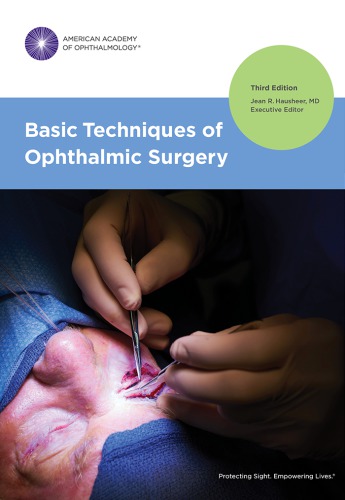
Basic Techniques of Ophthalmic Surgery (3rd Edition) - Original PDF
نویسندگان: خلاصه: This book is a supplement to the required training and experience that is essential for every ophthalmic surgeon to achieve safe and effective outcomes for patients. Correct surgical site marking and “surgical pause,” or “time out,” are not covered in this book, yet must be consistently and accurately implemented by the ophthalmic surgeon. While perioperative ophthalmic medi cations for each procedure are briefly discussed herein, physicians should be mindful to continually explore specific and proper use of medicaments for each procedure, on which there is an exhaustive body of knowledge, since perioperative pharmacology is also evolving alongside surgical procedures themselves.آیا کتاب مورد نظر هنوز بر روی سایت قرار نگرفته است؟ جای نگرانی نیست! کافی است بر روی گزینه سفارش کتاب کلیک کرده و درخواست خود را ثبت کنید. در کمتر از چند ساعت کتاب شما را آماده خواهیم کرد.