موضوعات
آموزش و پرورش
ادبیات و زبان
پزشکی، دندانپزشکی و داروسازی
تاریخ و جغرافیا
داستان و رمان
دیگر
دین و فلسفه
روانشناسی
ریاضیات و آمار
سلامتی، تناسب اندام و رژیم غذایی
شیمی و پلیمر
علوم اجتماعی و حقوق
علوم زیستی و بیوتکنولوژی
فیزیک و نجوم
کامپیوتر و اینترنت
کتابهای کودکان و داستان
کسب و کار و اقتصاد
کشاورزی و دامپزشکی و غذا
معماری
مهندسی و فناوری
هنر و تئاتر
محصولات

Handbook of EMDR and family therapy processes - Original PDF
نویسندگان: خلاصه: Starting with the Foreword by Daniel Siegel, MD, the Handbook demonstrates in superb detail how you can combine EMDR’s information processing approach with family systems perspectives and therapy techniques. An impressive and needed piece of work, Handbook of EMDR and Family Therapy Processes provides a clear and comprehensive bridge between individual and family therapies.
Optical Character Recognition Systems for Different Languages with Soft Computing - Original PDF
نویسندگان: خلاصه: The book offers a comprehensive survey of soft-computing models for optical character recognition systems. The various techniques, including fuzzy and rough sets, artificial neural networks and genetic algorithms, are tested using real texts written in different languages, such as English, French, German, Latin, Hindi and Gujrati, which have been extracted by publicly available datasets. The simulation studies, which are reported in details here, show that soft-computing based modeling of OCR systems performs consistently better than traditional models. Mainly intended as state-of-the-art survey for postgraduates and researchers in pattern recognition, optical character recognition and soft computing, this book will be useful for professionals in computer vision and image processing alike, dealing with different issues related to optical character recognition.
Consensus Over Switching Network Topology: Characterizing System Parameters and Joint Connectivity - Original PDF
نویسندگان: خلاصه: This book aims to extend existing works on consensus of multi-agent systems systematically. The agents to be considered range from double integrators to generic linear systems. The primary goal is to explicitly characterize how agent parameters, which reflect both self-dynamics and inner coupling of each agent, and switching network topologies jointly influence the collective behaviors. A series of necessary and/or sufficient conditions for exponential consensus are derived. The contents of this book are as follows. Chapter 1 provides the background and briefly reviews the advances of consensus of multi-agent systems. Chapter 2 addresses the consensus problem of double integrators over directed switching network topologies. It is proven that exponential consensus can be secured under very mild conditions incorporating the damping gain and network topology. Chapter 3 considers generic linear systems with undirected switching network topologies. Necessary and sufficient conditions on agent parameters and connectivity of the communication graph for exponential consensus are provided. Chapter 4 furthers the study of consensus for multiple generic linear systems by considering directed switching network topologies. How agent parameters and joint connectivity work together for reaching consensus is characterized from an algebraic and geometric view. Chapter 5 extends the design and analysis methodology to containment control problem, where there exist multiple leaders. A novel analysis framework from the perspective of state transition matrix is developed. This framework relates containment to consensus and overcomes the difficulty of construction of a containment error. This book serves as a reference to the main research issues and results on consensus of multi-agent systems. Some prerequisites for reading this book include linear system theory, matrix theory, mathematics, and so on.
Travel and Tourism (SAGE Course Companions) - Original PDF
نویسندگان: خلاصه: The Sage Course Companion in Travel and Tourism is an accessible introduction to the subject that will help readers extend their understanding of key concepts and enhance their thinking skills in line with course requirements. It provides support on how to revise for exams, how to present calculations, and how to prepare for and write assessed pieces. Readers are encouraged not only to think like a Travel and Tourism professional but also to think about the subject critically.
The Palgrave Handbook of Positive Education - Original PDF
نویسندگان: خلاصه: This book is open access, which means that you have free and unlimited access Provides a landmark introduction to the growing field of positive education Includes a range of theoretical, applied, and practice-focused chapters attractive to academics and practitioners Considers the implications of positive psychology research for public policy, curriculum, pedagogy, and teacher training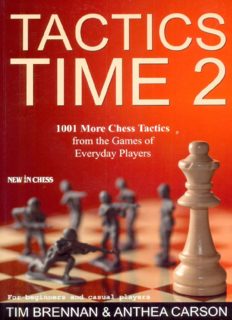
Tactics Time - PDF
نویسندگان: خلاصه: Thousands of beginners and casual chess players have improved by studying the tactical examples in Tactics Time 1. Now Tim Brennan and Anthea Carson are back with more real chess tactics from the games of players like you. Tactics Time 2 presents 1001 fresh and instructive positions that Tim and Anthea have assembled from real amateur chess games. Forget about grandmaster and master games and just spend your time and energy on relatively simple patterns like a knight fork, an overloaded piece or a weak back rank. After working with Tactics Time 2 you will not only know how to easily spot tactical shots, but you will also improve your game generally, gain confidence, use less time on the clock and start beating more opponents. Tim and Anthea say: don’t waste your time on studying chess puzzles you might never encounter again!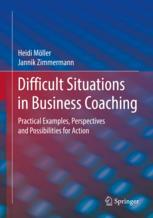
Difficult Situations in Business Coaching - Original PDF
نویسندگان: خلاصه: Case descriptions from coaching sessions that have actually taken place Presentation of different perspectives and suggestions for action from successful practitioners in each case Scientifically based and at the same time strongly practice-oriented

The History of Chile - Original PDF
نویسندگان: خلاصه: Within Chile is the driest desert in the world, the highest mountain range in the hemisphere, temperate rainforests, and a piece of Antarctica. In all these areas Chileans have created unique communities and, together, a vibrant nation. Chile's history mirrors its geographic variety. From its pre-colonial period, to its days as a Spanish colony, through its many independent governments, Chile has long been a land of crises and controversy. Beginning with a survey of the land, people, and current government of Chile, the book traces the chronological story of the country. Ten chapters follow the details of Chilean history from the indigenous peoples to the democratic transition after the Pinochet dictatorship. This is the perfect starting point for students and travelers interested in the history and people of Chile.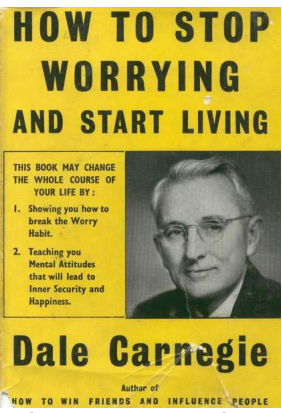
How To Stop Worrying And Start Living - PDF
نویسندگان: خلاصه: How to Stop Worrying and Start Living by Dale Carnegie In this time-tested book, Dale Carnegie shows us how to conquer worry and anxiety. Via engaging stories that reveal helpful lessons and practical frameworks, Carnegie arms you with an array of tools that will help you start living more fully and without the harmful effects of worry. Even though this book was written in 1936, the deceptively simple lessons from this book will help you better navigate the noise of the modern era. Key Takeaways Focus on today “Our main business is not to see what lies dimly at a distance, but to do what lies clearly at hand.” – Thomas Carlyle Resurfaced using Readwise Thinking about what needs to be done in the future can lead to overwhelm and inaction. But if you focus on what you need to accomplish today, it’s much more doable. It will help you create the future you want, one day at a time. A formula to follow Frameworks for dealing with worry can be helpful, especially since worry destroys our ability to concentrate. Without being able to concentrate, not only do we feel worse, but we’re less effective. If you have a situation where you’re worrying about failing, follow these three steps. Step 1: Analyze a situation causing you worry to determine the worst possible scenario if you fail. Step 2: Accept the worst possible case scenario, if it is to happen. Step 3: Focus on trying to improve the situation so that you end up with a better outcome than worst case. Why you should care about worry “The greatest mistake physicians make is that they attempt to cure the body without attempting to cure the mind; yet the mind and body are one and should not be treated separately.” – Plato Resurfaced using Readwise Worry isn’t just something that makes you feel a little worse or makes it less likely that you can concentrate. It’s something that can lead to seriously adverse health effects for your mind, body, and soul. These negative effects can cause much worse situations with your health than whatever it is that you’re worrying about. In short, worry is not worth the physical toll it can take on your body. Techniques for Analyzing Worry Understand the situation Whenever you’re worrying about something, you need to do three things: Get the facts. Analyze the facts. Arrive at a decision – and act on that decision. One simple framework for figuring this all out is to follow four lines of inquiry. Write down what you’re worrying about (What am I worrying about?) Think about what you can do about it (What can I do about it?) Decide on what to do (What are you going to do about it?) Start carrying out the decision (When am I going to start doing it?) This framework helps you get out of your head. It allows you to quickly understand what’s going on, what you can do about it, and to make a decision and start doing what you’ve decided. Solving business problems Similar to the framework above for analyzing any worry, you can use the following four questions to solve most of your worry about any business situation. What’s the problem? What is the cause of the problem? What are all possible solutions to the problem? What solution do you suggest? Whenever you’re struggling in business, go through this framework. You’ll feel better and be clear on what you’re going to do to start actually solving the problem, instead of simply worrying about it. Breaking the Worry Habit Use busyness To conquer worry, you need to understand that worry is a habit. That means it’s a habit you can break. One technique for breaking the worry habit is to keep yourself busy. When you’re really busy or taken up by action, it’s hard to worry. There’s a balance here – you don’t want to mask underlying problems by just keeping yourself moving all the time. But filling up your days can make it easier to not worry. Don’t sweat the small stuff or the improbable “Trivialities are at the bottom of most marital unhappiness” – Joseph Sabath Resurfaced using Readwise Don’t let the little annoyances or problems in life cause you too much worry. You can’t eliminate everything that’s unpleasant, and the energy expended on worrying about these problems prevents you from focusing on what’s important. On a related note, don’t get too concerned about things that don’t have a high probability of happening. Most surfers fear sharks, but how likely is it that they’ll get killed by one? Not that likely. Try to ask yourself honestly, “How likely is it that the thing I’m worrying about will occur?” Accept the situation “God grant me the serenityTo accept the things I cannot change,The courage to change the things I can;And the wisdom to know the difference.” Resurfaced using Readwise We often find ourselves in situations we don’t want to be in. Focus on what you can do about the situation, rather than on the existence of the source of worry. Know your values “Yes, I honestly believe that this is one of the greatest secrets to true peace of mind – a decent set of values. And I believe we could annihilate fifty per cent of all our worries at once if we would develop a a sort of private gold standard – a gold standard of what things are worth to us in terms of our lives.” Resurfaced using Readwise Get clear on what you value, and live by that standard. Hold others to your standards as well. If you have a friend who’s always an hour late, say that you’re willing to wait up to 10 minutes, but after that, you’re leaving. That’s a standard that you’ve communicated, and the person can choose to meet it or not. Figure out what you really care about in life and what you’re willing to give up to get it. You may find that you’re expending a lot of energy on something you don’t even want. Cut it if it doesn’t align with your values. Cultivating a Mental Attitude that Fosters Peace “Our life is what our thoughts make it.” – Marcus Aurelius Resurfaced using Readwise Just for today A beautiful daily program for you to aspire to follow, originally written by Sibyl F. Partridge. Just for today I will be happy. This assumes that what Abraham Lincoln said is true, that “most folks are about as happy as they make up their minds to be.” Happiness is from within; it is not a matter of externals. Just for today I will try to adjust myself to what is, and not try to adjust everything to my own desires. I will take my family, my business, and my luck as they come and fit myself to them. Just for today I will take care of my body. I will exercise it, care for it, nourish it, not abuse it nor neglect it, so that it will be a perfect machine for my bidding. Just for today I will try to strengthen my mind. I will learn something useful. I will not be a mental loafer. I will read something that requires effort, thought and concentration. Just for today I will exercise my soul in three ways; I will do somebody a good turn and not get found out. I will do at least two things I don’t want to do, as William James suggests, just for exercise. Just for today I will be agreeable. I will look as well as I can, dress as becomingly as possible, talk low, act courteously, be liberal with praise, criticize not at all, nor find fault with anything and not try to regulate nor improve anyone. Just for today I will try to live through this day only, not tackle my whole life problem at once. I can do things for twelve hours that would appall me if I had to keep them up for a lifetime. Just for today I will have a program. I will write down what I expect to do every hour. I may not follow it exactly, but I will have it. It will eliminate two pests, hurrying and indecision. Just for today I will have a quiet half-hour all by myself and relax. In this half-hour sometimes I will think of God, so as to get a little more perspective into my life. Just for today I will be unafraid, especially I will not be afraid to be happy, to enjoy what is beautiful, to love, and to believe that those I love, love me. Avoid trying to get even “If selfish people try to take advantage of you, cross them off your list, but don’t try to get even. When you try to get even, you hurt yourself more than you hurt the other fellow.” – Milwaukee police department No one can disturb your mind if you do not let them. Don’t waste time thinking about people you don’t like. Don’t worry about ingratitude Avoid getting upset about people not showing the level of gratitude that you expect. It’s human nature for people to forget to be grateful. So if you expect that they will be, you’ll simply be disappointed. If you want to be giving to people or the world, then do it. Don’t worry about that being recognized. If it is, great. You may feel good about getting that recognition, but don’t feel bad if you don’t receive it. 90% right, 10% wrong. “Two men looked out from prison bars, One saw the mud, the other saw the stars.” Resurfaced using Readwise Most of the time, about 90% of our lives are going well, while 10% are not going as we’d like. We focus and obsess about that 10%, even if it’s about things that we don’t care very much about. The best way to start enjoying your life is to focus on what’s going well. You can always try to improve what’s not going well, but don’t make that the focus of your days. Be grateful for what’s going well and for what you don’t have. Help others If you’re feeling down, try to spend some time thinking about the world outside of yourself. Focus on other people and what drives them. Become interested in their stories. See if you can find small ways to help. Bringing joy to someone else often brings joy to you. Conquering Worry and Criticism “Man is not made to understand life, but to live it.” – Santayana Resurfaced using Readwise Consider religion and prayer Religion and prayer – or the acceptance of something not knowable and greater than yourself – is a good way to stop fretting about all of your troubles. While many modern day people are agnostic or atheist, shying away from the specifics of various religions, it’s important to remember that you can always accept that there is a piece of life that you’ll never fully understand. So even if you’re not religious, talk to yourself about your worries, about your joys, about your hopes and dreams. Ask the universe for help. You may feel better by just asking. No one kicks a dead dog “So when you are kicked and criticized, remember that it is often done because it gives the kicker a feeling of importance. It often means that you are accomplishing something and are worthy of attention.” Resurfaced using Readwise People don’t criticize others who aren’t doing anything. So if you’re receiving some criticism, it likely means that you’re doing something that’s at least worthy of attention. Don’t take criticism so personally You can’t control whether or not you receive negative feedback or unjust criticisms, but you can control how you allow these events to impact your mind. Learning not to get worked up when someone says something that isn’t positive is a core skill for dealing with a world in which you may get criticized for just and unjust reasons. Keep a “fool things I have done” list We all do stupid things. Some people learn from their mistakes and move on. Others obsess about the mistakes they’ve made and never let them go. What path sounds better? One way to begin learning from and accepting your mistakes is to keep a “fool things I have done” list. This list can be a simple recording of all the stupid things you’ve done in your life. You can add to the list over time and look back over the years to see how you’re improving. Keeping Fatigue at Bay “Fatigue often produces worry, or, at least, it makes you susceptible to worry.” Resurfaced using Readwise Rest and relax “I never stand up when I can sit down; and I never sit down when I can lie down.” – Henry Ford Resurfaced using Readwise Instead of grinding all day, take small breaks from your work. Do things you enjoy. Lay down. Go for a walk. Regularly take breaks to restore your energy, and you’ll be able to work longer during the day. Rest also includes finding ways to reduce the impact of your emotions on your energy levels. Feeling too many negative emotions can easily drain you. Anger, resentment, and so on are some of the most draining forces around. You could sit all down and do nothing, but if you’re angry and resentful, you’ll feel exhausted. There are different tactics that will work for you, but you have to find ways to relax. “Relaxation is the absence of all tension and effort.” Do whatever it is that relaxes you. This could be a few deep breaths. It could be keeping a journal when you’re upset. It could be laying on the floor for a few minutes when you’re tired. It could be sitting more comfortably in your chair. Do your best to avoid unnecessary strain as you go about your days, and you’ll feel better throughout them. Avoid boredom Boredom is often exhausting. A good way to understand this concept is to imagine times when you’re doing something interesting or exciting. Are you tired or fatigued when you’re really engaged with your work? Probably not. So find activities that get you excited, and you’ll naturally have more energy. Dealing with insomnia Sleep is obviously a critical factor in feeling good. But many people, especially as they develop insomnia, begin to worry constantly about not getting enough sleep. This worry fuels the insomnia, and it makes people even more exhausted. So if you can’t sleep well, by all means, try different tactics to get better sleep. But if you don’t get much sleep or are struggling, don’t worry about your lack of sleep. The worry will make you far more exhausted than the “not sleeping” part. It compounds the problem, rather than fixing it. If you want more book summaries like this... Find more great book recommendations. Discover lists with hundreds of the best books. Check out Foundations. Foundations is a searchable digital notebook built for curious, lifelong learners. It will help you accelerate your learning, solve hard problems, and save time by giving you access to a growing digital collection of insights from timeless books.آیا کتاب مورد نظر هنوز بر روی سایت قرار نگرفته است؟ جای نگرانی نیست! کافی است بر روی گزینه سفارش کتاب کلیک کرده و درخواست خود را ثبت کنید. در کمتر از چند ساعت کتاب شما را آماده خواهیم کرد.